
An Informed Reverence
1/15/25 – The need to acknowledge the sacredness of the world

Hello everyone:
After a few days of puzzling with an essay idea on the beauty and virtues of ice amid the horrors of ICE, I’ve had to set it aside. Instead, then, this week I’m offering one of my favorite early essays. It was first published two years ago, in January of 2023, when I had 9% of the readers I have now. For those loyal, virtuous, patient souls who have been sticking with me from those early days, forgive me the (updated) repetition. For the rest of you, enjoy this one-step solution to much of what ails us.
As always, please remember to scroll past the end of the essay to read some curated Anthropocene news.
Now on to this week’s writing:

Do you want a simple, one-step solution to the world’s environmental problems? Would you like a planetary fix that already has deep roots in human nature and human history? And what if this answer to Earth’s ecological ills was already in place in many parts of the world?
There are plenty of days when my one-step answer might be something cynical, as in Send all the humans on that interplanetary journey they seem so keen on taking… But today’s answer is a bit more positive.
All we need to do to begin the healing – from habitat loss to overfishing, climatic warming to ocean acidification, from microplastics to nutrient pollution – is to sacralize the world. That is, to make the Earth sacred and treat it accordingly.
To be clear, I’m neither religious nor a scientist, but I have enough poetry in me to see that the meeting ground between the physical and the metaphysical is spacious enough to contain all of us. Atheists, evangelicals, and geologists can all agree on one thing. Science may be the most extraordinary learning system in human history, but its primary truth is as philosophical as it is precise: We live in mystery.
We’re mapping the universe, but we don’t know what it is or what it’s made of. We learn more every day about the elegant complexity of life on Earth, but every day we alter and erase entire ecosystems without knowing what was lost. We’ve studied our bodies intensively for centuries, but a majority of our cells are made up of other species whose complex relationships with us remain largely unknown.
Go outside, or look out your window. Take note of what you can see, but remember the vast wild that you cannot see within and around the visible. How aware are we, amid the tumult of this life, of the empires beneath our feet, of the communities under other species’ skin and bark, of the Sun’s light emanating from every organism, of the paper-thin greenhouse that contains us all, and so much more. All of it is beautiful.
Our deep knowledge and our vast ignorance of reality both demonstrate that the world we share with other strands of life is lovely, astonishing, and worthy beyond all doubt of saving. The fabric of life has been our salvation throughout our species’ history, and now that we’ve diminished the Earth we have little choice but to return the favor. We have to save all we can. The fate of the world is our fate too.
I started thinking about sacredness as a conservation tool because of yet another fine article by Fred Pearce at Yale e360. Pearce writes that in some places in the world, sacred sites hold the last remnants of important forests and other ecosystems:
Nobody knows how many sacred natural places there are across the world. They may number in the hundreds of thousands. Almost all societies have them — from Hindu villages in India to Catholic communities in the hills of Italy, and native tribes of the Americas to African animists. The creation and longevity of these places are testament to the power of religion as a tool for community-based conservation. Sacred natural places are “the oldest form of habitat protection in human history,” says Piero Zannini of the University of Bologna, author of a 2021 assessment of their value. “They are becoming ever more important as reservoirs of biodiversity.”
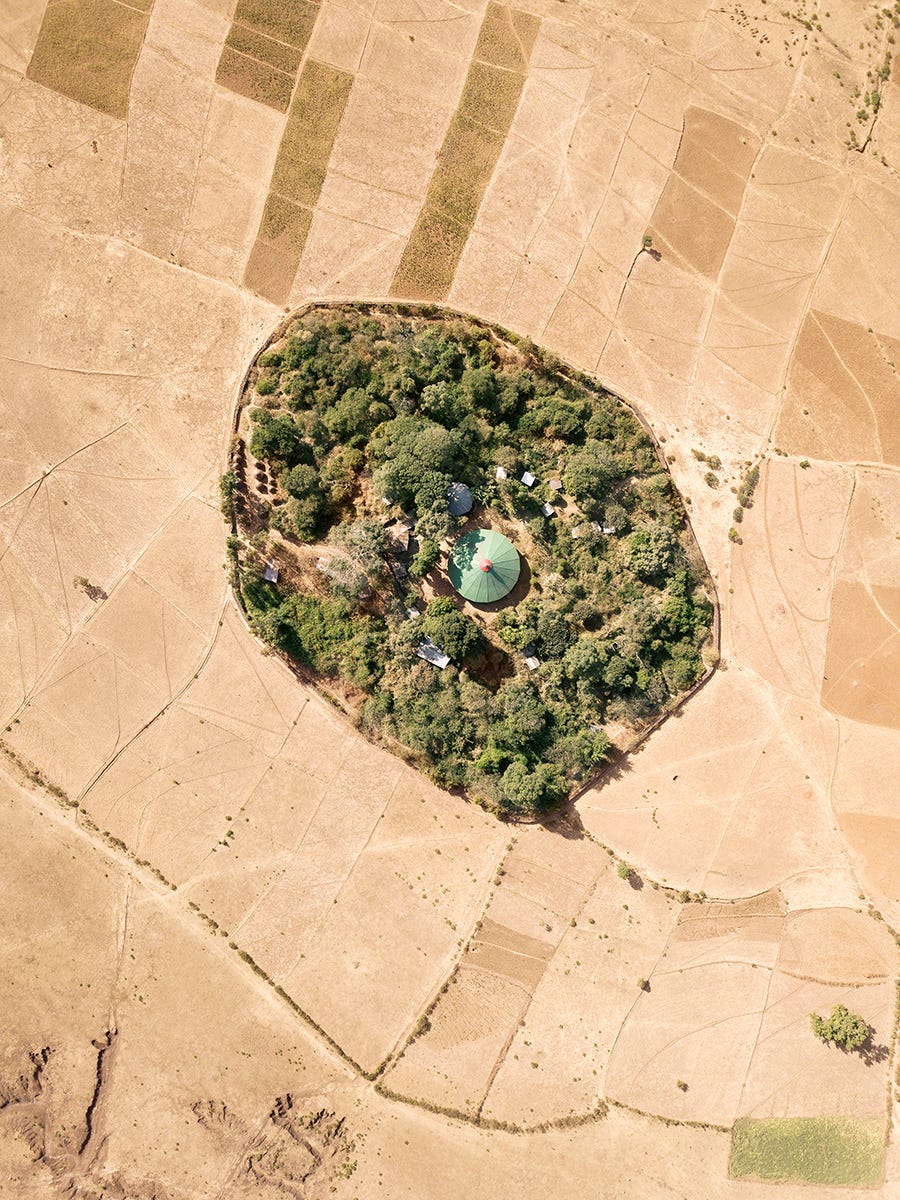
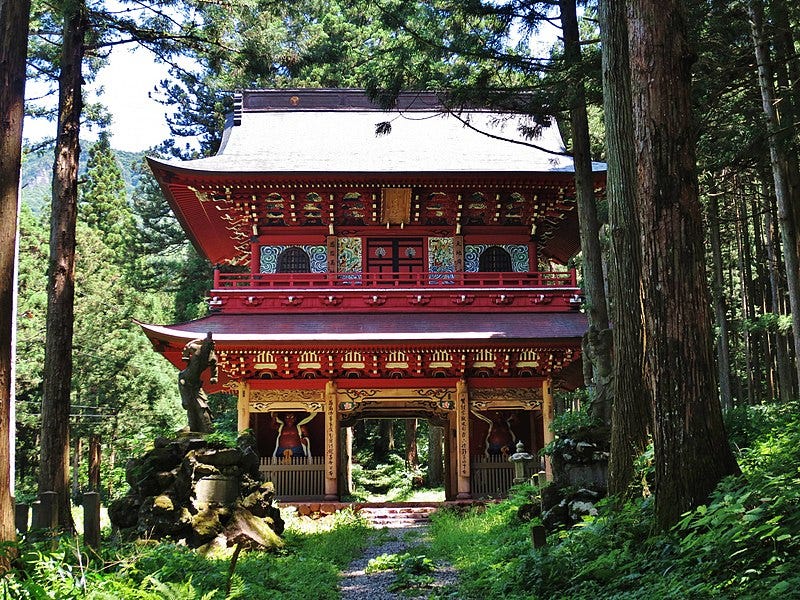
In many places they are the only refuges for endangered species and rare ecosystems. Church forests are now almost the only trees left in the Amhara Province of Ethiopia, holding back advancing deserts. In Japan, there are few if any ancient lowland forests outside the grounds of Shinto temples, which are estimated to cover more than a quarter-million acres.
Like all lush remnants in the Anthropocene, these sacred sites exist in a state of limbo. They ask a fundamental question of us: Are these intact places the seeds of future rewilding and reforestation? Or are they merely some of the last gasps of the healthy landscapes that nurtured us?
We will see. What we do know is that these fragments are also a map of the fragmentation of our once-common reverence for the natural world. As in the photo above, each of us is either an island of awe or one more soul adrift in a sea of neglect.
Here’s how I see it: Over recent millennia, as spirituality more often arose from books rather than from the forests cut to produce them, and as religion became indoor homework rather than outdoor recess, we shed the environmental knowledge and animist faiths that had informed nearly all of human history. In the wake of their loss, we are left with a deep ecological amnesia that explains our distance from, and thus destruction of, the natural world. We don’t know what we had, we don’t know what we’re losing, and we don’t clearly feel or understand the consequences when it’s gone.
These sacred sites are now refuges for far more than pilgrims. Unsurprisingly, as Pearce notes, these last holdouts are under threat by the human forces – overpopulation, consumption, colonialism, capitalism – that have isolated them, continuing to nibble away at all sides. He cites examples in India:
Until recently, there were estimated to be more than 100,000 sacred natural sites across India, though only some 14,000 have been described by researchers. The country’s rapid economic development is taking its toll. “Spiritual beliefs [are] no longer sufficient to ensure their survival,” according to [Indian ecologist Madhav Gadgil]. Yet just as there are no reliable statistics on their numbers, so are there none on their demise.
Pearce cites other losses of sacred sites around the world, but also notes those whose protections remain strong, particularly in parts of Africa. Their persistence doesn’t have a single reason. They may be a well-kept secret or a well-funded tourist site. They may benefit from vibrant ancestor-worshipping or animistic faiths, or from a scientific assessment of their rich biodiversity.
What all of these factors have in common, though, is a communal belief in their importance. The question, then, is to what extent this kind of reverence-based community conservation effort can be scaled up.
_sanmon.jpg)
When I read the article, my first thought was that these places demonstrated the need to create cultural taboos around the destruction of biodiverse regions of the natural world. We need to convince people that some places are too special - like national parks with an added layer of sacredness - to mess with.
But in terms of strategy, introducing specific place-based taboos is playing defense in an impossibly unequal conflict, a local solution to a global problem.
Modern civilization has been built around the idea of human supremacy, the largely unspoken philosophy that humans are so important that it’s okay for us to throw all of nature into the industrial blender. Given the scale of the problem, it makes less sense to fight back with a narrow set of taboos than it does to change civilization’s view of the natural world more generally.
Islands of wildness, while vital amid the desolation, are a seedbank rather than a solution. Looking at the hierarchy of protections for the island-like wilderness areas, national parks, and national forests here in the U.S., we can see that the utilitarian forces of destruction are always nibbling or chewing at the edges of the islands, if not seeking to undermine their status entirely.
More broadly, then, we need to remind everyone that the health of the natural world is in our best interests, both physical and spiritual. This is not just the usual pragmatic talking point about maintaining a stable climate and healthy forest because it’s good for us too. I’m talking about sacralizing the natural world, which implies a commonsense understanding that life is a beautiful and sacred mystery enjoyed by atheists and believers alike.
It’s the kind of idea that does not survive the media’s voicing of it, something that’s spread instead from hand to hand and mouth to ear.
What paths to sacredness are available? Well, there are some straightforward practical things to do for the sacred places that still exist. First, we must ensure their survival regardless of whether they still have faithful populations and institutions to protect them, and whether the faith in question is our own. We should help them expand their protective borders wherever possible. Imagine, for example, that Ethiopian church forest in the photo abvoe having the means to defend and expand its walled Edenic gardens.
Second, and more importantly, Indigenous peoples must have the rights and funding to protect the life within their lands and waters. And again, where possible, these lands and waters should be expanded, because still today Indigenous communities are far better at conservation than the rest of us, even in the absence of the support and quality of life they deserve.
And finally, there must be recognition at all levels of governance that these sites and territories are beyond the reach of industrial-scale development not merely because they are protected, but because they have an inherent value beyond human interests. We must learn restraint, and must impose restraint on the artificial embodied entities we call corporations, whose goals are neither human nor biologically healthy.
Simple, right?

I like what renowned photographer Amy Vitale says about Indigenous communities in a Guardian article in which she discusses why she shifted her photography work from documenting wars between humans to documenting ordinary people on the front line of our war against nature:
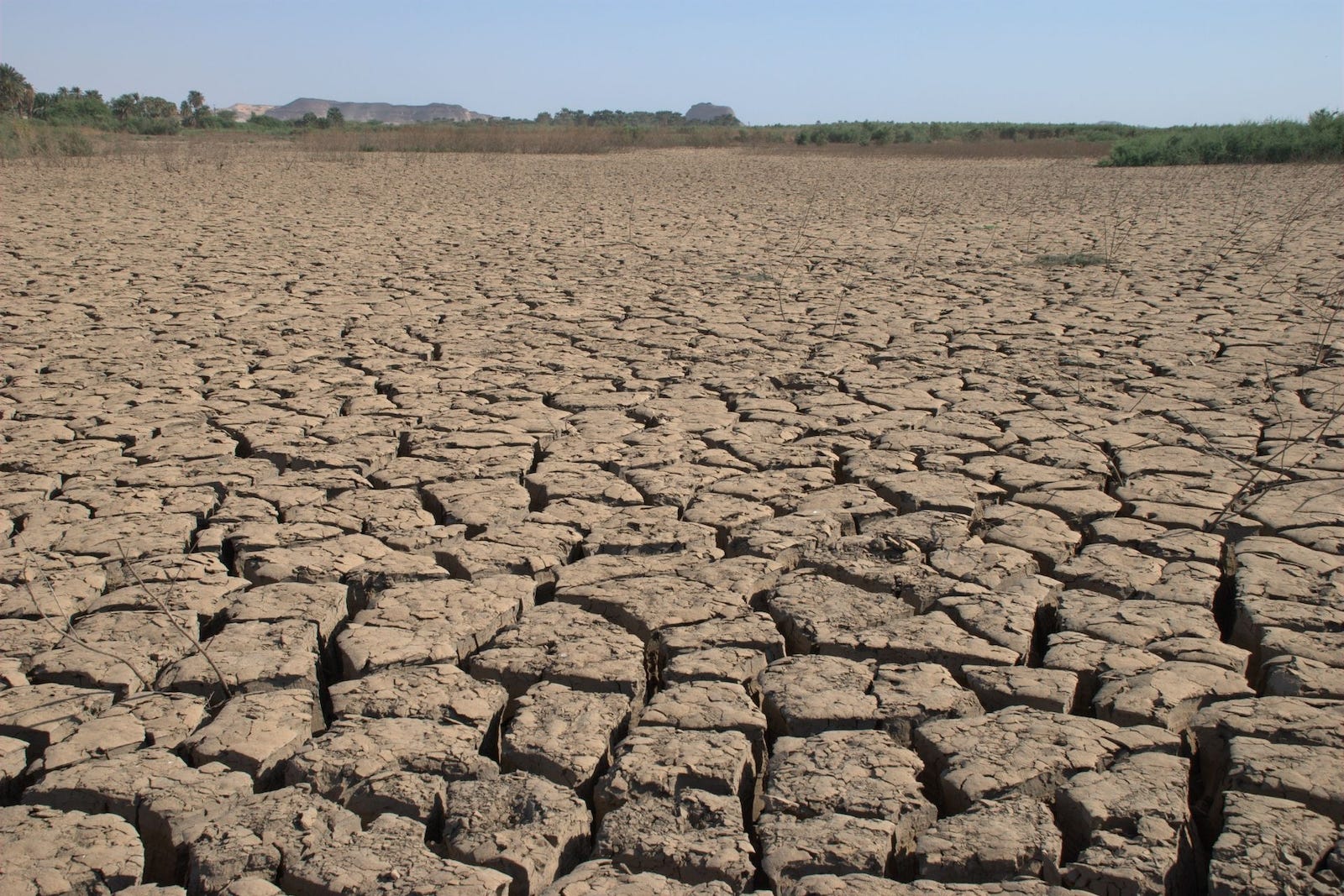
I realised the backdrop of every story was the natural world. In some cases, it was the scarcity of basic resources, like water. In others, it was the changing climate and loss of fertile soil. But I started to understand that it’s always the demands placed on our ecosystem that drive conflict and human suffering. Indigenous communities have always understood how important the natural world is for their existence. I believe they hold the keys to saving what’s left of wildlife and nature.
For more recent belief systems, the faithful must be called to the cause of protecting and restoring God’s green Earth. In this effort, no one has done more than Pope Francis with his remarkable encyclical letter Laudato Si’, in which Francis enters into dialogue “with all people about our common home.” The Pope reminds believers and the rest of us that “the earth herself, burdened and laid waste, is among the most abandoned and maltreated of our poor.”
[Our sister, Mother Earth] now cries out to us because of the harm we have inflicted on her by our irresponsible use and abuse of the goods with which God has endowed her. We have come to see ourselves as her lords and masters, entitled to plunder her at will. The violence present in our hearts, wounded by sin, is also reflected in the symptoms of sickness evident in the soil, in the water, in the air and in all forms of life.
It's hard to assess the impact of Laudato Si’ and Francis’ good work to promote it, but some suggest it pushed the Paris climate accords in the right direction and that it remains a potent force among Catholics. PBS put out a special documentary on it called The Letter: A Message For Our Earth.
I don’t have the space here to properly explore other large-scale faith-based environmental thinking around the world (like the Faith for Earth initiative at the U.N. Environment Program), but I want to point you toward two people. First, the Times has a good interview with Katherine Hayhoe, an evangelical and climate scientist with the Nature Conservancy. Second, I am particularly impressed with the work of Fazlun Khalid, scholar, activist, author of Signs On the Earth: Islam, Modernity, and the Climate Crisis, and founder of the Islamic Foundation for Ecology and Environmental Sciences. I recommend you explore his ideas in this excellent article from USC’s Center for Religion and Civic Culture. My sense is that Khalid is fighting an uphill battle within his community, but aren’t we all?
Finally, then, there are the rest of us, those who are neither Indigenous nor drawn to religion and its calls to action. What’s the sacralizing message for us? Some of us already heed our own environmental ethics or sense of sacredness, of course, but it’s not enough. The deep wonder so many of us have, whether on a walk or while watching nature documentaries, is not enough. That wonder does not create rational governmental policy nor rein in corporate behavior. How do we turn personal awe into a societal-scale reverence?
First, there are the wise words of environmental philosopher Kathleen Dean Moore, who answers the question, What can one person do to help heal the world? with this gem: “Don’t be one person.” Translate the awe into useful, pragmatic, public language that pushes for the mutual flourishing of people and place.
Certainly this isn’t about pretending to be Indigenous. Nor is it about constructing some new animist faith. Instead, we need to help instill in our communities a set of ethics that acknowledges the unassailable value of the life all around us. The tapestry of plants, animals, and microbes is not merely a resource for people, but neither is it merely a spectacle to be gazed at. It’s our home and we’re still in it, even as we light the flames, drive the machines, and shop for the toxins that abuse it.
That’s the elegant answer to making the world sacred, I think. Acknowledging, as a civilization, that the natural world is our home.
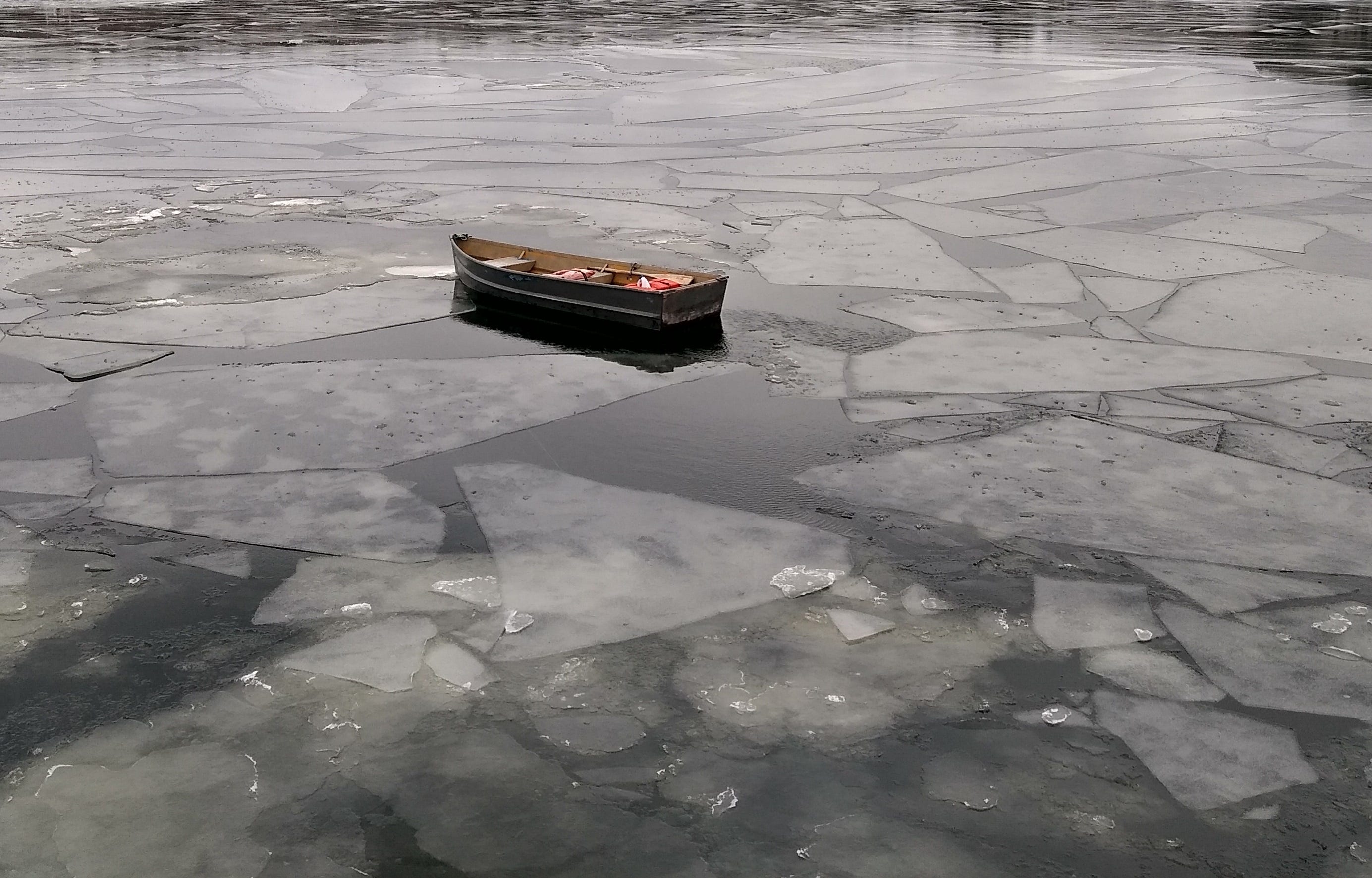
Even as I write this, I know it sounds like a bumper sticker. Earth is our only home. But the truth of it is unavoidable. That truth is derived from both ancient cultures and contemporary ecological knowledge. An informed reverence, you might call it.
Our outsized impacts on the planet have given us a god-like status – we determine who lives and who dies – but we need to decline the throne. There is no “environment” separate from us; there is only the world. We’re part of the fabric of life and the fabric must be whole in order for our lives to have a deeper meaning. As Daniel Quinn writes in Ishmael, we need an everyday understanding that the world does not belong to us, and sufficient modesty to recognize that we belong to the world.
This quest for sacredness is about rooting the actions that must be taken to limit the ongoing catastrophes of the Anthropocene within the knowledge that already exists across human cultures: 1) nature is our home, 2) its loss is our loss, 3) science and traditional faith both make it clear that the richer the Earth’s array of life is, the richer our lives will be, and 4) our health, whether physical, mental, or emotional, relies on connection with the real world that nurtured us.
We need arguments now that shift the dialogue at scale, so that a generation from now, when all hell is breaking loose, there will be only pockets of conservative resistance. Earth is our only home doesn’t rise to that level, but it’s the worldview we need.
There’s hope in seeing how the arguments rooted in science (and self-interest), along with technological solutions, have finally shifted the dialogue on climate. Despite the violent idiocy of the moment, we’ve moved beyond the extraordinary efforts of the fossil fuel industry to cast doubt on the science. Affordable solar is taking over the world. We’re almost at the pockets-of-resistance stage.
That’s where we need to be with the biodiversity crisis, but it’s an even tougher case to make. The climate argument has had to overcome the most powerful industry in human history and our reliance upon it, but the fabric-of-life argument must convince us to substantially resize and restructure civilization.
Economies will be reimagined, food and shelter and transport will change, and population will shrink. “Sustainability” is another bumper sticker word, but I’m not sure how many people realize that the true ecological sustainability we need will require both a revelation and a revolution. The worldview of human supremacy is built into who we are and what we do. What we now unthinkingly consider sacred – capitalism, consumerism, constant growth – must become deconsecrated and contained within the parameters of life. Economies have always been subsidiary entities within ecology, but now we have to act on that truth.
To get to where we need to be, with the natural world brought back into a state of relative abundance and our broad array of threats to it made harmless, we’ll need to consider Earth is our only home as doctrine and act accordingly. It’s a “one-step solution,” as I joked at the top of this essay, but it’s an impossible step to take all at once.
There’s so much I haven’t said here. And I’m not sure I’ve found the right balance between the necessity and the impossibility of this idea of informed reverence. I’ll be very curious to hear your thoughts in the comments. Please don’t be shy. For now, though, since Fred Pearce’s article got me started on this week’s writing, I’ll give him the last word. Here are his closing paragraphs:
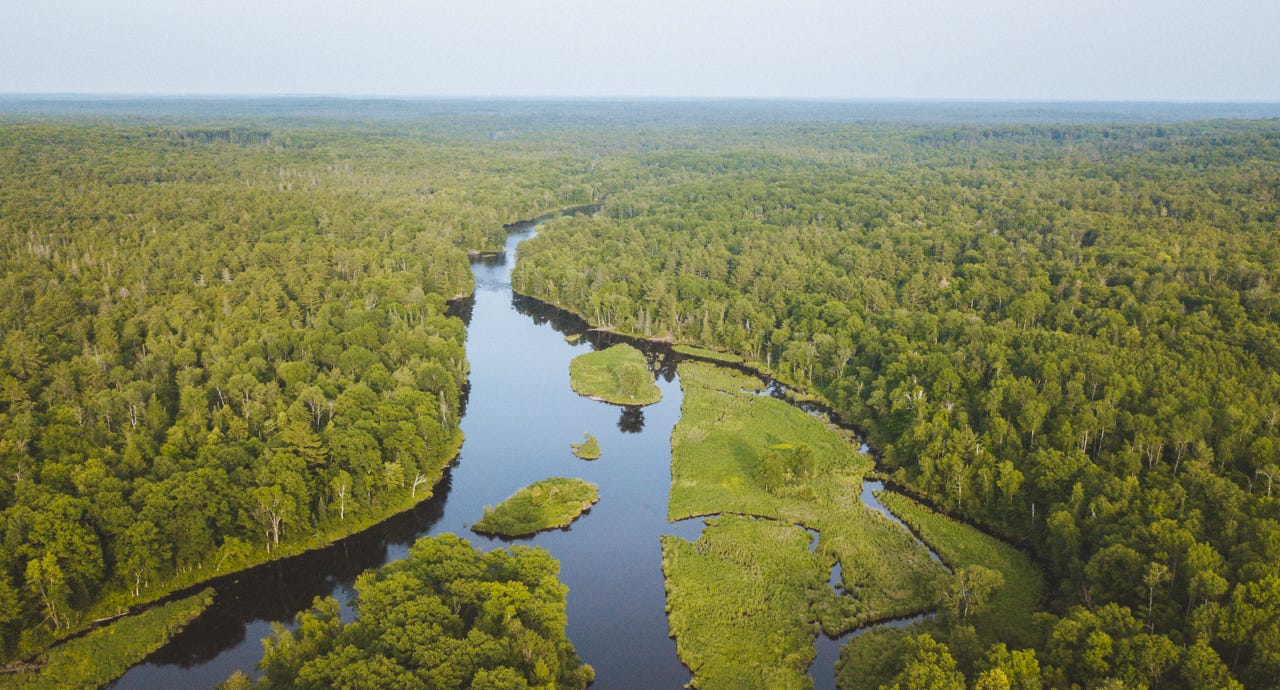
In the United States, the Menominee people of Wisconsin have practiced a sophisticated system of sustainable logging for more than 150 years in the forest that makes up most of their reservation. The rules are tied to cultural principles and spiritual values derived from the desire to protect the forest habitat of the five animals that feature in the tribe’s creation story and represent its five clans — the wolf, bear, eagle, moose, and crane.
Modern silviculturists and forest ecologists regularly make pilgrimages to the Menominee reservation to find out how they do it. But the answer is at root as much spiritual as technical. Their forests are sacred and treated as such.
Thanks for sticking with me.
In other Anthropocene news:
From rebecca hooper and Between Two Seas, “a pocket of light,” a beautiful little essay that starts with a dog and a writer’s desire to say something gentle and good, and then wends its way through a discovery of poems - by Mary Oliver, Seamus Heaney, and more - about mortality and
what it means to live, and live well and wholly and magically and lightly, when death is a certainty, when it feels like there is darkness all around.
Many of you have already read “Lichen Incognita” from Bryan Pfeiffer, I’m sure, but I’ll recommend it anyway because Bryan has done his usual stellar job of bringing us into the woods and showing us marvels that help us love the real world for all the right reasons. It’s an essay about a tiny lichen, but it’s also a balm in troubled times:
We live in the epoch of the infinite — the scroll, the feed, the playlist, the possibilities, the 24-hour grudge cycle. My patch of Candleflame Lichen is finite. In this era of upheaval, it is balance. And when I’m feeling lost, the lichen is destination.
From the Guardian, a conservation biologist who spent the pandemic lockdown inventing “frog saunas” to save fungus-infected rare frog species is now working feverishly to find a small gene-editing solution that could save hundreds more of those species.
From Inside Climate News, a timely and helpful reminder that a solar-powered world is inevitable. We now have the technology and affordable price point for the entire human world to take full advantage of this basic fact: “In one hour, the Earth receives enough light from the sun to power the world for the whole year.” No energy source in history has grown as quickly, and no other proposed energy source has the capacity to empower and uplift the world’s poor so comprehensively.
In related news from Yale e360, here are photos of the scale of Chinese wind and solar installations that are as beautiful and painterly as they are disturbing and strange.
Also from Yale e360, an account of the ongoing investigation into the death of billions of sea stars in the Pacific, in what’s been called “the largest wild marine epidemic of all time.” It’s a story I haven’t paid enough attention to. Here, we learn that the vital role played by sea stars in subtidal zone ecosystems made them the original example of a keystone species, and we learn that their populations have been decimated by “sea star wasting disease,” which begins with lesions and ends with them “disintegrating into a white goo.” The good news is that a global effort to solve the mystery is ongoing. The bad news is that no answer has been found, and that warming waters are almost certainly part of the problem.
From the invaluable Center for Biological Diversity, an announcement that the Center is suing the Trump administration to halt the EPA’s approval of a new PFAS-based pesticide. The EPA, now run by industry hacks who are set on destroying the agency’s true purpose, have been (among other terrible decisions) accelerating these approvals, despite ample evidence of their harms:
“EPA itself acknowledges that the PFAS pesticide isocycloseram presents significant human health and environmental risks, yet the agency swept those risks under the rug,” said Sharmeen Morrison, senior attorney at Earthjustice. “In doing so, the agency’s approval of this pesticide violated federal law. Isocycloseram does not belong on millions of acres of American farmland that produces the food we eat.”
From the Intercept, the idea of putting massive data centers in orbit around the Earth is of course wildly stupid. Thus, in this era of big and stupid ideas, it is also very popular with the people and corporations determined to burn money and hurt people.

Thank you Jason. As a non-religious person, I am often skeptical of words like "sacred". I almost skipped your piece because of the title. I'm glad I didn't. As a biologist and outdoors person who cares deeply about biodiversity and the natural world, I'm happy for any help we can get! Perhaps organized religions can help make up for all the havoc they've caused through the centuries by motivating their adherents to know about, care about, and treat with respect (= "sacred"?) the natural world and its endlessly diverse living parts. I spent over 40 years of my life trying to help people come to better understand the biological world and, given the current trends, I sometimes feel like I failed miserably. But we must keep trying. It's impossible to love and care about something you don't know exits. We need as many people as possible who love and care the natural world and its biodiversity.
PS: Love it that you referenced Daniel Quinn.
Yes. Re-sacralization of Earth 🙏