
The Living Bridge
7/9/26 - A wonderful book about fig trees, a keystone genus


Hello everyone:
As always, please remember to scroll past the end of the essay to read some curated Anthropocene news.
Now on to this week’s writing:

Indispensable to the Forests
I have never seen a fig tree in a forest. Or maybe I did, in brief trips many years ago to Nepal and Australia, but didn’t notice. Perhaps this is true for you and your travels as well. Even if we had noticed a fig tree, or had it pointed out to us, would we have thought much about it? To me, a fig is a niche fruit notable mostly as a sugary filling in Fig Newtons, which I’ve scarcely eaten since I was a child.
If this describes your experience as well, what we have in common is that we are outliers in both human history and the history of life on this planet. In my case, it’s because I live in the fig-less northern temperate region of North America, where winters are harsh and dark and where we measure forest diversity in mere dozens of species. In the tropics and subtropics, where thousands of tree species mix in a riot of green complexity, the nearly 900 species of fig trees (the genus Ficus) are everywhere.
More importantly, figs are as indispensable to those forests as those forests are to the Earth.
The fig trees are, arguably, the most important genus of trees in the world. In the same way that, say, an oak tree or beaver are keystone species in my part of the world, the Ficus genus is a keystone genus for the entire swathe of tropical forests that wrap around the middle of this planet. And, as it turns out, they have nurtured humans for nearly our entire history. While you and I, like billions of others, perhaps, are now oblivious to the importance of fig trees, our ancestors certainly were not, and they wove figs into our most fundamental stories of culture and faith.
As Strange and Awe-Inspiring as Anything in Nature
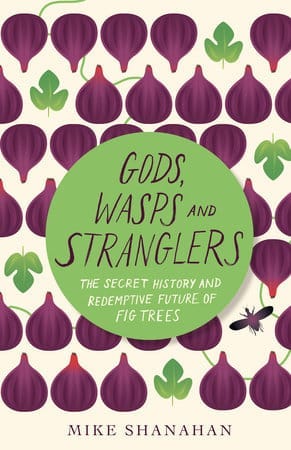
How do I know this? Because I just read Mike Shanahan’s marvelous book, Gods, Wasps, and Stranglers: The Secret History and Redemptive Future of Fig Trees. What seems at first glance to be a niche book about a niche bunch of trees turns out to be a remarkable and eye-opening narrative about the shape of the natural world and our place within it.
If life on Earth were a drama - which of course it is - fig trees would be a complex, secretive, and essential central character. Shanahan lays out in a set of fun, concise, and fascinating chapters what makes fig trees so vital. In short, they feed the world of tropical forests, which in turn sustain the world; they have fed humanity in ways so important that they still resonate today; their sex life is both secretive and their secret power; and as a keystone genus they are proving to be essential to the restoration of tropical forests we’ve decimated.
Let’s start with their sex life. In one of my favorite chapters, “Sex & Violence in the Hanging Gardens,” we follow the astonishing journey of a female fig-wasp, “so small you could swallow her and never notice,” as she illustrates the even more astonishing reproductive strategies of the figs. I don’t want to spoil too much of the story here, but suffice it to say that, despite being woven into human history since the beginning, for millennia no one knew how fig trees reproduced. Only in recent centuries did we understand that fig flowers hide inside the growing fruit, that many fig species have evolved over 80 million years an extraordinarily complex and resilient relationships with microscopic wasps (each often relying solely on the other for their existence), that those wasps can travel up to 160 km (100 miles) in search of other ripe fruit, and that what happens within the darkness of that flower-filled fruit is as strange and awe-inspiring as anything in nature.
The result, as Shanahan explains, is both ancient and ongoing:
Right now, as you read these words, fresh dramas are playing out at fig trees across the tropics and subtropics, just as they have done every day for tens of millions of years. At some trees, fig-wasps are emerging from their figs and setting out on their bizarre and fatal journeys. At other trees, fig-wasps are arriving, bearing pollen and eggs. Without these ancient odysseys, the world would be entirely different. For from the wings of tiny fig-wasps hang the fates of hundreds of bird and mammal species, and perhaps even entire rainforests.
The Pop-Up Restaurants of the Rainforest
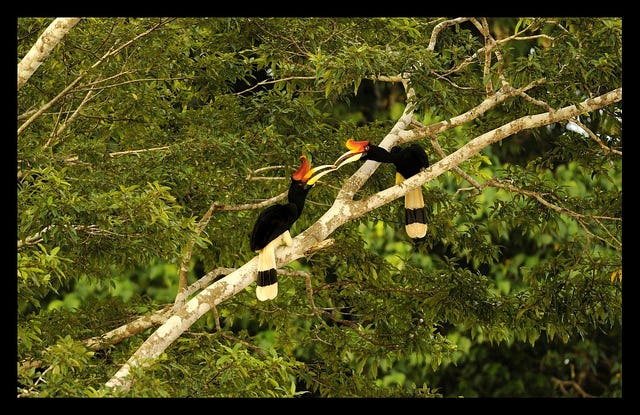
Fig trees and their wasps, Shanahan says, “appear to be disproportionately important cogs in the clockwork of life.” In tropical forests, the fig tree species feed at least 1274 species of birds and mammals, more than any other fruit. In that vast forested clockwork network, those 1274 species sustained by figs go on to also disperse the seeds of thousands of other species. With that in mind, it’s hard to imagine tropical forests thriving without the fig trees.
In part, this success is due to the crazy diversity of the Ficus genus, whose 880 species (and counting) range from the massive banyan and strangler figs which become forest icons to spindly innocuous trees and small epiphytic plants who never touch the ground. It’s common for tropical forests around the world to have more Ficus species than species of any other genus of plants.
Most importantly, though, fig trees are incredibly reliable and prolific sources of food. Thanks to their obligate and resilient relationships with the fig-wasps, fig trees are able to provide a year-round supply of food to birds and mammals, with some species fruiting two or three times per year.
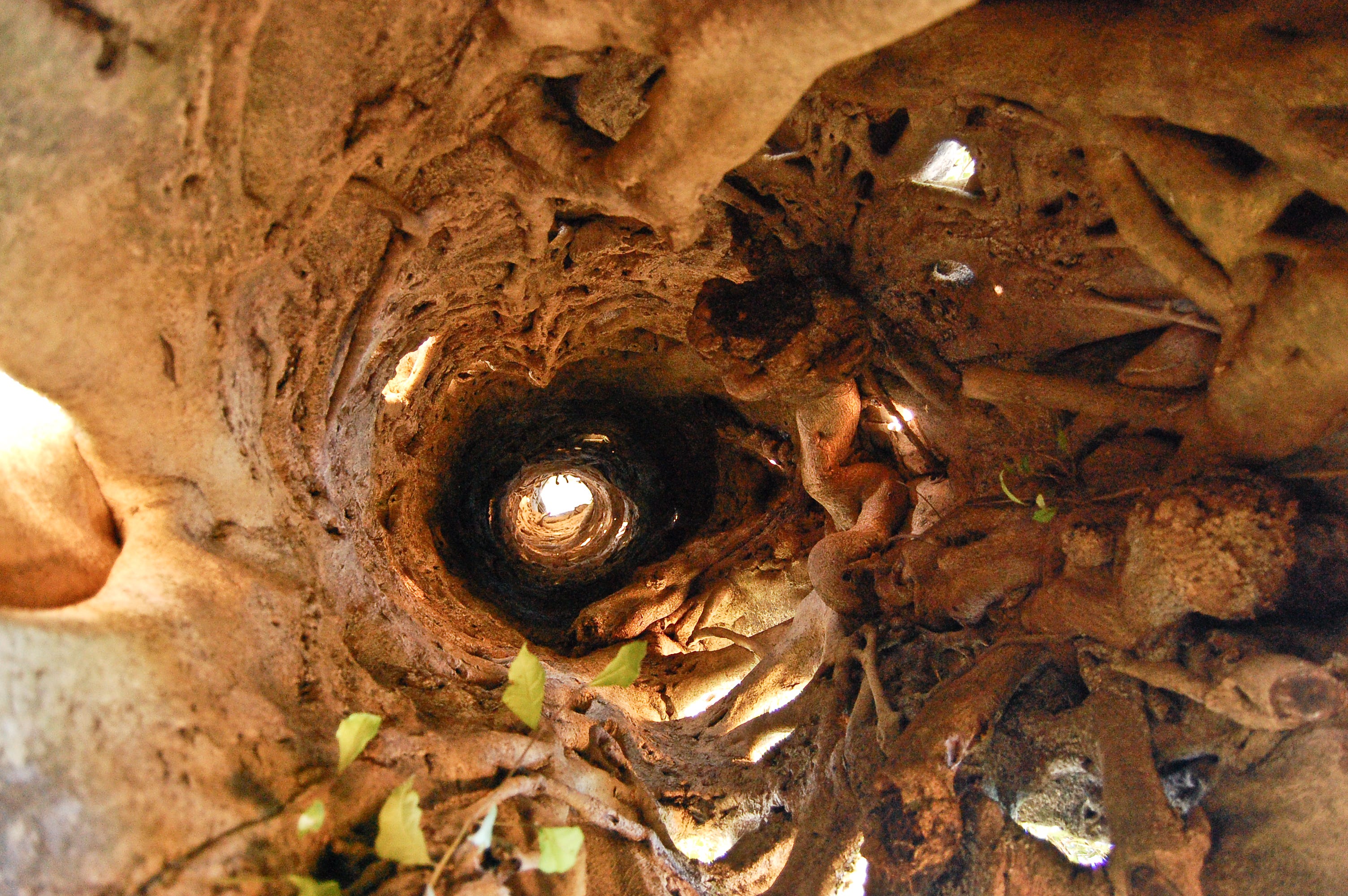
Strangler figs, known primarily for the way they vine around and then eventually smother their host trees while becoming hollow lace-like giants of the forest, are “the pop-up restaurants of the rainforest,” as Shanahan has written:
They feed fruit bats, primates and dozens of bird species. The stranglers operate on a boom-and-bust basis. They ripen as many as a million figs in just a few days and trigger a feeding frenzy that falls quiet as quickly as it begins.
If you have some time, enjoy this recording (by Vincent Chanter, in Sumatra) of wildlife gathered in a strangler fig during one of those feeding frenzies:

The Respect of Every Human Eye
It may have been strangler figs that inspired Alfred Russel Wallace to develop his theory of a “struggle for existence” in nature - contradicting church teachings and 19th century science - at the same time his friend Charles Darwin was assembling his theory of evolution. But this was by no means the first time figs had inspired human thought.
The tree under which the Buddha sat as he gained enlightenment? A species of strangler fig, now known as Ficus religiosa. The Tree of Knowledge of Good and Evil in the story of the garden of Eden? As Michelangelo painted the scene in the Sistine Chapel, it was most likely a fig tree. Across the globe, from the Congo Basin and Kenya to India and Indonesia to Oceania and Amazonia, Ficus species figure into cultural stories of creation and faith. Shanahan dedicates pages to the incredible array and depth of stories that demonstrate our ancient and universal interdependence on fig trees.
Fig trees were central to the earliest civilizations - from the Harappan and Vedic cultures to the ancient Greeks - and are intricately laced through the history of Hinduism and Buddhism. The myth of the founding of Rome includes Romulus and Remus saved from drowning by clinging to fig tree roots. The stories are as endless as the variations of human culture. What they all share is the desire to place the highest value on fig trees and, often, a warning against doing them harm. Still today, in places across Africa, India, and elsewhere, there is a taboo against cutting down fig trees.
Perhaps much of our ancient valuing of figs is utilitarian. Figs sustain us and the community of life around us. What could be more sacred than life supporting life? And yet, humans being humans, we seem to need more. We need ideas to sustain us too. We need to imagine something “greater”. And if you’re a top-heavy overthinking primate who depends on trees for your survival, the fig trees have long provided that intangible value: awe. Shanahan, who has spent much of his life studying and writing about fig trees, feels that awe himself. The book is the product of many years’ labor, a gift of his own awe so that we might experience some of it too:
Tropical forests are indeed awesome, and giant fig trees are among the most awesome things within them. Their power and fertility demand the attention and respect of every human eye that sees them.
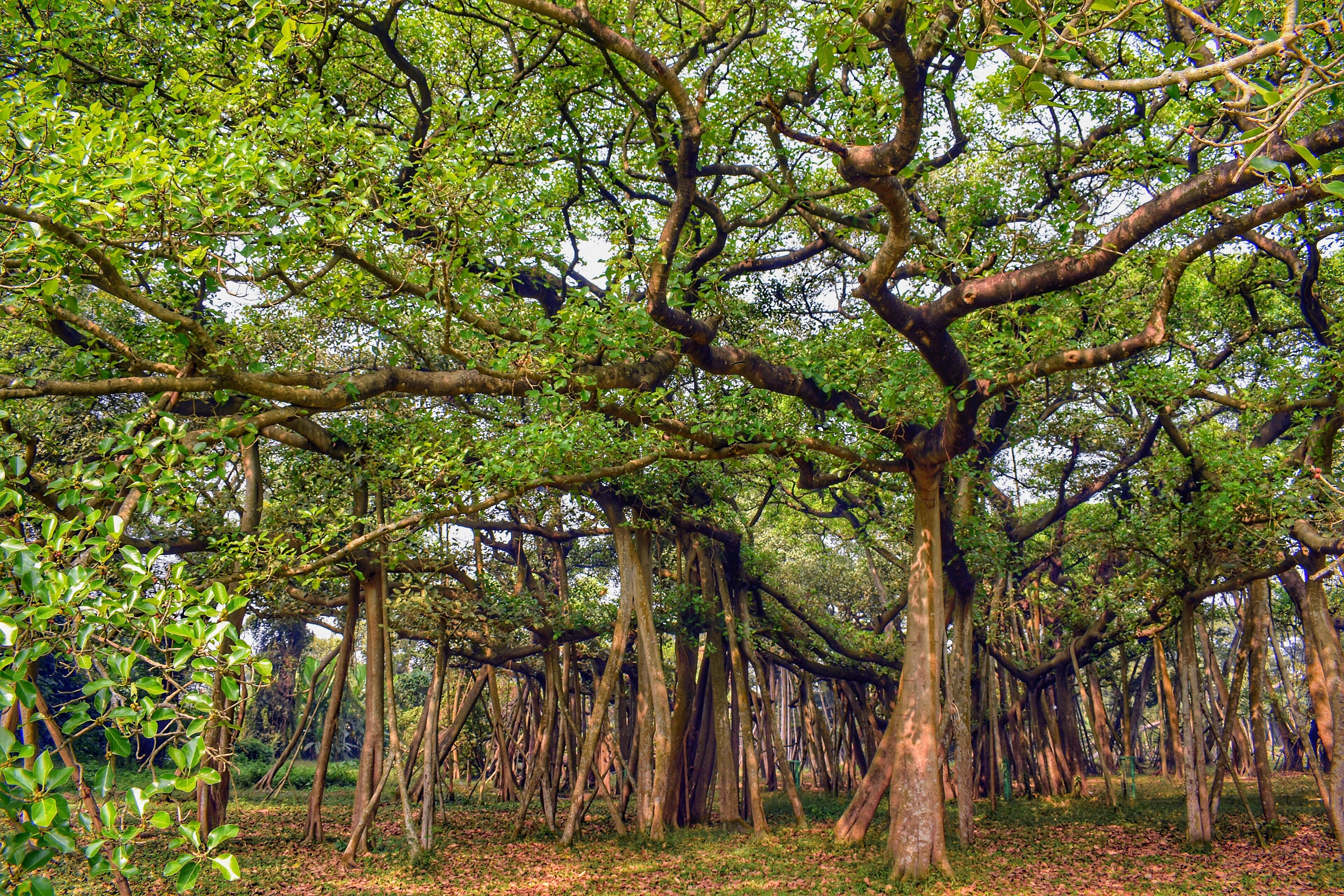
Perhaps no fig tree has captured our species’ aesthetic attention as much as banyans, Ficus benghalensis, the tree that can become a forest. Alexander the Great, after conquering much of the ancient world, stood amazed at the banyans in India. One of them could harbor ten thousand of his soldiers underneath it. A type of strangler fig, banyans grow first from a seed excreted into a nook of a branch on a host tree, then drop roots which reach the ground, harden and lace around the host, then eventually spread massive branches which each drop their own thin roots “like strands of unkempt hair,” which in turn take root and become woody trunks. “There is little,” Shanahan writes, “to stop a banyan spreading”:
The biggest one on record is said to have begun life in 1434 at the spot where a woman called Thimmamma died when she threw herself onto her husband’s funeral pyre. That tree, in Andhra Pradesh, now covers two hectares. Twenty thousand people can shelter beneath its crown.

Key and Keystone
Of course we now live in an urbanized, industrialized world that largely ignores the fig trees. Massive deforestation of tropical rainforests has damaged the clockwork and a warming climate may make the difficult journeys of tiny fig-wasps even harder. Without fig-wasps, figs do not ripen. Without ripe figs, the forest community diminishes. Without fig trees, tropical forests lose their keystone.
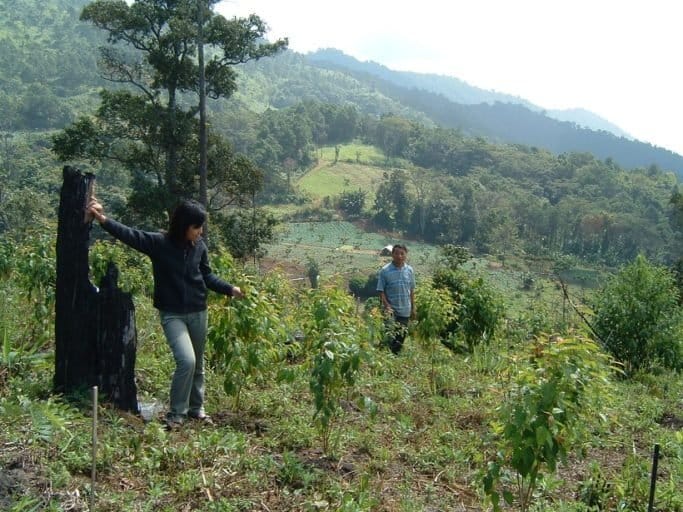
The good news is that fig trees are proving to be key to our efforts to help tropical forests recover. As a keystone species - what Shanahan calls their “ecological superpowers that allow them to have an outsized effect on their tropical forest ecosystems” - fig trees remain a magnet for all those mammals and birds who thrive on ripe figs. Again and again, from Thailand to Borneo to Australia to Costa Rica to Rwanda, efforts to plant fig trees in what was once beautiful forest - now degraded farmland or the margins of oil palm plantations - pay off better than the planting of other species.
Fig trees are ideal for encouraging the recovery of tropical forests for a few reasons:
First, they have phenomenal roots, which grow fast and can even tear rocks apart. “They can find water in the dry season when other tree species can’t,” says Elliott… “Fig trees find so much water with their fantastic roots that they are evergreen when all around them… trees have shed their leaves.”… Second, Ficus species grow very fast and their thick green leaves cast a dense shadow and shade out grasses and climbers. Third, fig trees are magnets for biodiversity, attracting animals that disperse the seeds of many other species, including of course more fig trees.
It turns out that if you plant a fig tree in a field next to a forest, the forest will come to the fig tree. Birds, bats, and other mammals will visit the tree to eat, and poop out the seeds of other trees and plants. In a matter of a few years, dozens of trees will be growing around the fig tree, beginning the process of reestablishing the kind of complex native tropical forest that for many years now we have been afraid could never come back.
Shanahan highlights the work of FORRU, the Forest Restoration Research Unit from Chiang Mai University in Thailand, which has pioneered much of this restoration work. FORRU has been so successful that they’ve been advising similar projects around the globe, providing some hope that if the political and cultural will exists to repair our damage to the tropical forests that underpin much of Earth’s climate and biodiversity, we know how to get it done.
As early as 2008, FORRU was spreading the word - like Wallace and Darwin contradicting the science of the day - that tropical forests could be restored. They wrote that FORRU
rejects the adage, adopted by many conservation organisations, that ‘tropical forests, once destroyed, are lost forever’. The unit bases its work on the more optimistic view that it is possible to transform largely deforested landscapes into lush tropical forests in a few years.
The Living Bridge
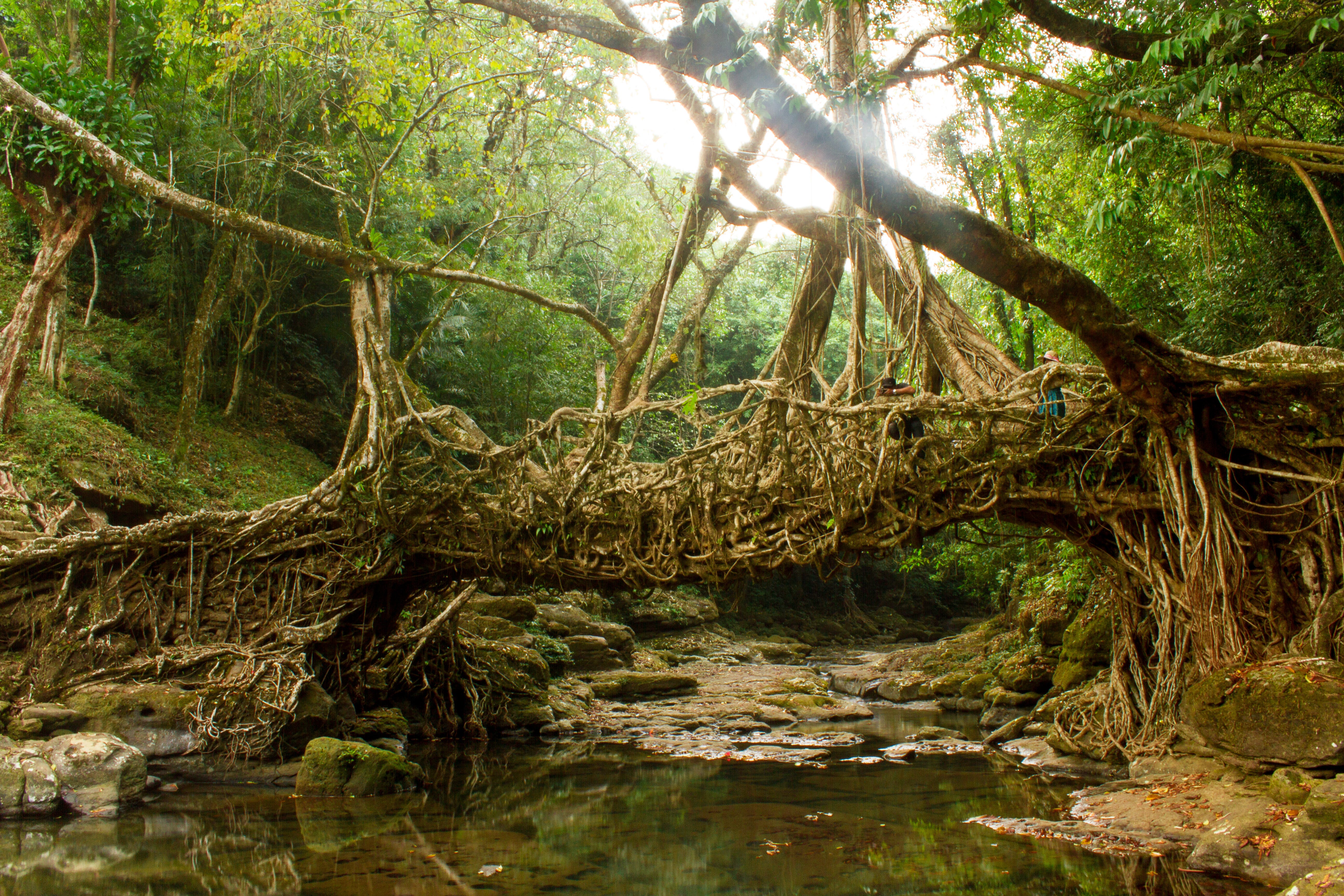
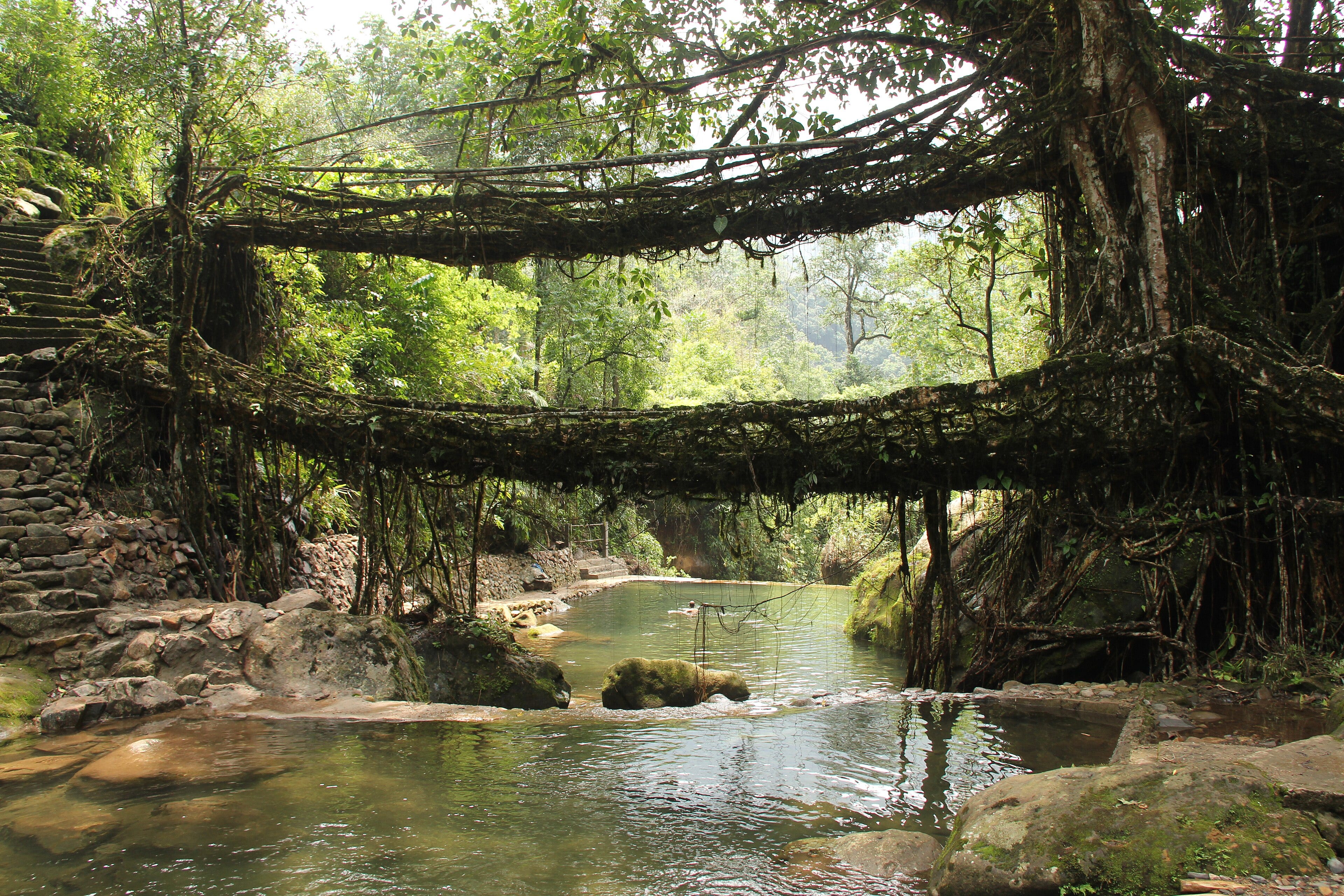
I’ll close with a really fascinating detail of the human-fig tree relationship that Gods, Wasps, and Stranglers doesn’t really get into, but which I think is symbolic of the role fig trees have played in ecology and human history. I’m referring to the “living bridges” of Northeast India, woven by villagers from Ficus elastica roots to cross rivers that become impassably flooded in the rainy season. The tradition is more ancient than anyone can remember. Once established, these bridges can last for centuries, only growing stronger as the trees grow more sturdy and generations of locals tend to the bridge’s health.
The process begins with people planting a pair of Ficus elastica trees of either side of the gap to be bridged. After a few years of growth, the trees’ first aerial roots are stretched toward each other until connected. (Often, a temporary bridge of bamboo or other material is built to aid in the process.) Over time, more roots are stretched and combined, each one growing in thickness and density as the walkway and handrails begin to take form. Eventually the bridge becomes usable, and is then maintained indefinitely, with new aerial roots incorporated and shaped to the bridge’s purpose.
It’s that image, of people and fig trees serving each other, that I love about these bridges. And, to be honest, they’re simply amazing to look at.
I’ve provided images of living bridges at the top and bottom of this page. You should also see the NPR article, “Living Tree Bridges in a Land of Clouds,” by photographer Prasenjeet Yadav, who beautifully documents these incredible structures. He makes a point that I’ll close with:
What's more, the root bridges don't just support humans who cross over them. Studies suggest that a single F. elastica tree can potentially support up to a few hundred living species — birds, insects, sometimes mammals and vegetation like moss. The trees themselves are ecosystems, constantly interacting with their living and nonliving surroundings.
The trees themselves are ecosystems… While this is true of all trees, I think it’s worth taking a moment, in our mostly fig-less lives, to contemplate this history of the fig-human relationship we’ve forgotten and this natural history of fig trees we dismiss at our peril.
After all, if we’re not tending to our living bridges, then how will we get to where we need to go?

Finally, if you’re intrigued by Gods, Wasps, and Stranglers, you should also check out Mike Shanahan’s Planet Ficus here on Substack. It’s chock full of stories from the book and beyond, including new Ficus-related science and cultural tales from around the world.
Thanks for sticking with me.
In other Anthropocene news:
From Nautilus, “What Makes Humans Stupid,” a brilliant, funny, and insightful essay that insists that we take the study of stupidity seriously, because it’s a hallmark (or “evil twin”) of human intelligence and because, in our absurd construction of AIs that will do our thinking for us, “We face the prospect of a stupidity so sophisticated that it becomes indistinguishable, to its beneficiaries, from intelligence.” Though the essay doesn’t really touch on the usual themes here in the Field Guide, it’s clear to me that the kind of civilizational stupidity he addresses here apply to the mistakes we continue to make that are changing the fate of life on Earth:
One might say that stupidity implies a capacity for getting things right before it can get them spectacularly wrong. Stupidity is not the opposite of intelligence but its evil twin, the dissimulating Cain to a cerebral Abel. And perhaps surprisingly, the degree of stupidity available to any system scales directly with the intelligence that system possesses—more intelligence begets greater feats of stupidity. It would be a stretch to call a bacterium stupid, and we know that cats and dogs achieve modest feats of it. But human beings, equipped with language, abstraction, technology, institutions, and ideology, can be stupid on a truly civilizational scale. This is not a joke; it is close to a law of nature. A law that might very well be our undoing.
From Maria Popova and The Marginalian, “The Souls of Animals,” another of Popova’s astonishing essays which is both book review and lyrical adventure in philosophy and poetry. She looks back at the 1991 book The Souls of Animals by Gary Kowalski and, as she always does, weaves a tale both from the book and from a myriad of other beautiful sources - from May Sarton to Henry Beston - to sing a life-affirming song about this difficult world. There’s far too much for me to summarize here, so I’ll just offer a couple of quotes from Kowalski, who writes exquisitely about animals, our relationship with them, and how humans (which he calls “the perpetual neonates of the animal world”) must grow outward and forward:
If we are to keep our family homestead — third stone from the sun — safe for coming generations, we must awaken to a new respect for the family of life.
We are kin to, and must be kind to, all creation. Overcoming speciesism — the illusion of human superiority — will be the next step in our moral and spiritual evolution.
Another great post of positive Anthropocene news from around the globe by Sam Matey-Coste at The Weekly Anthropocene. This week’s post includes conservation and clean tech news from China, Bolivia, Switzerland, Morocco, and more, including stories on solar panels between Swiss train tracks, a healthier and more biodiverse Yangtze River, and carbon-neutral skyscrapers built in Canada by the Squamish Nation. If you haven’t subscribed to Sam’s work, you should.
From More Than Just Parks, the Forest Service has a new proposal to “shrink the public’s right to comment on the rulebooks that govern grazing, logging, and permits across the national forests.” The post lays out the latest terrible effort by the Trump administration to sell off and degrade public lands and reduce public involvement. But the authors provide a template for making a comment to the Forest Service during the public comment period, which ends on July 31. Please read the post and make your opposition known. Here’s their final pitch:
Here’s what to do about it. The comment window is open now, and this is the rare fight where a single comment carries real weight, because the agency has to read and respond to substantive comments on the record. Read the proposal and file your comment through the Federal Register page. Then use the draft below as a starting point.
My daughter is now 30. She moved to the Yukon to get close to it all. I'm writing a book with a working title "Humans are Stupid". It will probably end up something closer to: "How To Fix Everything". She and I were discussing some of the content. She offered: "The Anthropocene was a great party, but everyone just wants to go home now."
Marvelous, thank you! As I read your notes on the book, I thought of that NPR photo essay, so I’m glad you linked to it. The world is indeed full of wonders. I love those bridges as an example of a beneficial relationship between people and trees. One of countless others if we only notice.