
Empathy is Not the Enemy
2/19/26 - Ten thoughts, part one

Hello everyone:
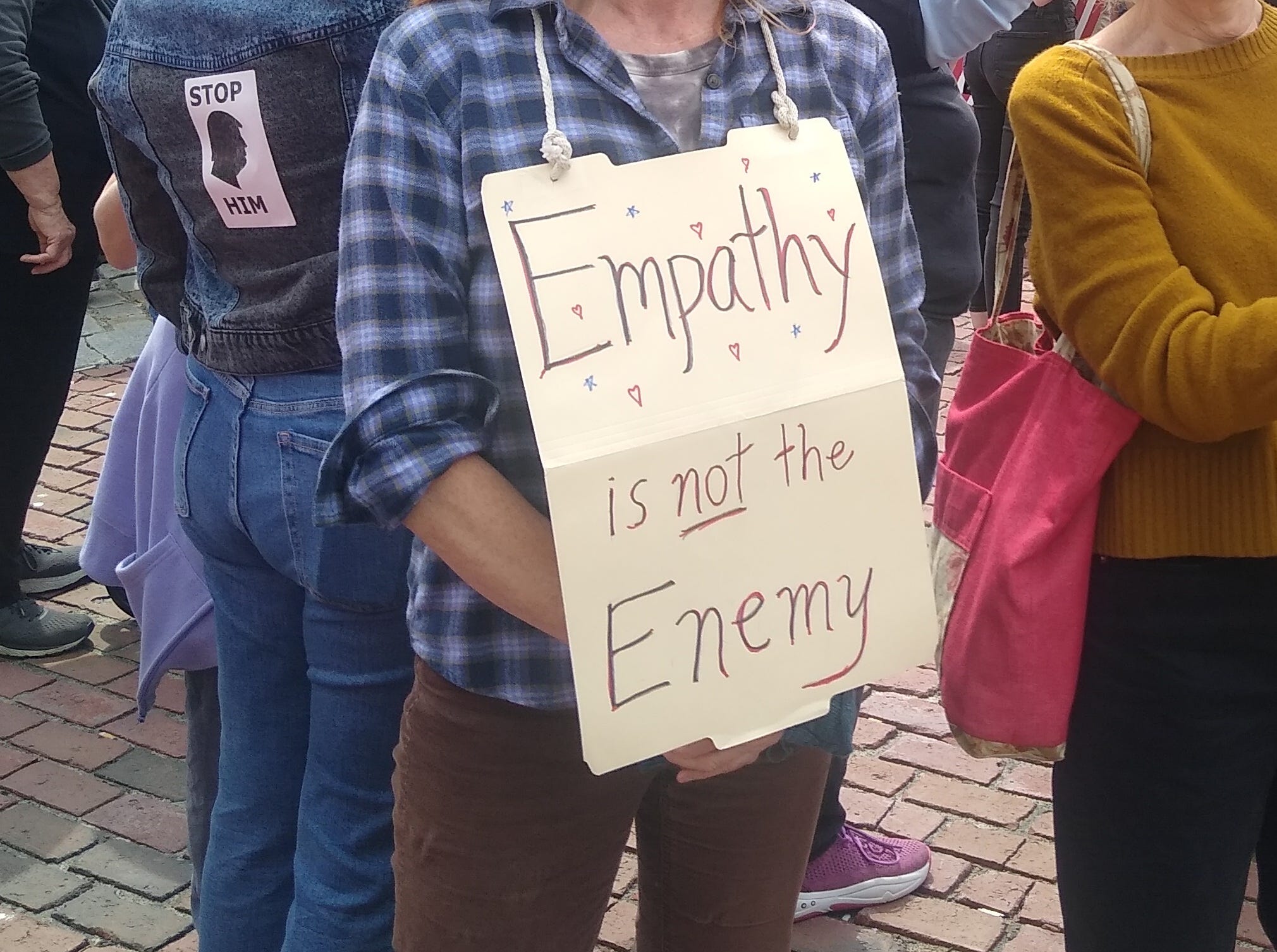
This week’s title and topic are taken directly from the sign Heather (my much better half) made for anti-fascism (anti-administration) rallies we attended this past year here in the U.S.. It’s a perfect message for these imperfect times, and I thought I’d explore it with you.
The essay, composed in ten sections, runs a bit long. So I’ll offer half this week and half next week. I have mixed feelings about breaking the writing in half, but am hoping that a prolonged essay is better than an unread (too-long) one. Let me know.
As always, please remember to scroll past the end of the essay to read some curated Anthropocene news.
Now on to this week’s writing:
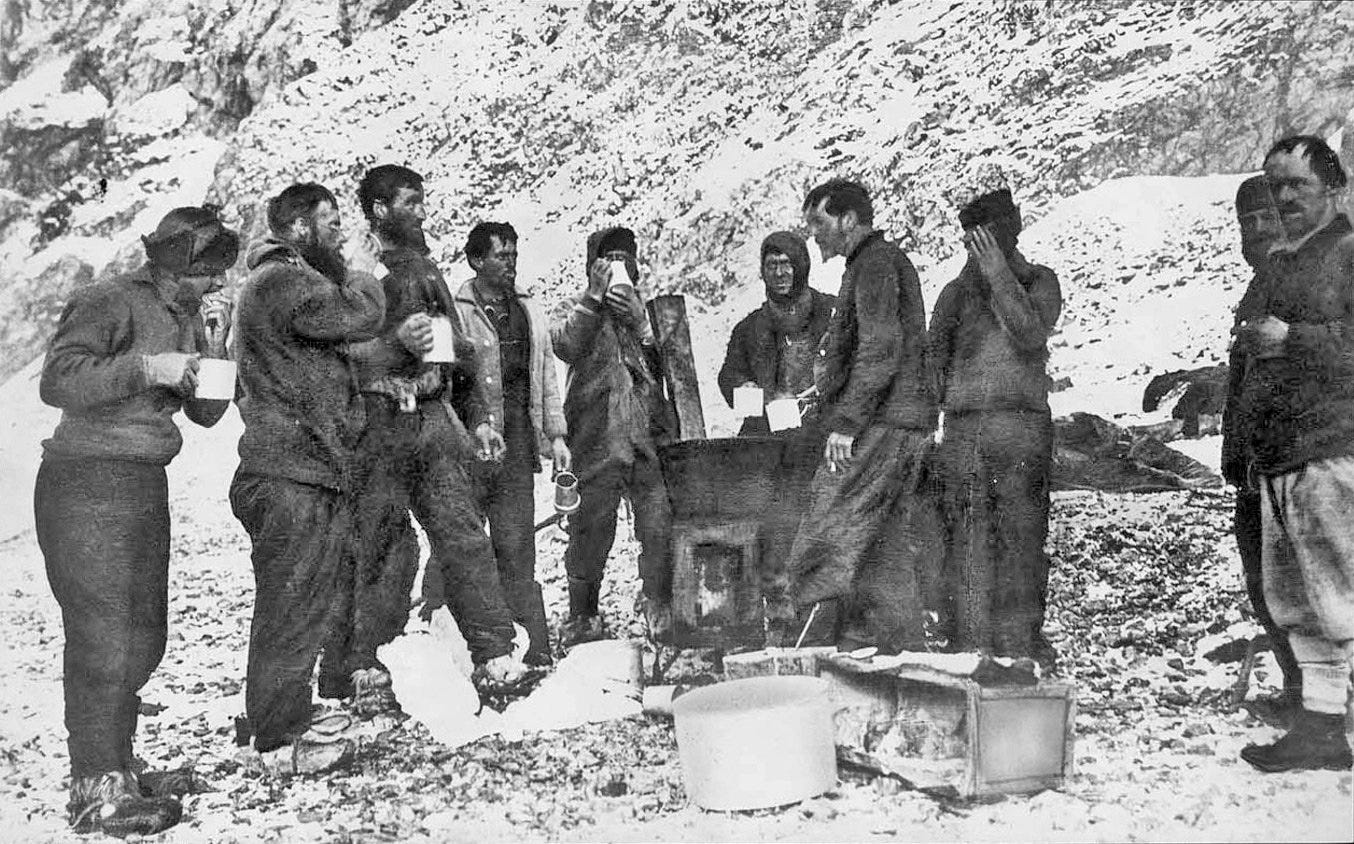
Ten months after their ship was crushed in the ice of the Weddell Sea, the 28 men of the 1914 Endurance expedition were, against all odds, rescued from what should have been their Antarctic gravesite. For the first five months, they had been camped out on slushy, shifting sea ice with little food and even less hope of seeing home again. Then, after several brutal days packed into small boats amid ice and storm, they found a barren and stony isle, where 22 of the men remained, hungry and sleeping amid the greasy smoke of burnt penguin fat under overturned boats.
Ernest Shackleton, expedition leader, took five men on an 800-mile impossible small boat journey through the world’s wildest seas. They passed like crumbs through the jaws of death again and again, arriving finally as unrecognizable souls at a whaling station, where the effort to rescue the others began. Shackleton’s hair turned gray while he worried about his men for the next three months, as attempt after attempt to reach them failed.
Throughout, Frank Worsley noted, the boss had “kept a mental finger on each man’s pulse” and tending to his needs without drawing attention to them. Meanwhile, on the isle, Frank Wild woke the men each morning, rolled up his moldy sleeping bag, and said, “Get your things ready boys, the boss may come today.” He kept them busy hunting for seals, penguins, and limpets, and kept their thoughts - month after month - on the hope of rescue. He would not abide open fear or melancholy. And it made a difference.
I and others have written about this tale as a saga of extraordinary leadership and heroism. But perhaps it’s better understood as the genius of empathy.
You might say Shackleton’s care and Wild’s good cheer was duty and obligation, but are those not formal terms for empathy in tightly regulated society? You might claim that empathy had little place among rough, hard-bitten men amid tragedy and starvation, but I can tell you from my reading of every Antarctic survival story that empathy was essential to that survival. Those who survived intact had sung songs together, composed mock ballads about each other, argued good-naturedly for hours about menus for fantasized feasts, and celebrated long-awaited birthdays with treats - a few remaining raisins, a slab of seal blubber - in a spirit of the truest comradery.
It cannot be said enough: Empathy is the door to a meaningful life and, in times of trouble, the key to our survival. As rebecca hooper in between two seas wrote recently, in another tragic and beautiful shipwreck tale, empathy is how we save each other and ourselves:
there is so much struggle and pain in this world but there is also so much light—so many ways to find light, and to give it, too. Saving what we can save, helping where we can help, fixing what we can fix, doing what we can do—no more, no less.
That is all we can do, and that is enough.
It feels to me, as we watch (and inhabit) the ship of civilization struggling to avoid a lee shore, that we are counting down toward one of two fates: a world that centers itself on empathy, or one that justifies its erasures until erasure comes for us. It’s an ancient tension in human affairs - mutualism vs. parasitism, more or less - but on a new scale.
This essay is one way of imagining that tension and the countdown.
Nine words: The ability to feel what someone else is feeling. Empathy is fundamental to compassion in all its forms, whether intimate care for another, community care for your neighbors, or cross-species care for animals and the landscapes of home.
Empathy is innate, but not a given. It’s clouded, or even killed, by fear. And that’s what I think underlies the bubbling cauldron of conservative rallying cries against “toxic empathy” and “suicidal empathy.” There is, in these weird cries, a desperate attempt to explain away support for policies they fear and loathe - humane immigration programs, racial justice, criminal justice reform, the right to abortion, sexual and gender freedom, climate action, environmental protection, and now even voting rights and the rule of law - as delusions brought on by excessive empathy.
And yes, like fear, empathy can be stimulated by telling ourselves (or, more likely, being told) the wrong story. Neither are inherently logical or blind. Both are, when aptly applied, forms of rationality based on a million years of human evolution. And both can be irrational: The abused can be convinced to feel empathy for their abusers, and abusers often convince themselves to fear those they abuse.
But they differ in their capacity to contain the other. Empathy makes room for fear and tries to allay it. Fear, though, sees empathy as just another threat.
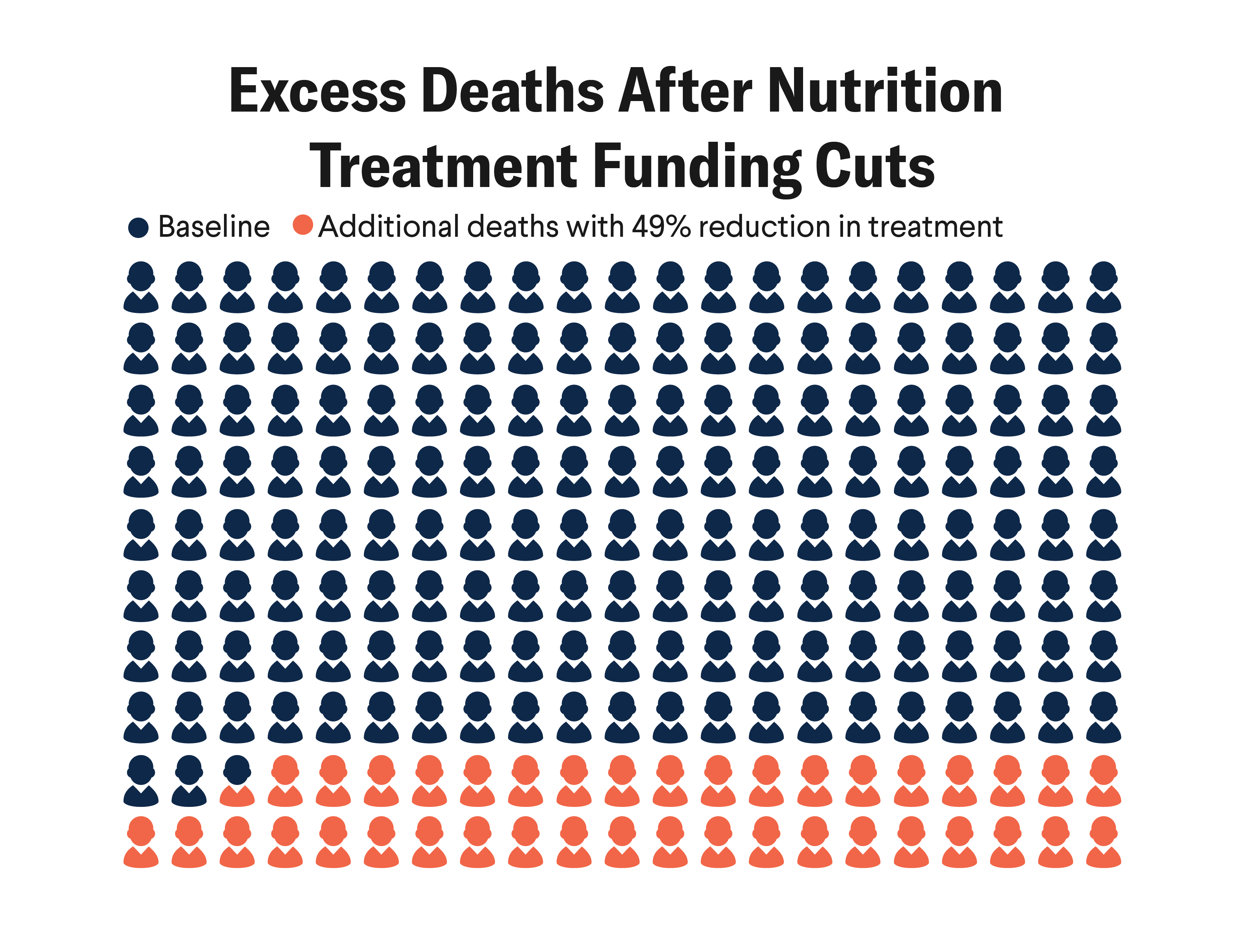
Eighty eight people die unnecessarily per hour, per this report, and nearly 820,000 have died already, specifically because funding for USAID was erased last year. Children account for two thirds of those deaths, more than 550,000 so far. The funds were for programs that fought mortality from malaria, HIV, tuberculosis, malnutrition, diarrhea, pneumonia, and other diseases. USAID saved an estimated 92 million lives in recent decades, but no longer.
That’s the calculus behind the white/Christian nationalist cadre running the U.S. government and who are, at the same time, complaining that empathy is toxic and unnatural.
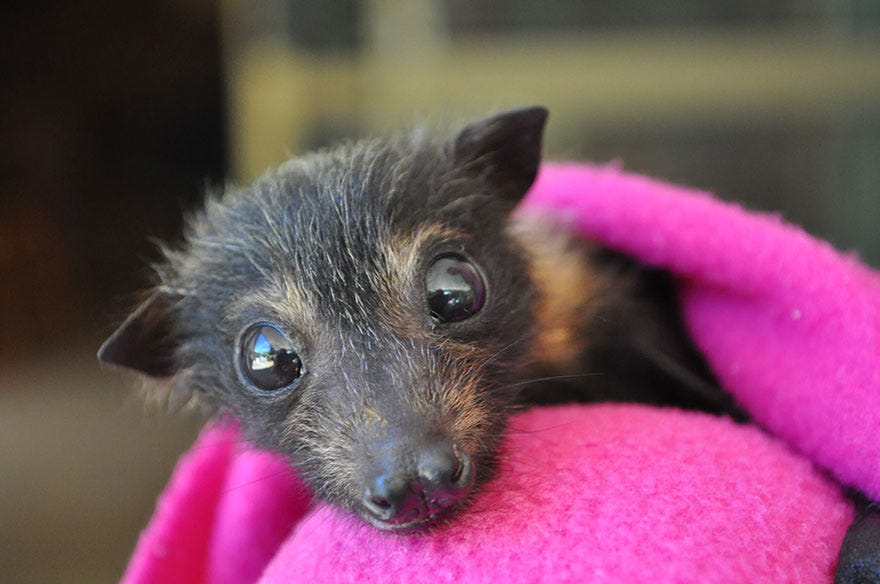
Seven kilometers outside of Atherton, Australia, is the Tolga Bat Hospital. Like wildlife rescue and rehabilitation centers everywhere, Tolga does astonishing and wonderful work every day with too little money and too little attention. (Wildlife rescue facilities, I think, should be as central to our communities as veterinary offices, schools, and libraries.) In Tolga’s case, they’re the only bat hospital in Australia, and its one paid employee and platoon of volunteers handle a thousand or so bats per year. Many are very young spectacled flying foxes, orphaned when their mothers fall victim to a tick-borne disease that causes paralysis. Other young and adults arrive suffering from heat stress, disease, and injuries from barbed wire.
Read a new Vox article from Benji Jones to see the “unbearably cute patients” in bubble baths and being bottle-fed. Read it also to be reminded of what empathy really is. Jones interviews Jenny Mclean, Tolga’s founder and director:
“You meet a bat, and they’re worth caring about,” Mclean, 71, told me that afternoon, as she fed a sick adult bat fruit juice from a syringe. “They have serious threats that they’re facing, all of them human-induced.”
Mclean, who works around the clock at the hospital and doesn’t pay herself, said she feels a responsibility to help these creatures — not only because they’re suffering at our expense but because they help keep our planet healthy. Flying foxes are exceptionally good at pollinating plants and dispersing their seeds, Mclean said.
Giving back to these animals in some way, she said, is the least we can do.
The small raptor hospital in a poor New Delhi neighborhood, or the turtle rescue center in a Boston basement, and the numerous bird rescue/rehab centers around the globe (like Avian Haven here in Maine) are run by people like Mclean who are empathy pioneers, widening the circle of empathy so that the rest of us can move cautiously forward into the light of kindness.
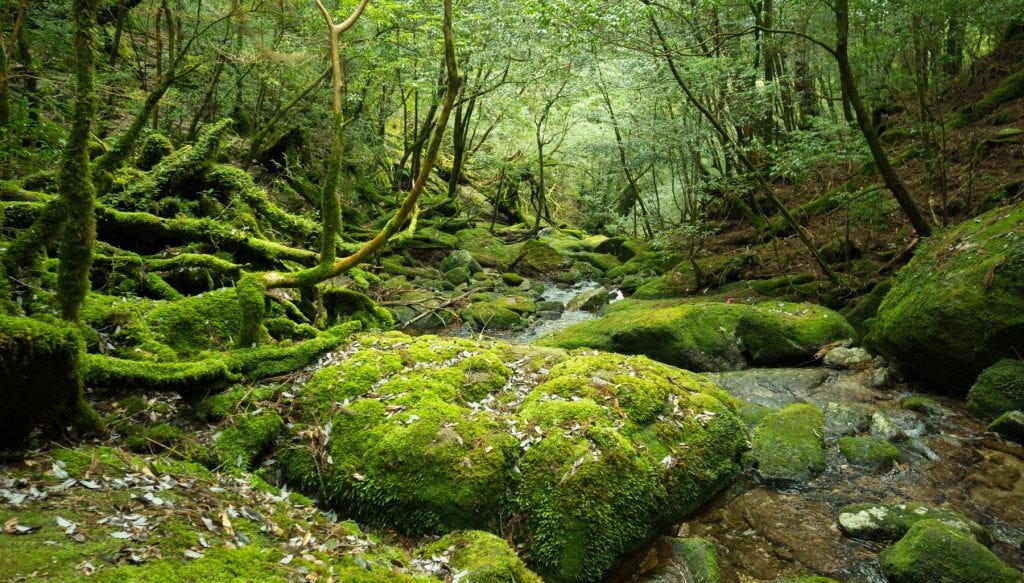
Six pounds or six ounces? An earlier estimate, still popular, suggested one to six pounds, but newer analysis suggests no more than half a pound. Either way, the microbes that make up much of our body would fill a sizeable container. And, in leaving our body, would unmake us as they themselves would die without the warm embrace of our organs. Humans are not individuals but community, within and without, from the invisibly microbial to the landscape-scale ecological.
Failure to embed that truth in both our workday and spiritual imaginations will unmake us too, as famed biologist Roger Payne wrote in his final essay for Time:
there’s one discovery so consequential that unless we respond to it, it may kill us all, graveyard dead. It is this: every species, including humans, depends on a suite of other species to keep the world habitable for it, and each of those species depends in turn on an overlapping but somewhat different suite of species to keep their niche livable for them.
Our empathy, which is innate but in need of constant activation, must evolve outward and outward and inward. Robin Wall Kimmerer reminds us of this in “Becoming Earth,” in Emergence, while describing the ecological intimacy when we lie down in a luxurious bed of moss:
Chlorophyll beckons with lovers’ embrace and my carbon dioxide falls into its arms, woman becoming moss. At the very same moment, the leaf’s green sigh of oxygen goes straight to my blood. Red answers green in the dance of chlorophyll and hemoglobin. Plant breath becomes animal breath, animal becomes plant, plant becomes fungus, fungus becomes plant, mouth-to-mouth resuscitation that fulfills our deepest longing for union with the earth.
I’ll close this first half of the essay with a last-minute addition, thanks to Heather Cox Richardson and her February 18th post, in which she quotes Illinois governor J.B. Pritzker, whose State of the State address had something to say about empathy:
“I am begging my fellow politicians, my fellow Illinoisans, my fellow Americans to realize that right now in this country we are not fighting over policy or political party,” Pritzker said. “We are fighting over whether we are going to be a civilization rooted in empathy and kindness—or one rooted in cruelty and rage.”
See you next week with the other five sections of the writing.
Thanks for sticking with me.
In other Anthropocene news:
From Bill Davison and Easy by Nature, “Chiseling through ice,” another beautiful illustrated personal essay from Bill, this one on the resilience built when we stay close to the land and model ourselves on those lives (birds, trees, neighbors) who remember how to persist through the hard realities of winter.
From the Volts podcast, a very informative conversation about how alternative meats - whether plant-based or industrially cultured - may go a long way toward solving the extraordinary list of problems caused by the ever-growing consumption of meat by 8.3 billion humans:
Meat is responsible for roughly a fifth of climate change, the lion’s share of deforestation, 70% of our antibiotic use, and quite possibly the next pandemic — and consumption is going up every single year, with no end in sight.
From Margi Prideaux, PhD and Radically Local, “The Age of Abundance is Ending,” a stark message about the impending impacts of climate change on global agriculture - something the world’s major defense agencies are concerned about - and how we should be investing heavily in local sustainable farming and the relationships that come with it. “The real defence strategy,” she writes, “is soil and local growers who refuse to let their communities starve.”
From Hannah Ritchie and By the Numbers, “Does that use a lot of energy?”, a very useful interactive tool for assessing with some precision the amount of energy used by typical household devices. You can compare devices, and set parameters like the amount of time the device is in use.
From the Bulletin of the Atomic Scientists, a scientific quest to map and understand soil fungi in regions of the Earth where they have not been reduced by excessive fertilizer and tilling and the increasingly relentless heat of a hotter climate. Fungi, arguably the most important life forms for the future of global agriculture, are hardly on the to-do list for conservation groups.
From Bill McKibben and The Crucial Years, “An El Nino is Brewing,” and with it may come extraordinary change in both Earth’s living conditions and in the governance of societies dealing with the consequences.
Two from Phys.org: Deoxygenation of oceans and freshwater ecosystems has been identified as another planetary tipping point, and a more precise map of agricultural emissions around the globe will allow for more effective work in reducing those emissions.
From Yale e360, the complex problem of creating a healthy coexistence between chacma baboons and human residents of Capetown, South Africa. The city’s current plan is not settling the debate between those who want the baboons gone from their neighborhoods and those who insist the baboons have a right to live freely.
From Floodlight, Elon Musk’s massive gas-powered xAI supercomputers on the Mississippi-Tennessee border are flouting EPA and state regulations, and reducing air quality for nearby neighborhoods, by burning massive amounts of methane gas in “portable,” unpermitted turbines.
From Nature Briefs, an excellent overview of coral bleaching, with additional wisdom on the complexity of threats facing corals around the globe, especially as year after year the oceans continue to warm.
From Jonathan Tonkin and Predirections, “Bending the curve is possible”: A 10-year total fishing ban on the Yangtze River in China has, in a few years, resulted in notable improvements in a freshwater basin the size of Mexico devastated by habitat loss and overfishing. “Climate and biodiversity stories aren’t all doom and gloom — and here’s proof,” Tonkin writes. “After seven decades of ecological free-fall, the Yangtze River is showing its first signs of recovery.” It has come at a cost (230,000 fishermen and their boats relocated), and no one knows how resilient the recovery will be when fisheries eventually resume, but it is remarkable that such a large-scale recovery is possible.
Multi-layered and fascinating. Empathy: definitely a commodity we need more of in these times.
I'd never heard of toxic empathy: I am still not sure I completely understand the term, but I don't like the ring of it.
Well said. It's incrompehensible to me that people who call themselves Christians decry empathy as "toxic."