
Empire and Archipelago
7/2/26 - Another perspective on America's 250th

Hello everyone:
It may reveal something about my capacity for patriotism that I’m much more interested in watching the World Cup while cheering for whatever team catches my fancy than in thinking about the flag-draped parades of America’s semiquincentennial. This would be true even without the corruption, fascism, and Earth-killing ethos of the current administration, which is rife with what writer Barry Lopez, in Embrace Fearlessly the Burning World, called “the desecration of what is beautiful… the celebration of what is venal, and… the ethical obtuseness of the king’s adoring enablers.” (See below for more of Lopez’s wisdom.)
With the holiday and a wave of terrible Anthropocene heat falling upon too much of the Earth, though, I thought I’d offer a brief set of thoughts and quotations with which to ponder America and the land beneath it.
As always, please remember to scroll past the end of the essay to read some curated Anthropocene news.
Now on to this week’s writing:
America is a poem, said Walt Whitman, and we are singing it into being. Whitman, the founding poet of this nation, was in Leaves of Grass the first to give that poem voice. The nation has yet to live up to the fullness of his joy, vision, genius, and empathy, though we are still full of the sparks that lit his fire. You and I and others who love the Earth Walt loved are a few of those sparks.
In America he professed a faith that the nation is
Perennial with the Earth, with Freedom, Law and Love,
A grand, sane, towering, seated Mother,
Chair’d in the adamant of Time.
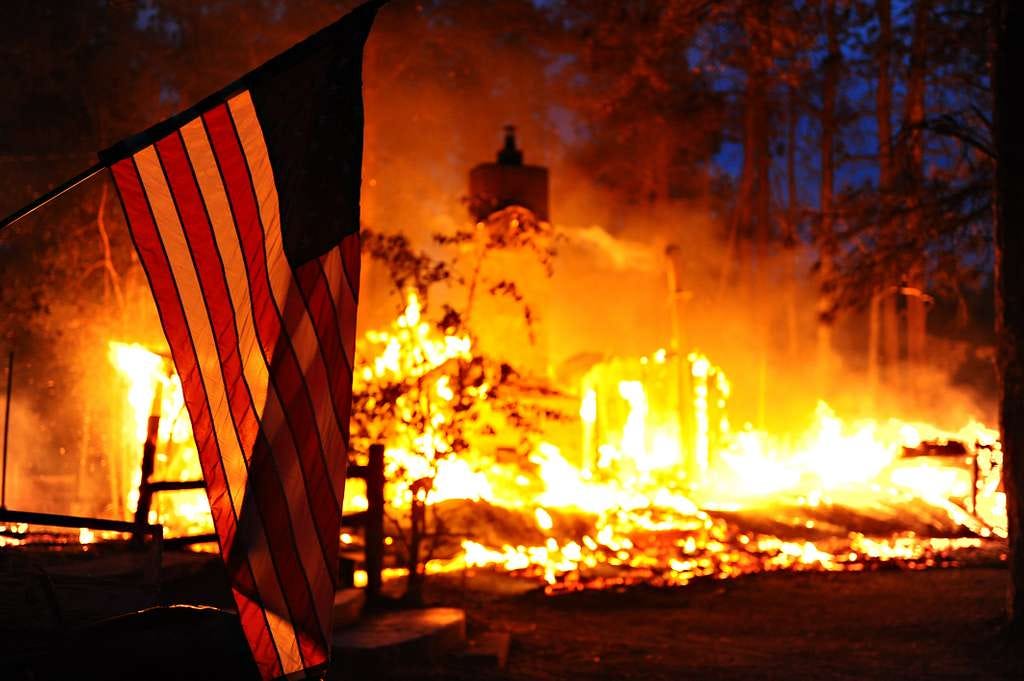
Certainly, in our self-soothing stories about this nation, we aspire to be a perennial and mature democracy. We wave the flag as if it were a beacon for the highest values of human freedom. And throughout our brief history, for millions of immigrants, we have been both beacon and comfort. Simultaneously, though, the blood of this American experiment harbors darker human impulses. There is the torch of Liberty, and there is the torch that burns homes.
As Whitman knew, America the beautiful is also a raw wound. The wound opened half a millennium ago with the desecration of the land and the peoples who were woven into it, and has been continually reopened by this European colonial culture whose political DNA still spirals around the urge to erase, segregate, and enslave.
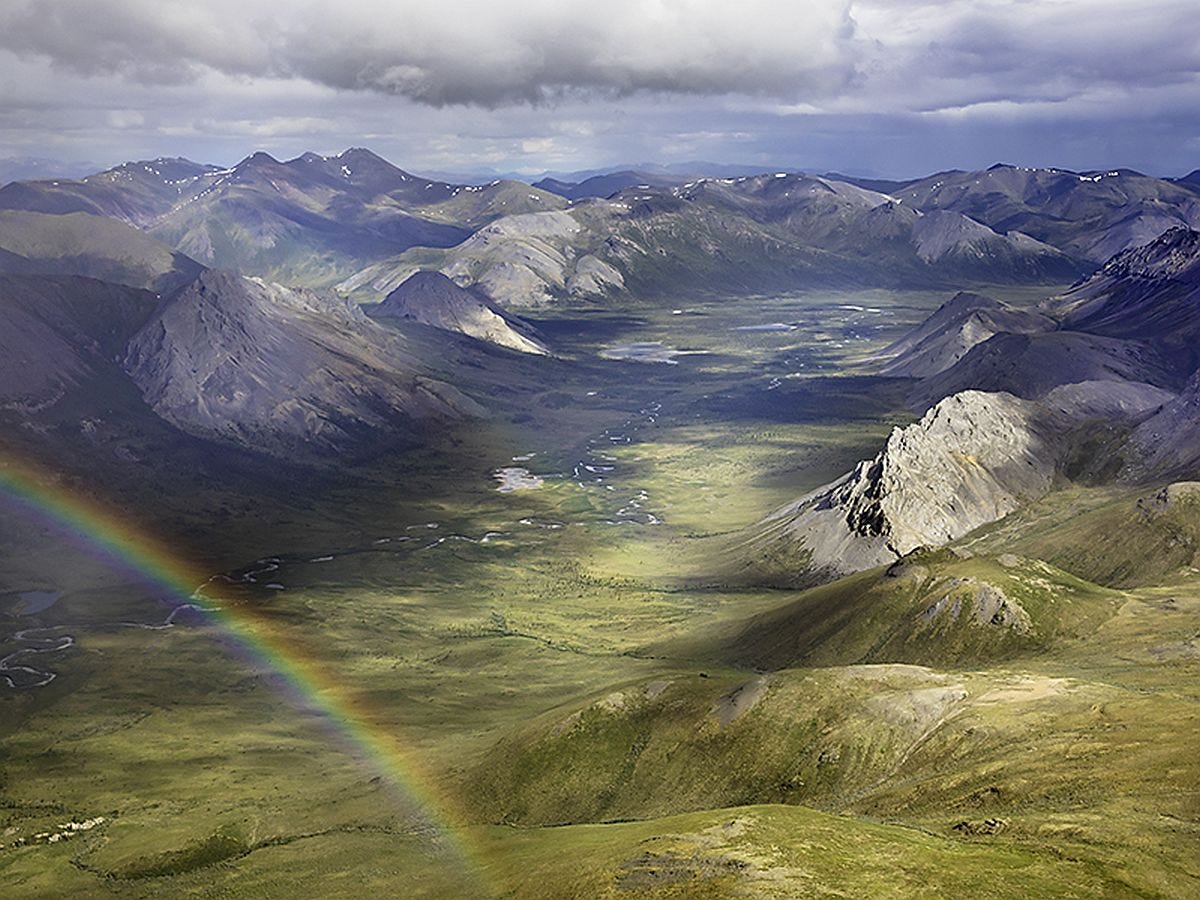
At the heart of the American poem is the land itself, as Barry Lopez reminded us. He speaks here of the open landscape of the Arctic, but I think it’s true everywhere the fabric of life is intact enough to remind us that we are not alone:
The land is like poetry: it is inexplicably coherent, it is transcendent in its meaning, and it has the power to elevate a consideration of human life.
But the land has too often been treated as merely the blank page upon which the American poem is being written, with forests felled and wetlands filled, while markets do to farmers what farmers have been forced to do to the land.
On paper, as on the land, America has always been both noble promise and dark stain. The 250th celebration honors the Declaration of Independence, which opens with one of history’s noblest policy statements - “We hold these truths to be self-evident, that all men are created equal…” - while noting in the fine print that “all men” does not include the “merciless Indian Savages” (or women, or non-white men, or white men without property). It’s a reminder that the word “independence” in America has always been as complicated as “equality” and “resources”.
On the bright side, there is a fun absurdity to the patriotic chants of “U! S! A!” and invocations of “God Bless America!” when we remember that the nation is named after Amerigo Vespucci, a 16th century Italian/Spanish explorer and navigator who never set foot here and who Ralph Waldo Emerson labeled a thief and “pickle dealer” who somehow got “half the world baptized with his dishonest name.”


America is an empire, and America is an archipelago. How many of us know the true extent of the nation? (Click on the maps above for the full picture.) The oceans are peppered with our political dependencies - from Puerto Rico to American Samoa - whose peoples have no vote, and the globe is littered with hundreds of our military bases. These islands and bases are nodes of control in the empire, though many are neglected or forgotten in the story America tells itself.
America has been the empire of extraction driving much of the transformation of conditions for life on Earth. At home and abroad, we keep scribbling out line after line of the ambivalent poem of American promise, written first with quills and enslaved fingers, then coal dust and oily ink, and now with code and AI hallucinations, always in search of unnecessary levels of land-killing profit that sacrifices the ideals of the society that made the fierce profit-seeking possible.
The impacts are global, as we export our unfair labor and habitat loss to those wilds and peoples who serve the empire more than they are served by it. All people may be created equal, but America keeps failing to treat everyone equally.
Nature in America is a remnant archipelago of protected lands loved deeply by us but not deeply enough. All of life here is diminished, despite a near-universal desire among us to live amid a healthy blue-green world. As Barry Lopez suggested, to transcend ourselves and write a better American poem, we must make the land coherent and whole again. We must elevate ourselves to the status of good stewards of the gift that surrounds us. Eventually, a good America must flip the map, and become an archipelago of societies within a sea of life.
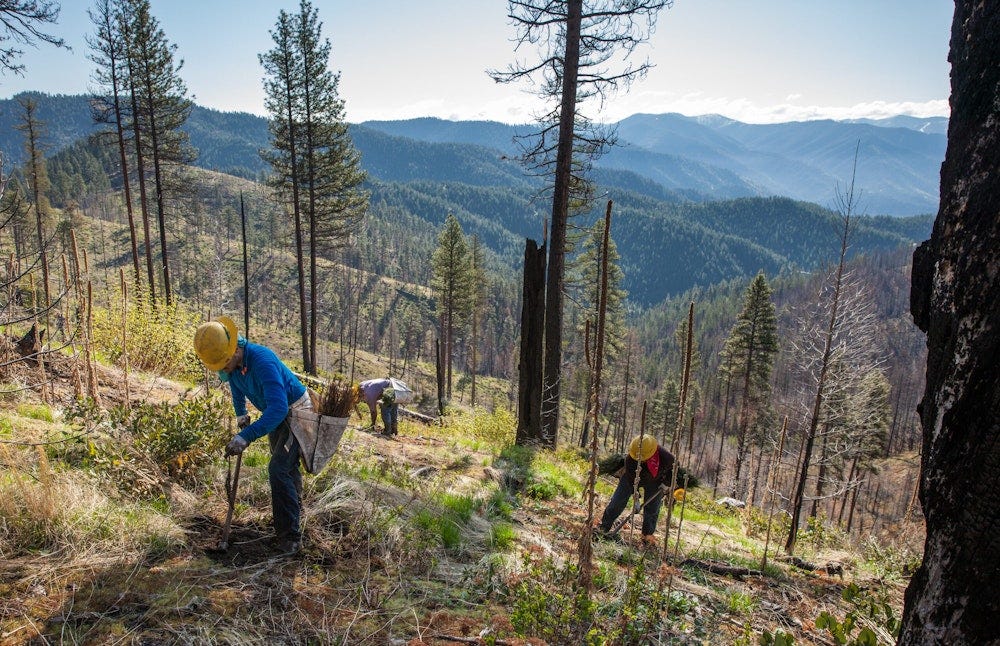
Caring for the land is perhaps the most patriotic act. We must devise a democracy that is more consistently a project of empathy in action, in support of both the rights of nature and the self-evident rights of our human neighbors, all while staunchly defending such empathy against the fascist alliance of industrial profit-seeking and racist politics.
Despite his own racist politics and bias against Native Americans, I’ll quote Teddy Roosevelt on how to address the American conflict between profit-seeking and the preservation of a healthy living world. I love particularly his phrase “the womb of time”:
The ‘greatest good for the greatest number’ applies to the number within the womb of time, compared to which those now alive form but an insignificant fraction. Our duty to the whole, including the unborn generations, bids us restrain an unprincipled present-day minority from wasting the heritage of these unborn generations. The movement for the conservation of wild life and the larger movement for the conservation of all our natural resources are essentially democratic in spirit, purpose, and method.
John Muir reminded us, in Son of the Wilderness, that like the ongoing battle to defend and extend democratic protections to all of us, “The battle for conservation must go on endlessly. It is part of the universal warfare between right and wrong.” Further, in his essay “The American Forests,” Muir noted that while his God had “cared for these trees, saved them from drought, disease, and avalanches,” he couldn’t “save them from fools, — only Uncle Sam can do that.” But Uncle Sam is still figuring out which side it’s on.
And a decade ago, Wendell Berry explained that the colonial impulse that created America and sent it creeping outward across the globe has also reigned across poor communities here:
Rural America is a colony, and its economy is a colonial economy. The business of America has been largely and without apology the plundering of rural America, from which everything of value—minerals, timber, farm animals, farm crops, and 'labor'—has been taken at the lowest possible price.
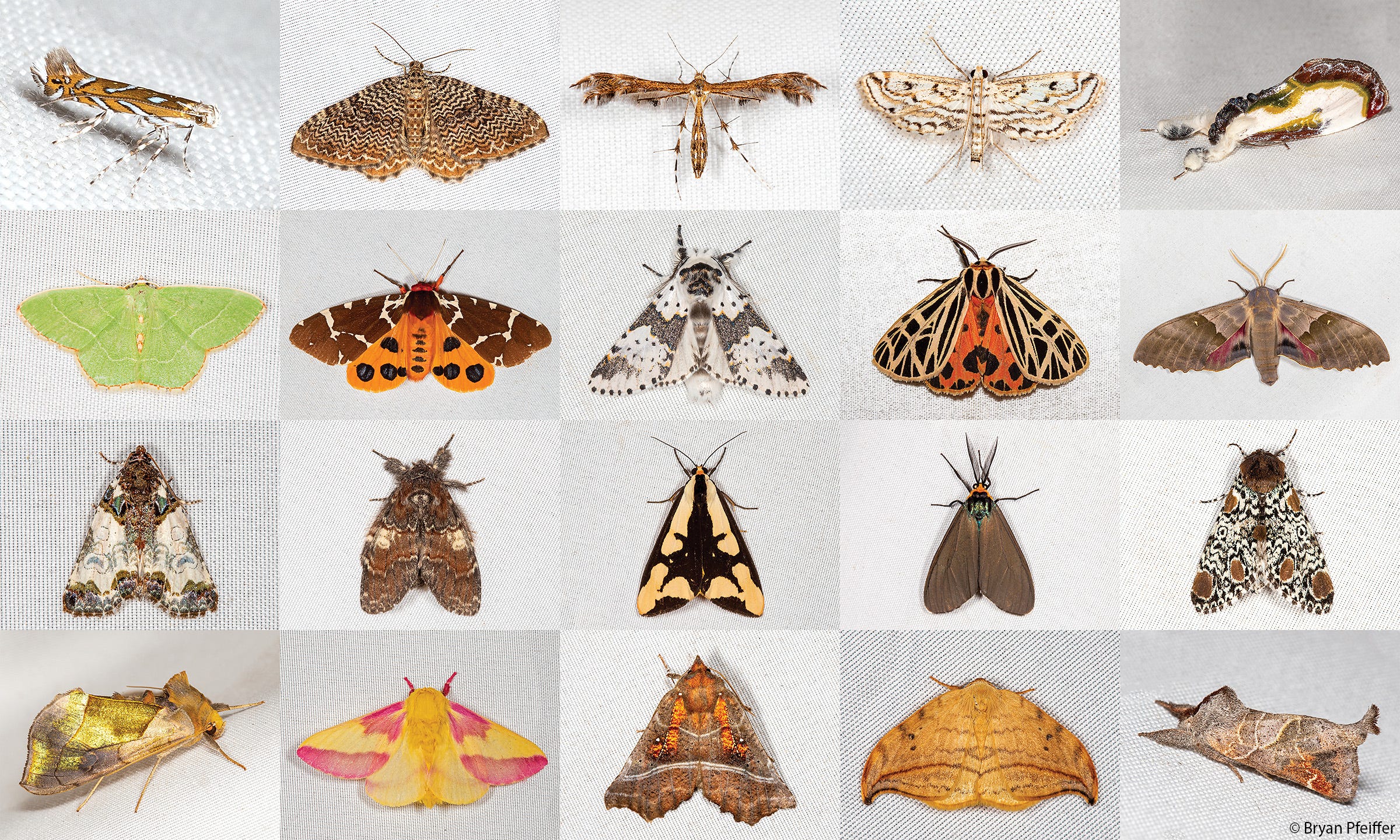
More recently - last week, in fact - in his latest post, “Letter from the Flight Season,” Bryan Pfeiffer describes, in a deceptively simple sentence, how our species spent the first 99% of our history: “Our bond with nature was once commensurate with culture, faith, governance, and community.” If you spend a little time with that sentence, you might remember and envision the greener pastures of the pre-Anthropocene past: what we revered and protected, what art we made, where we walked, and what we understood to be real about the green and golden earth that nurtured us. If that sounds romantic, I mean it to depict how embedded we once were in nature, rather than squatting atop its remnants.
Bryan continues, with his usual elegance, describing the loss of connection that is especially true here in America:
But the natural world now seems to be more a niche or marginalized aspect of the human experience. Our lives are increasingly a fusillade of demagoguery, celebrity, commerce, AI, and other instruments of artifice. We know corporate logos better than the names of trees lining our neighborhoods. Our children spend more time with their phones than with frogs or flowers or fritillaries.
Finally, I’ll admit that this is a lot to pile atop a holiday with fireworks and burgers, but that noise and meat come from places we tend not to look into, and I believe every celebration of history shouldn’t skip over that history.
So spare a moment, if you’re an American thinking about the 4th, or a citizen of the world wondering what this 250th celebration means to us here in Vespucci-land, to think about America’s path forward in what Barry Lopez calls the “Era of Emergencies… bearing down on us.” In a Lit Hub essay which also served as the introduction to a book of photographs, American Geography, Lopez describes the scale of what must be done:
We must invent overnight, figuratively speaking, another kind of civilization, one more cognizant of limits, less greedy, more compassionate, less bigoted, more inclusive, less exploitive.
I hear, in his incantation of who we must become, echoes of Walt Whitman. Walt was, and perhaps remains, the truest American poet, an artist who revered an independence that insisted, nonetheless, on absolute empathy for others. No freedom for self unless all others were free. No freedom for self unless the land under our feet was free as well.
And that’s the kind of independence we need to survive and perhaps thrive on the relentlessly difficult road ahead. As Lopez articulates, we need a societal-scale version of the artist’s way, an independence defined by an empathy for each other and land so entwined as to be inseparable:
At the heart of the lifework of many artists I have known is a simple but profound statement: “I object.” I have studied what we have done to the planet and I object. I object to the exploitation of, and the lack of respect for, human laborers. I object to the frantic commercialization of the many realms of daily life, I object to the desecration of what is beautiful, to the celebration of what is venal, and to the ethical obtuseness of the king’s adoring enablers. I object to society’s complacency.
Happy 4th, to those who celebrate, and to those who object.
Thanks for sticking with me.
In other Anthropocene news:
Have you ever been in the presence of a lonely and miserable caged bird and thought desperately of freeing it? My wife Heather has, and wrote “I Am a Bird,” a beautiful, heartbreaking song about not saving a bird that needed saving.
From Inside Climate News, “Smart Thermostats Will Soon Come to the Rescue During Heatwaves,” a good article on the development of a massive “virtual power plant,” or VPP, that displaces the need for new massive centralized power sources (like gas plants or solar arrays) by slightly reducing energy usage in thousands of homes and businesses via remote control. Here’s the article’s opening:
In the near future, the Chicago-area electricity grid will meet demand during a heatwave by remotely turning up thermostats by a degree or two in households that choose to participate.
This adjustment—barely noticeable at the household level—would reduce the region’s electricity demand by the equivalent of several power plants, giving the grid the help it needs.
Similarly, from Yale e360, “A Home Battery Revolution is Reshaping the Power Grid” reports on the astonishing growth in battery technology - more effective and efficient at much lower cost - is upending the traditional idea of a power grid. Energy in these VPPs flows both ways, often with sizeable financial incentives for homeowners and businesses who participate. As one source noted, “We’re moving toward a world where homes don’t just consume energy — they store it, optimize it, and contribute back to the grid.”
From Nautilus, “The Cephalopods Are Coming,” an insightful if dark essay by a scientist who has studied the relationship between cephalopods (squid, octopuses, nautiluses, etc.) and mass extinctions in Earth history. Their numbers always increase in warmer, less oxygenated oceans as less adaptable fish and shark populations decline. That story is complicated by humans vacuuming most other life from the sea at an increasingly unsustainable rate, but nonetheless the pattern of cephalopod increase as the oceans warm and change is repeating itself.
As scientists, we can’t say for certain the current rise of cephalopods represents the early phase of a new mass extinction in our oceans. But there are certainly signs for Cassandra to see.
From Undark, “In California, a Bridge for Wildlife Comes to Life,” an update on the massive Wallis Annenberg wildlife crossing over the 101. It’s due to be complete in December, providing a lifeline for wildlife - from cougars and coyotes to deer and butterflies - in an area fragmented and made violent by the astonishing human growth of the last two centuries. Building wildlife crossings is an essential task for a biodiverse future, as I’ve written at length, because we need to redesign civilization to be habitable for all life:
The wildlife crossing, she believes, is a good-faith attempt by humanity to leverage ecosystem engineering to turn back the clock, deconflict our earlier intrusions, and acknowledge that this place has always been a vital crossroads for far more than one species. A tangible affirmation of the sovereignty of animal nations.
The best solution to the rise of big stupid data centers is to recognize that they’re large unnecessary, but within the current build-or-die logic of a data-junkie society Grist has an article outlining one partial solution: build them in the existing desolation of oil and gas fields.
From Canary Media, a report that heat pump sales are about to surpass sales of air conditioners. And for good reason: they heat and cool and dehumidify, and they do it all more efficiently and economically.
For my readers in the Pacific NW, or who are interested in its natural history, David B. Williams from Street Smart Naturalist has a new book coming out: In the Range of Fire and Ice: A Human and Natural History of Washington’s Cascades. Here’s some of David’s description:
In the Range of Fire and Ice is the product of four years of researching, writing, and editing. My field time took me the length of the Cascades in Washington state with ecologists, geologists, wolverineologists, ornithologists, [and] glaciologists [in] mountains that have graced my life since I was a child. The focus of the chapters ranges from geology to huckleberries to fire to wolverines to stocking fish to human settlement to one devoted to Mount St. Helens.
From David Wallace-Wells at the Times, “We Need to Retrofit the Planet. The Heat Wave Proves It,” an op-ed about the heat waves striking Europe and the U.S. and his frustration over the foolishness of the debate about why nations haven’t been responding fast enough. We’re simply not prepared, he says, for how shockingly quick our transformation of the atmosphere is upending our sense of normal life.
That’s what climate experts mean when they say, as they have said for more than a decade, that warming not only changes everything but also requires that so much be changed. To pretend adaptation is simple is to live in denial of the pace and scale of warming.
"Caring for the land is perhaps the most patriotic act." 💯
Thank you for the salve on the gaping wound of this country. Thank you for bravely and eloquently expressing that which this Trump regime would like to imprison us for expressing. Thank you for your humanity and for writing.