
Beneath the Turbulence
1/8/26 - Looking for reality below the noise of empire

Hello everyone:
Nota bene: This post starts political, heavy and dark, but please hold tight and follow me through; I promise to turn it back toward life and the light, as all things must.
As always, please remember to scroll past the end of the essay to read this week’s curated Anthropocene news.
Now on to this week’s writing:
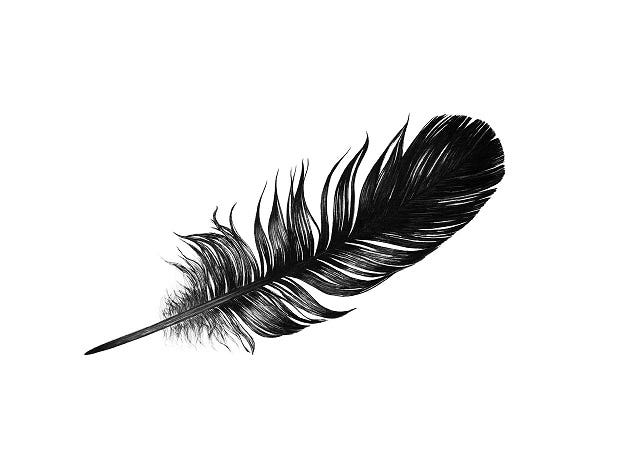
Awash in the deliberate cruelties of this political moment, let’s start 2026 with an ocean metaphor:
We all know that the chop and swell of politics are the shallows of reality. We all know that life, whether the richness of human cultures or the complexity of Earth’s biology, runs so much deeper. We know this, but we also know that the storm-tossed surface of power, politics, and policy are where we must, over and over, rise to breathe.
It’s not the vast calm of the deep ocean that might drown us; it’s the turbulent unkindness at the surface.
That turbulence is created and maintained, or quelled and dispelled, by the quality of human leadership, the seriousness of institutional governance, and the level of trust and empathy embedded in society. We are capable of substantial grace, integrity, and civility at scale, if we choose it.
At this stage of history, when so much is possible, when incredible wealth and logistics run the world, when we can map the fate of 8.3 billion people in granular detail by satellite and cellphone, when we can ship grain and refrigerated vaccines around the globe in mere hours, human suffering is largely an event manufactured through cruelty, neglect, and incompetence.
Look no further than the Trump administration and so-called DOGE “feeding USAID into the wood chipper,” as Elon Musk joked a year ago, not caring that those cuts would lead to hundreds of thousands of unnecessary deaths per year. USAID funding is reported to have saved 92 million lives in the previous two decades, but by November of 2025 the absence of those funds had led to an estimated 600,000 deaths from disease and malnutrition, two-thirds of them children. As an excoriating but inspiring New Year’s editorial from Derek Lowe at Science put it:
Never forget: whenever Elon Musk walks up to a podium to bullshit you about colonizing Mars or whatever, he is walking on the bodies of dead children. He yanked their food and medicine away while telling lies and cracking stupid jokes.
Wealth and power are not a prerequisite for such inhumanity, but Cory Doctorow argues successfully in one of his marvelous Pluralistic posts that heartlessness might be necessary to those who strive for such excessive wealth and power, noting in particular that tech billionaires don’t seem to think that ordinary people are real:
the only way to become a billionaire is to hurt and exploit lots of people. You have to be willing to cheat your investors by lying about "full-self driving," you have to be willing to maim your workers, you have to be willing to rain space debris down on people near your launchpad. If you think of those people as truly real – as being just as capable as you are of experiencing stress, sorrow, fear and anxiety – you couldn't possibly set these crimes in motion.
And yet these tech tycoons with their unnecessary but ubiquitous AIs are, like the oil robber barons who buy governments and rent militaries to boost quarterly profits (see: Venezuela), like the petrochemical industry poisoning the world for another dollar, and like the insurance companies who parasitize our medical care, following the logic of empire.
Each seeks to create its own unbridled economic empire, and each serves the larger notion of empire as well, in which large corporations have a gravity we can neither escape nor diminish. All of them, from Trump and Musk to ExxonMobil and Dow and Anthem, treat people and all of life itself as things to be manipulated for their abstract, nonhuman, and abiotic purposes. They set their crimes in motion because an empire, in the absence of greater authority, cannot commit crimes.
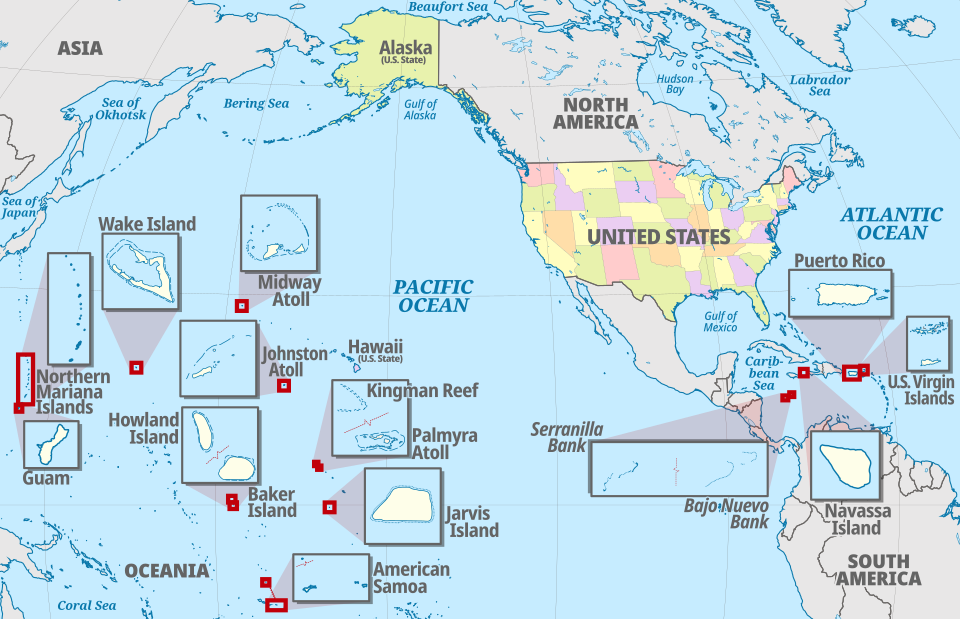
Here in the U.S. we tend to think of empires as historical periods: British, Roman, Ottoman, Mongol, etc. We forget, or were never taught, that the U.S. has been an empire for several generations. Americans picture the nation as the contiguous states (plus Alaska and Hawaii as afterthoughts in little boxes), when really it looks like this, dotted with territories we control but can neither name nor describe:
,_administrative_divisions_-_en_-_colored_(zoom).svg)
And, when we widen the view, we have to acknowledge that for much of the world, the U.S. boot print also looks like this:
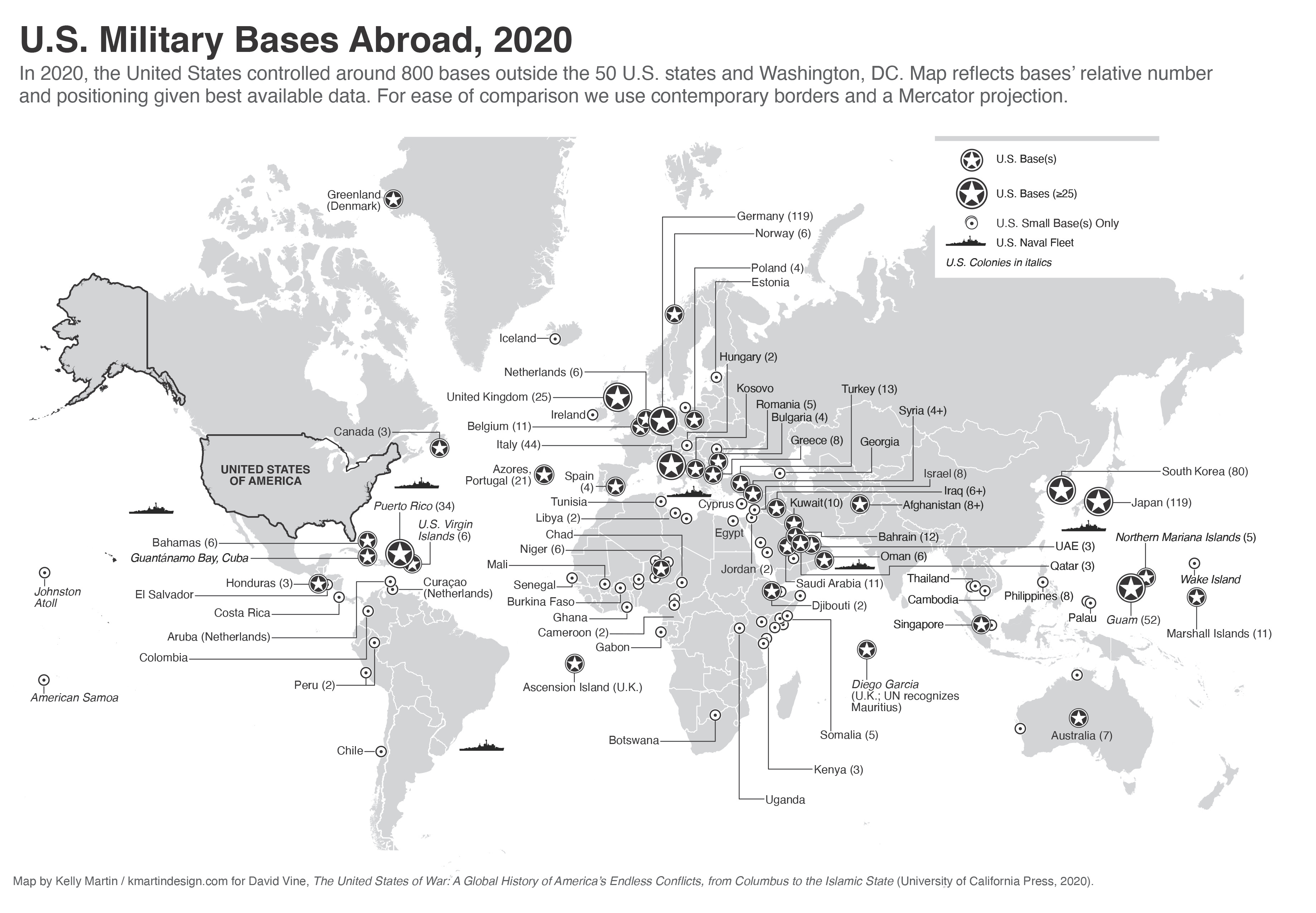
Those bases are a good stand-in for the scale of American economic and political power over the last century and a half. What will happen to that power in the coming decades is a question for another essay from another writer. But the administration’s new oil-soaked adventure in Venezuela, like all of its fossil-fuel errands and policies, suggest another ocean metaphor, this one familiar to me from my time in Antarctica.
Committing the U.S. to a long-term doubling-down on an energy system which poisons the Earth and whose obituary has already been written, while the rest of the world rapidly adopts the light-eating wisdom of plants, makes me imagine the empire as a glacier advancing implacably, seemingly eternal, before suddenly shattering into pieces in the warmer sea of Anthropocene reality. The question is how violent the chop and swell would be during and after the collapse.
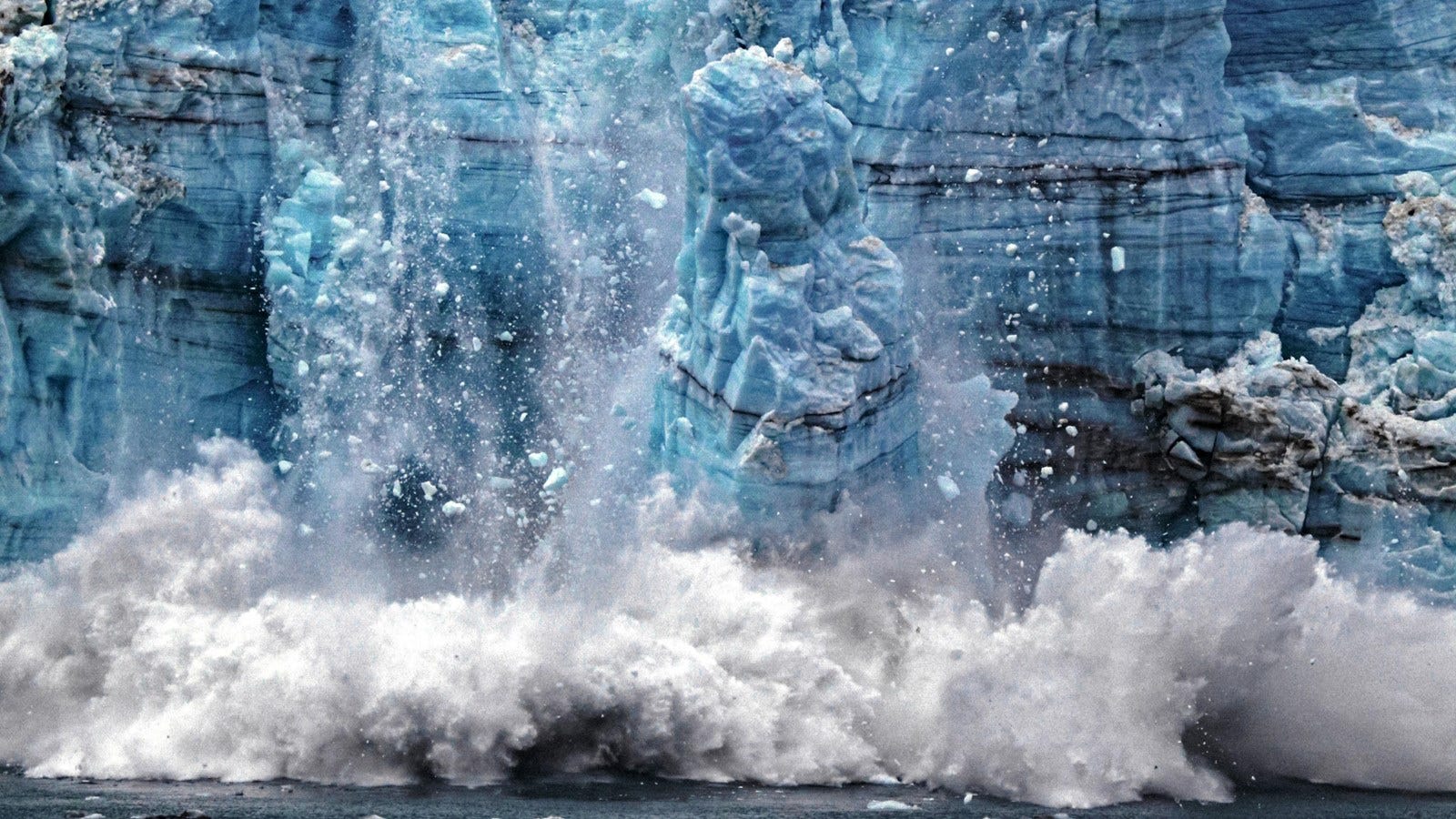
But let’s ease our way down from the turbulence. After all, it’s not the U.S. empire that defines this age. It’s the human empire and its enslavement of “resources” better known as the fabric of life, which even in our enlightened moments we still divide into bioregions, ecosystems, and species. The U.S. is merely a dominant expression of that greater empire in this same brief moment that you and I are breathing together at the surface of existence.
Though we are less practiced at reducing it, the suffering of the natural world from our actions is as avoidable as human suffering. And much depends on doing that work. As Wade Davis wrote, citing E.O. Wilson,
this era will not be remembered for its wars or technological advances but as the time when men and women stood by and either passively endorsed or actively supported the massive destruction of biological diversity on the planet.
For all of its child-killing cruelty, Musk’s wood chipper metaphor also says something about the relationship of wealth and power with the forests that give us all life. It’s a good reminder, too, that USAID was one of the world’s largest funders of conservation and environmental protection. As Yale e360 notes, USAID funds backed
a diverse portfolio of projects in dozens of countries — projects that protected elephants in Tanzania, great apes and national parks in central Africa, giant fishes and watersheds of the Mekong River basin in Southeast Asia, and rainforests in the Amazon, among many others.
Beneath the turbulence, this is the much greater and much deeper reality: 8.3 billion humans (and growing) live in relationship with each other in a still-astonishing world full of giant fish and watersheds, great apes and national parks, forests and rain and elephants, all of it embraced between sky and earth in a dance measured not by election cycles but by billions of years.
We live alongside, and by the grace of, algae and albatross, zinnia and zebra, and millions of insects and microbes we haven’t identified, much less alphabetized. We emerge at birth from darkness framed by light, and exist for a little while in light framed by the unknown. The sea has its own turbulence, of course, and we take the several hundred million breaths given to us by life (if we’re lucky) while bobbing between the waves of ordinary fate.
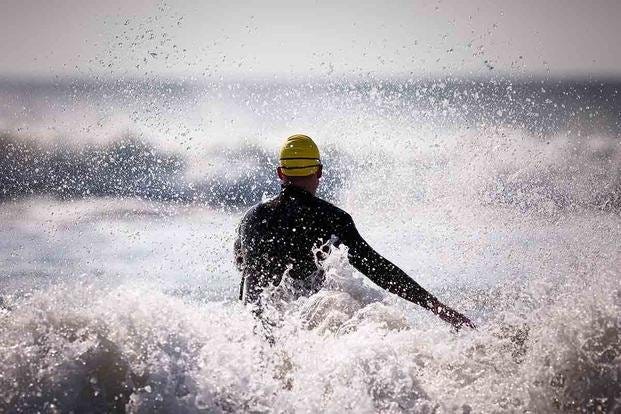
The most infuriating thing about the cruelties some power-hungry fools among us inflict on the rest of us, and on the beauty of life, is that it is unnecessary. It is a choice. We imagine our species as a rational, ethical anomaly in the natural world, but this is a fantasy (see my link below to “The Moral Authority of Animals”). Much of our poor behavior is as deliberate as it is irrational.
Humans, as “the younger brothers of creation,” don’t naturally know how to live, so like amnesiacs or drunks we write down guidelines, whether spiritual or ethical. But we still aren’t wise enough to stick to the script. We have to relearn it every time, often at a terrible cost. Really learning the rules, and sticking to them amid the consequences of failure rising around us like a flood tide, is the struggle of this age.
I wrote after the 2024 election that we had chosen to increase suffering in the world. Even in my despair then I couldn’t map how much suffering would be inflicted. But I’ve written quite a bit since then too about deeper truths: why we’re never alone, our relationship with mystery, the importance of awe, and more.
Which leads me to my thought for 2026: Even as we wonder how the hell we got into this mess, and how we’ll get out, we have to remember that we still live in a world of wonders.
That can be a tall order on the days I leave NPR on for hours, the hosts’ soothing liberal voices drilling the daily catastrophes into my head like existential dentists… But on the days I remember to get out and walk by the restless sea, or through the quiet forest here, it’s not hard at all. After all, the world is full of lichens, and we are mere ripples in life’s fabric to them.
And I have so many other writers I can turn to for the deeper perspective, in both the journals I curate articles from and in the Substacks of those writers producing work I admire. This month’s National Geographic, for example, has an article on a master trailbuilder whose difficult, anonymous work shapes wilderness trails in a way that invites awe while keeping hikers from straying from the path. His work invites them into nature and protects nature from them. Likewise, when Antonia Malchik writes a marvelous essay that threads Kangaroo Care for her premature baby to the loss of trust in American society, and cites Bryan Pfeiffer who like Antonia turns to the natural world to be grounded, I feel myself back on the trail and in love with the world.
Other trailmakers include Chloe Hope, Bill Davison, Sam Matey-Coste, Julie Gabrielli, David E. Perry, David B. Williams, Rob Lewis, rebecca hooper, my wife Heather Hardy, and others, including David Knowles in Elvers by Moonlight walking a Gaelic poet’s path betwixt language and landscape, as here when he reminds us that our fear of the dark says more about our fear than it does about the dark:
There is no malice in the darkness. Except when we bring it with us, deep down in our coat pockets… There is no menace in the night-wood unless we sour it with our bitterness. The dead-stump gargoyles are terrors of our own imagining. The ghosts of fallen trees are tender souls. Listen to the softness of their sighing as they remember the wind in their leaves.
As always with these writers, I hear in these words a path forward. Every sentence, like every public policy, comprises a set of choices that make a path. In all things, on all paths, it makes sense to act in service to life, to be kind, and to quell the turbulence wherever possible. Thus my writing, thus my reading, and thus my hunch that those parasites who move fast and break things are probably afraid of the dark and suffering from an infancy without enough Kangaroo Care…
Every quest for empire is violent and immature - empty of grace, integrity, and civility - and devoid of the wisdom of knowing how to live. The work to repair what they break and to replace what they take is done both down here below the surface, in culture and nature, and up there in the chop and swell of politics.
The fate of the U.S. empire, whether intact or in pieces, need not be turbulent at all. The solutions, like good sentences, are all around us. We adopt the right energy systems and re-embed empathy for all people and all species into social and political institutions. We leash the will to power with regulations and a strictly enforced criminal code. We prohibit the poisoning of the world. We rebuild the bridges to other, less wealthy, societies with the soft power of food and medicines, and use great wealth and logistics to share rather than hoard the spoils of empire. These are choices that can be made every day. And these are choices that most of us would make if we had the power.
As this year unfolds, I wish you all the capacity to feel wonder even as we wonder together what turbulence will wash over us next. Remember to breathe, and remember to rest at a depth that the waves cannot reach. But remember also that there is much work to do at the surface, in the constant effort to build and rebuild our defenses against the cruelties of this moment.
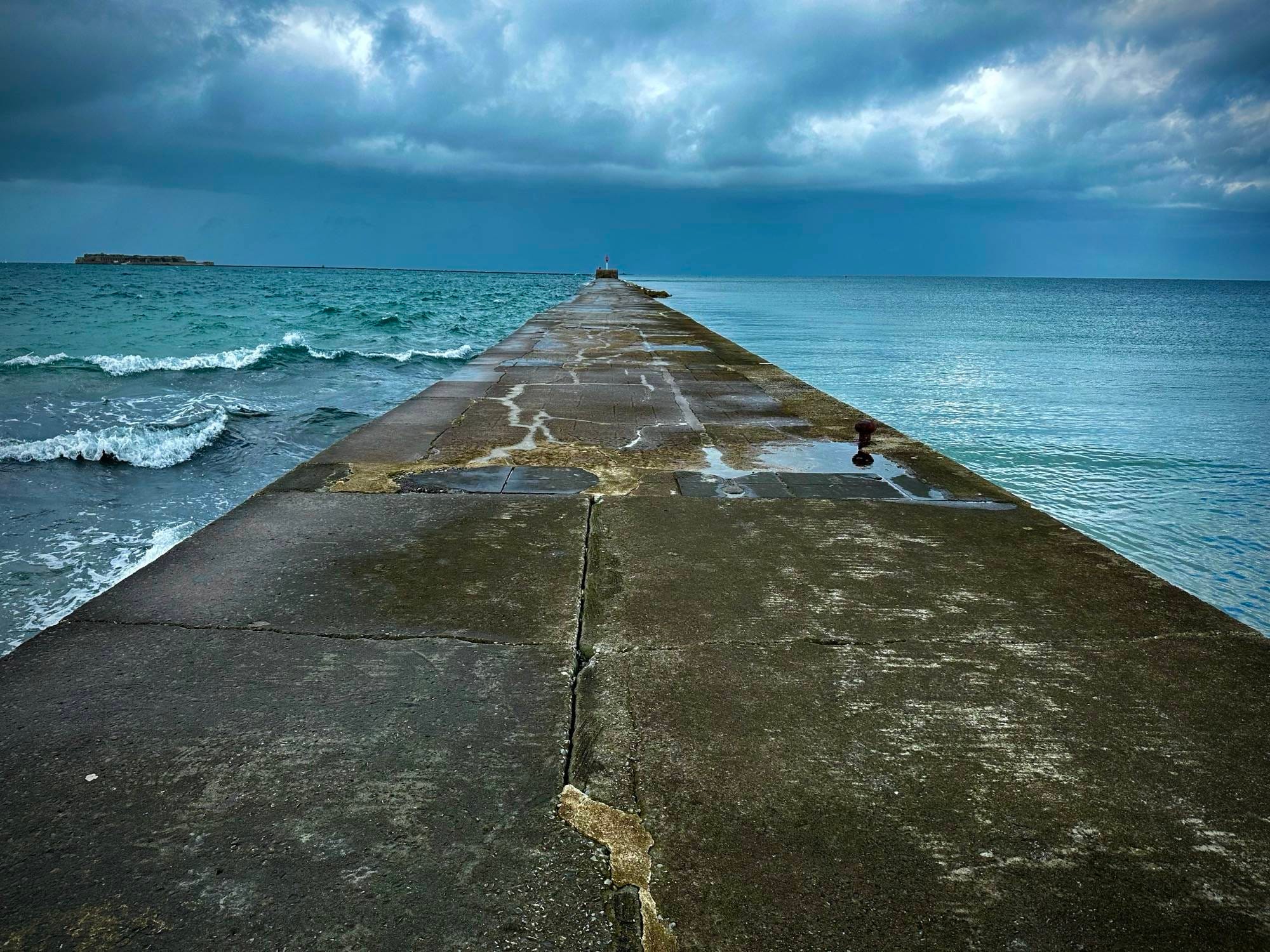
Thanks for sticking with me.
In other Anthropocene news:
From Reasons to be Cheerful, “The Year in Cheer: 97 ways the world got better in 2025,” just in case you need a boost of good retrospective news.
From Orion, a very short prose ode from Rick Bass about winter and waiting, about a river and empathy, and about planting what we can against the losses we’ve allowed.
From Noema, “Where the Prairie Still Remains,” a wonderful long-form essay about the beautiful Rochester Cemetery in Iowa, one of very few remaining fragments of the oak savanna/tallgrass prairie habitat that once covered 80% of the state. The cemetery, closely guarded and studied by those who love it and know its importance, is a reminder of how much has been lost - soil, biodiversity, Indigenous land management - and a guide to how we might reclaim some of it. The writer, Christian Elliott, does an excellent job evoking the meaning of the place in a world that’s forgotten it:
it strikes me that if one of the pioneers buried here suddenly rose from the dead, these hills are about the only part of the Iowa landscape they’d recognize.
Also from Noema, for those of you who recognize that animals have ethics and empathy, I highly recommend “The Moral Authority of Animals,” which lays out the obvious - animals have been, and remain, vital for teaching us how to live - with good sense and good humor. I liked especially this passage debunking the fantasy that we are alone in our capacity for moral behavior and replacing it with the much more likely notion that we learned our morality from animals:
In the opinion of some Australian anthropologists, notes ethologist Temple Grandin, early humans watched wolves and were educated by them. Indigenous Australians put it more directly, saying, “dogs make us human.” Millions of years before us, wolf ethos included babysitting the pups, sharing food with those too injured, sick or old to hunt and including friends in their packs, beyond the genetic kin. Wolf ethics also included being both a good individual and a good pack member.
Human societies, while often quite different from one to the next, generally have a shared ethos similar to that of wolves: Look after the young; protect the tribe; consider the needs of the sick, injured or old; and value the cooperation of others who may not be kin (friends, in other words). It is biomimicry applied to the ethical world. Wolves were doing it first, and we aped them.
From Population Connection, a brief summary of vital insights about overpopulation and excess consumption in a new, massive report from the U.N. Environment Program, 7th Edition of the Global Environment Outlook (GEO-7), about the crises the world faces in ecological losses and a hotter climate. I was heartened especially, amid the noisy fears in the media about declining population, to see this excerpt from GEO-7 about the benefits of a necessary shift toward a much smaller human presence:
Although declining populations may present short-term economic difficulties, the current global population greatly exceeds levels compatible with maintaining biodiversity and ensuring sustainable human well-being, especially considering recent consumption patterns. Some studies suggest that Earth could support a larger population, but recent research indicates that a sustainable world, even with improved consumption and production, should not surpass two to three billion people. However, UN projections show that reducing fertility by half a child below the most likely UN medium variant rate would decrease the global population in 2100 by over 3.2 billion, from 10.2 billion to about 7 billion in the low-fertility scenario.
From Wired, some unsettling but vital reporting on how the most likely cause of Parkinson’s disease isn’t genetic but environmental. Research has been searching for relevant genes (which are related to perhaps a quarter of Parkinson’s cases) for decades, but there seems to be a clear smoking gun for a toxic cause: TCE, trichloroethane, once commonly used in solvents, degreasers, etc.. TCE is now banned in the U.S. but is prevalent in drinking water on military bases and elsewhere, in yet another example of profit-driven industrial poisoning of life and human well-being:
“The health you enjoy or don’t enjoy today is a function of your environment in the past,” says Ray Dorsey, a physician and professor of neurology at the University of Rochester. Your “environment” could be the refinery a town over, the lead in the paint of your mother’s home, the plastic sheath of the Hot Pocket you microwaved in 1996. It is air pollution and PFAS and pesticides and so much more.
From Emily Atkin and Heated, “It’s time to embrace climate conspiracy,” a call to writers and journalists on the climate beat to end the polite refusal to honestly describe the cabal of government and fossil-fuel companies. Why? Because it’s a story
about coordinated power, deliberate deception, and a bought-off government that repeatedly acts to promote an industry that is poisoning humans and the environment for profit. It just so happens to be a real conspiracy.
From Grist, “Expecting Worse: Giving Birth on a Planet in Crisis,” a series of articles examining the dangers and difficulties for child-bearing women in a hotter world, from fertility to pregnancy.
From the Guardian, seven environmental wins in 2025 despite the Trump administration’s all-out war on climate and conservation policy.
From Canary Media, ten energy stories their reporters are following in 2026, including the rise of virtual power plants and various workarounds for building out clean energy despite the nonsense at the federal level.
“We rebuild the bridges to other, less wealthy, societies with the soft power of food and medicines, and use great wealth and logistics to share rather than hoard the spoils of empire.” - more power to you for pronouncing the truth, for adding to the grammar and language of spiritual deplete we are currently under. Thank you for doing this work.
May we stay human,
love, “act in service to life.”
“Choices make a path.”
...
Repair/replace work,
underwater, underground.
And “at the surface.”