
Ice vs. ICE
1/22/25 - Where power lies

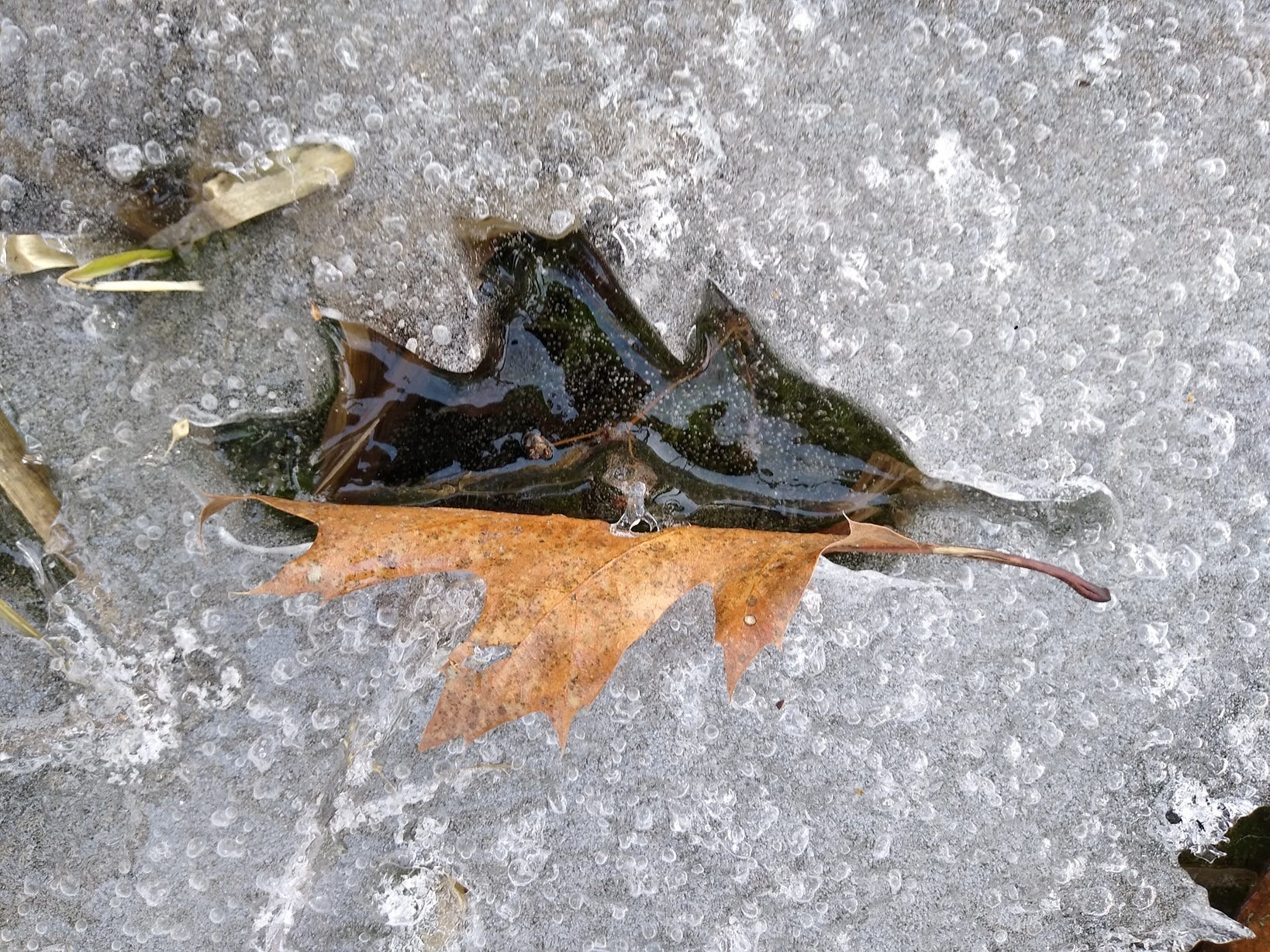
Hello everyone:
Two weeks ago, in Beneath the Turbulence, I named some of the writers I rely on for deeper, more rational perspective on this life of ours and the life that surrounds it. But I neglected to mention Chloe Hope of Death & Birds, one of the finest and most empathetic writers I’ve ever encountered. I’ve now corrected the absence in the archived version of the essay. If you don’t know her work, you should.
As always, please remember to scroll past the end of the essay to read some curated Anthropocene news.
Now on to this week’s writing:

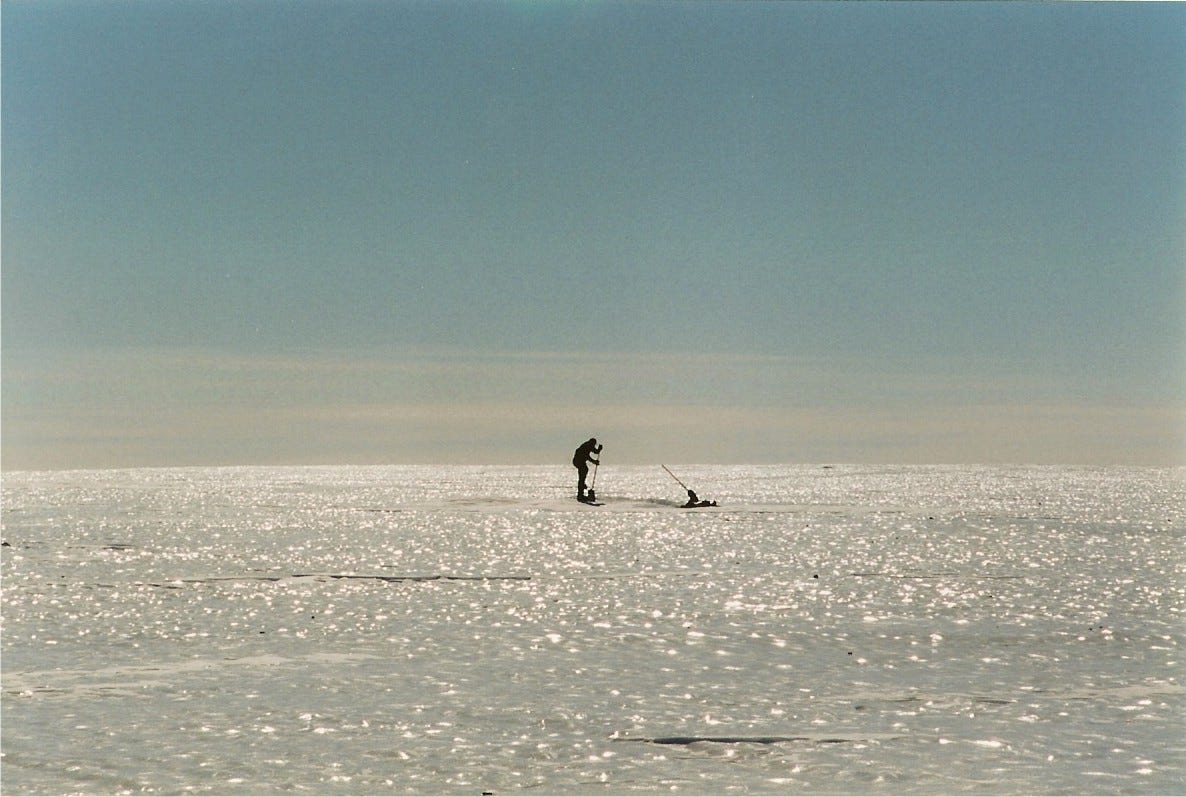
I have a fondness for ice. I’m a child of the north, certainly, one who grew up toddling between winter snowbanks and being driven in the big wood-paneled station wagon across the magic of a suddenly solid surface of frozen ponds. Later, I spent a lot of my time wandering up mountains into alpine areas etched by glaciers and, in some cases, still holding onto their ice age remnants. And then, by the kind of great good fortune that has framed my life, I found myself in Earth’s great house of ice - Antarctica - and fell in love with it. There seemed no better place to understand the green world than from a place that defied it. I have, ever since, seen the Earth through that icy lens.
Trump’s ICE has arrived in Maine, arresting poor asylum seekers and intimidating citizens. This is not Anthropocene news per se, but any society which commits outrageous violence against its own people will invariably commit similar violence against life in general. And so it is now, as the Trump administration hollows out environmental protections and climate regulations while bloating ICE with obscene funding and squads of violent, poorly-trained men.
This reminds me - as so much does - of one of the most important sentences I’ve ever read. It’s from scientist and philosopher Gregory Bateson:
The major problems in the world are the result of the differences between how nature works and the way people think.
This week’s writing is a balancing act. It’s important that I don’t trivialize the impact of America’s quick-moving, half-witted, criminal and cruel would-be Gestapo with a cute ice/ICE compare-and-contrast essay. But I want to say some vital and beautiful things about ice so that the word can still sit in our mouths without the taste of bile.
I’m (mostly) not writing about immigration, because ICE is (mostly) no longer about immigration. I’m reminding you of where true power lies, and of the cost to human and more-than-human communities when those in power lie about their power.
Both Kill
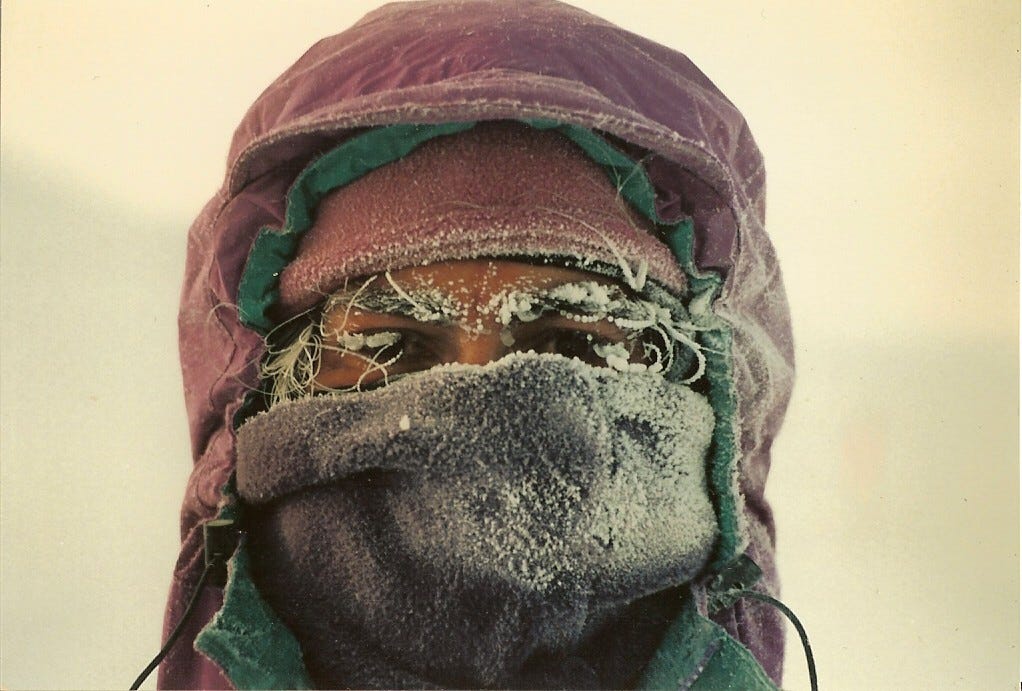
One chews on flesh, bursting the miraculous cells that comprise the body’s soft tower. I’ve felt as my skin turned wooden how fate is shaped by ice, and I know people who’ve lost fingers, toes, even limbs. The other, though, gnaws at the body politic and the social fabric. Like paramilitary forces loyal to corrupt authority elsewhere in human culture, ICE ruptures families, community, and democracy with an intent to kill empathy, hope, and dissent.
Death from ice feeds life, because ice like stone is built from life. Death from ICE feeds only fear and those who benefit from it.
***
Community vs. Parasites
Snowflakes require living dust - microbes, pollen, spores, ash, etc. - sailing through the atmosphere to provide a nucleus to form around. (FYI: All rain begins as snow.) Biology begets snow and rain; rain and snow beget biology. When and where the Earth is cold enough to wear its winter shawl, those crystals lock together, shoulder to shoulder, to give hunters of the north access to their food, to gather and reflect starlight in the winter dark, and to cool the Earth by radiating back the Sun’s eternal heat. Ice regulates life, and is regulated by life.
Every biological system is rife with parasites. More than half of all animals are parasitic, in fact, and healthier ecosystems carry more parasites. Which means, in my analogy here, that the success of ICE and the fascism that spawned it can only thrive because the community is healthy enough to host it and, when awoken to the attack, overwhelm and suppress it.
***
Ice and Fire
In English, we associate cold with murder, hate, and the absence of empathy. Someone who hates is “cold-blooded.” Certainly the cold kills indiscriminately, as the residents of any refugee camp in winter can tell us. But so does heat, and will do so much more often in the world we’re making. A world without ice will be more brutal than the harshest winter.
It is no coincidence that many of the societies most tied to the fossil fuel industries disrupting life on Earth are also the most militaristic. Wealth and power alienate the elite from the idea of equitable society and from the deeper realities of the natural world.
The Trump administration’s foreign and domestic policies are to a ludicrous extent a wish list from the doomed fossil fuel industry trying to slow the civilizational train running quickly from the oil fields toward an electric future powered by the Sun. The industry will apparently abide any violence done in Venezuela or Minneapolis to secure a political structure that will boost quarterly profits for as long as possible.
We might describe these politics and those companies as cold-hearted, but theirs is a passion and heat like those of oafish ICE officers abusing other human beings with a hate derived from racist nationalism. It’s the heat that comes from burning the world you no longer understand.
***
The Illusion of Whiteness vs. Delusions of Whiteness
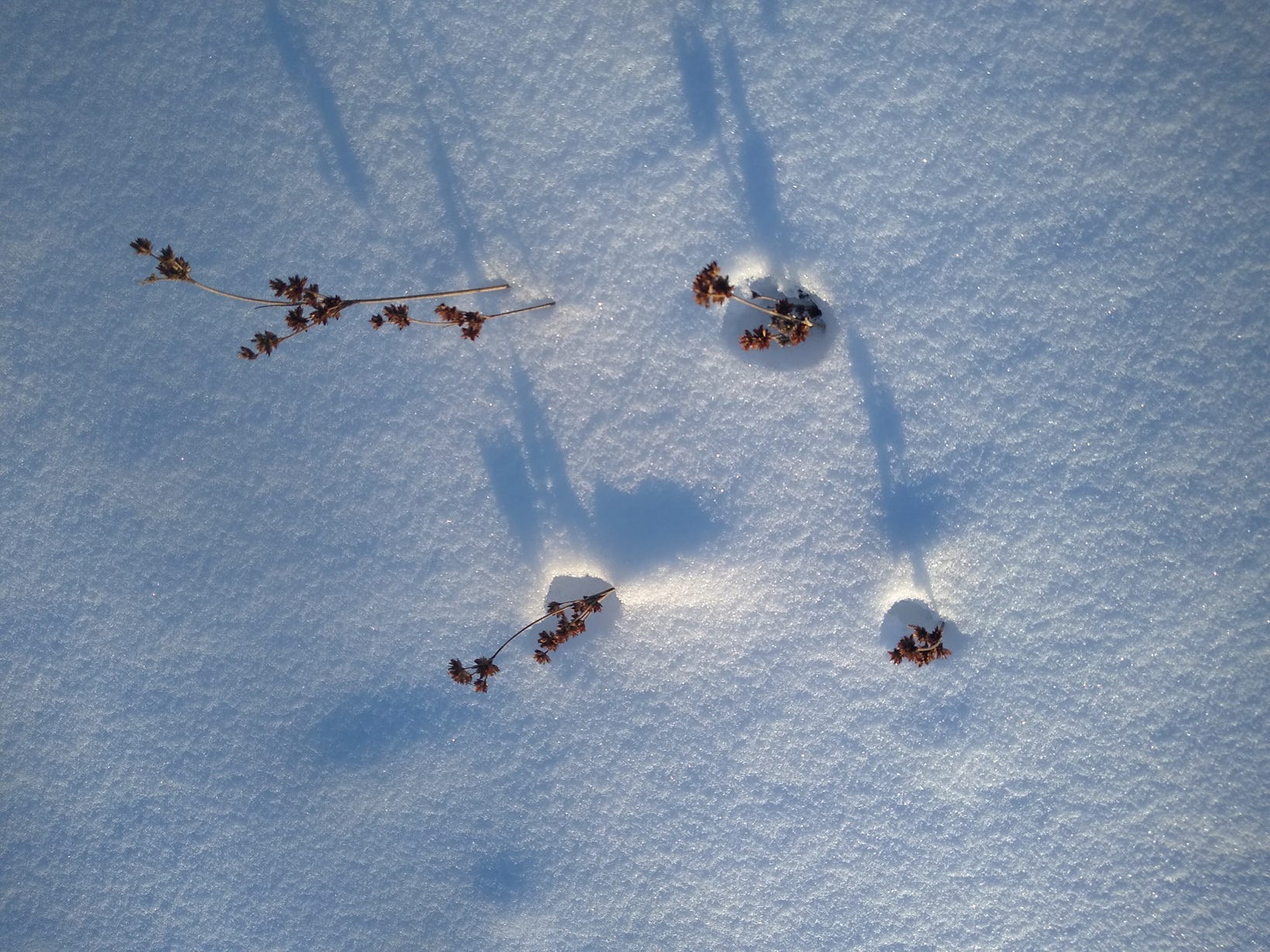
Snow is as beautiful in its individual crystal geometry under the scope as it is in its vast communal white blanket across the landscape. That blanket is not white, though. It is often the grays of cloud and the blues of bruise, but may be green or golden depending on the sky’s mood and the willingness of the snow to reflect it. The snow is a mirror, then, and when we insist on simply calling it white we see reflected in it our urge to categorize without paying attention.
As Project 2025, the blueprint for everything this administration is doing (other than the weird, desperate whims of its senile figurehead), made clear, the architects of this pivotal moment in U.S. history believe America is a not an evolving and always flawed experiment in multicultural democratic governance. It is to them a fiefdom for corrupt white Christian nationalist men and the self-serving industries made in their own emotionally-stunted image. If this sounds too dramatic, consider that their suite of policies offer more allegiance to non-humans (corporations and AIs) than to working families.
ICE is meant as a private army for the executive branch to shape the domestic policy agenda of those white men, and is part of a larger and longer plan to cripple free and fair elections. So far, and these are early days still, this has meant lawless cruelty, injuries, incarceration, and deaths of law-abiding immigrants and American citizens in custody and on suburban streets.
The primary truth of the lawlessness is that it is aimed at minorities and peaceful protesters. And all of it is based on two delusions: First, of “whiteness” as a racial indicator, when “race” is itself a fiction; and second, of the idea of America as a white Christian nation rather than a nation of hopeful immigrants living on land won through attempted genocide and chattel slavery.
It is about categorizing without paying attention.
***
States of Matter
Ice is one of water’s faces, each as elegant and necessary as the other. Solid, liquid, and vapor can each convert to the others as naturally as we inhale or exhale. When we say that water is life we’re talking about more than the liquid that pools on both sides of our skin. We’re talking about clouds and ice caps, hydrology and aeroecology, sunlit molecules and the darkest ocean deeps.
Wielded by an increasingly desperate and self-serving authority, ICE is increasingly two-dimensional. Immigration rationale has shattered into rationalization of un-Constitutional violence. Becoming an ICE agent has lost any meaning. How many of these masked thugs crawling through our communities, for example, have been hired from right-wing groups founded on their fear of an overreaching government sending masked thugs into their community? When an agency created to uphold the law becomes a cruel criminal cartoon of itself, detaining 5-year-old schoolchildren and shooting unarmed protesters in the face without consequences, it no longer has a reason to exist. It is neither natural, elegant, nor necessary.
***
Mathematics
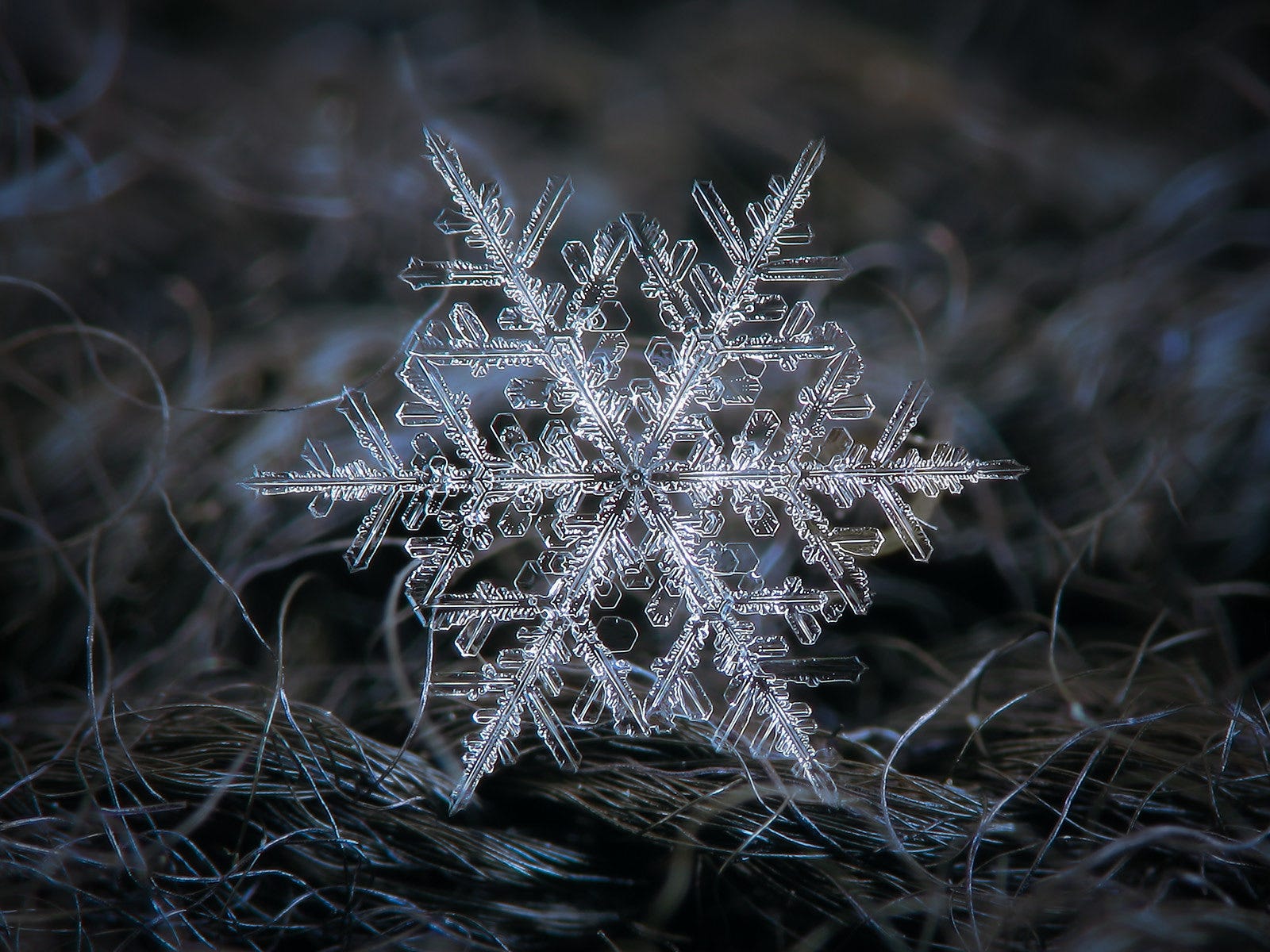
If mathematics are a language of the universe, what should we say about who we are? Something that hopes to speak like the fractal wisdom and beauty of an ice crystal, or just a series of grunts through the algorithm of crude power?
***
With or Without
Humans have never lived on Earth without ice. The last time the planet was iceless was 35 million years ago in the late Eocene, when palm trees grew in the hot Arctic and the closest thing to a human ancestor was likely a small forest-dwelling primate. CO2 levels were about double what they are now and sea level was nearly 500 feet higher. Worst-case emissions scenarios have included reaching similar CO2 levels by 2100, which would devastate much of life as we know it. Given rapid renewable energy rollouts, we’re unlikely to go so far down the wrong path. It would be nice, though, amid the increasing tendency toward authoritarianism and fascism here and abroad to instead focus all of our attention on living better lives on a rewilded and ice-capped Earth.
We would thrive without ICE. We need adults in the political room to establish a rational, pragmatic, and compassionate immigration system, one that a) recognizes that the U.S. is a nation of immigrants, b) has clear, fair, and consistently enforced rules, and c) makes room for our fair share of the extraordinary number of immigrants who will be on the move in a hotter, more chaotic world. What we do not need is populist, racist rhetoric and the police state it conjures up. We will need an immigration service, but not ICE. It has lost all credibility.
***
Durability
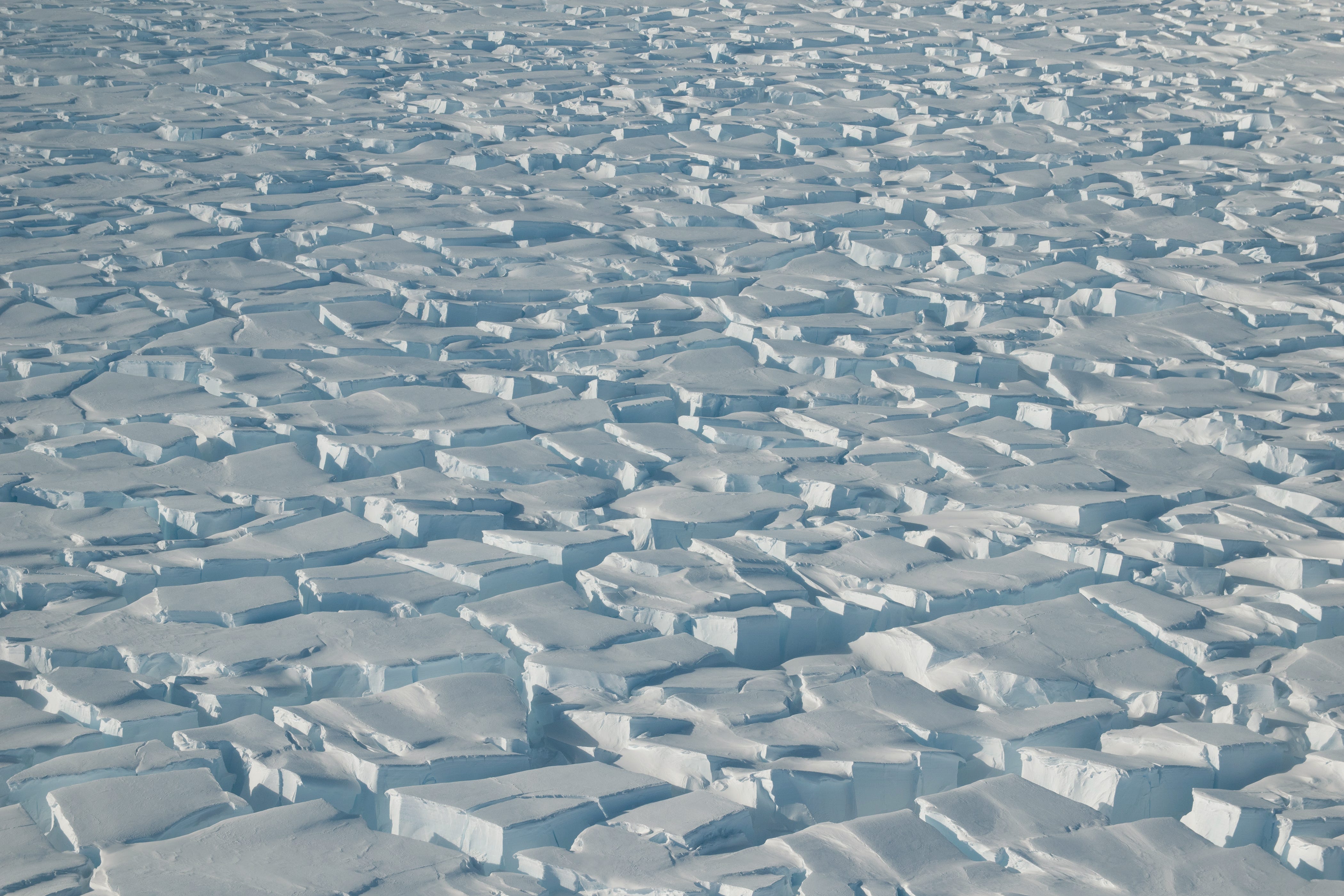
In Antarctica, the ice felt eternal. The East Antarctic ice cap alone is more than three miles deep and larger than Australia. And in human terms, it might as well be eternal. Antarctic glaciation began about the same time that small primate ancestor of ours was scurrying through the forests of North Africa, and even our worst-case emissions scenario will probably not be the end of Antarctic ice in any meaningful human timeframe. Our noble histories are mere centuries or millennia; we cannot imagine what a million years looks like. While we are making changes to the ice substantial enough to upend human societies and much of the fabric of Earth’s life, I knew while wandering the southern continent that we are little more than mayflies in the life of that ice.
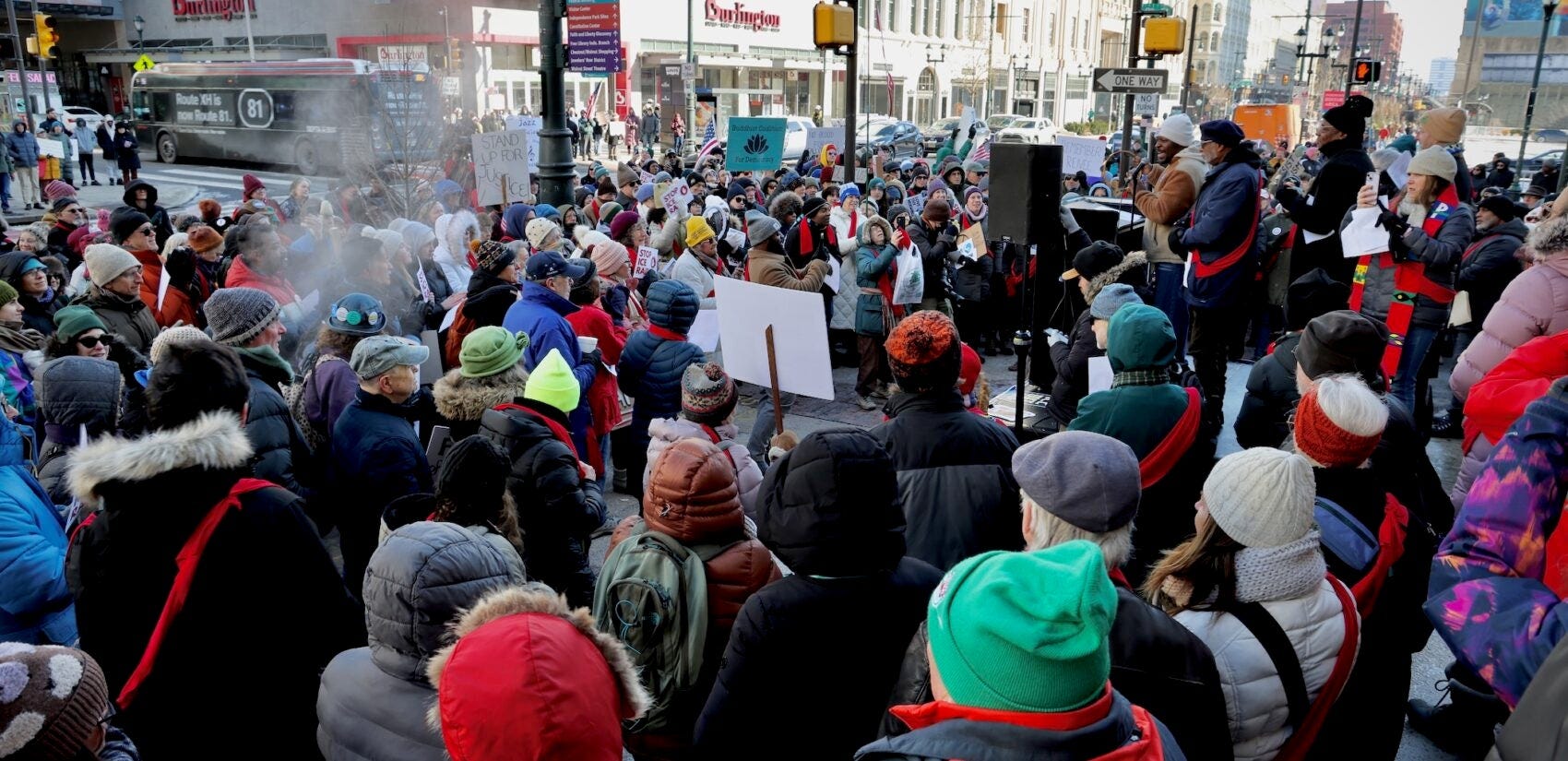
ICE, however, is as fragile as a fascist flower. It can be leashed or defunded with a single vote from Congress. The courts can punish the crimes of both agents and leaders. They can all be laughed out of civil society and sent to melt back into their dark corners. For that to happen, we need to rise together like sublimating snow and vastly, peacefully outnumber them.
It feels that ICE, like ice, is everywhere, but it’s a tiny cruel army led by an unpopular fascist minority. Like the Gestapo, which was a “relatively small organization with limited surveillance capability” that succeeded primarily “due to the willingness of ordinary Germans to report on fellow citizens,” the success or failure of ICE will depend entirely on how we respond to it.
If thousands - better yet, millions - walked out every day to face up cheerfully to the few dopey agents and the fewer white christian nationalists in charge, everything would change. We are not yet at a point that the Trump administration would greet us with tanks and fighter jets, and so sooner is better than later.
The first Earth Day brought out 20 million people - 10% of the U.S. population - in what is still the single largest protest in this country’s history. A resurgence of that energy, devoted to a healthy society and an Earth balanced between fire and ice, would go a long way toward limiting the harms of Project 2025 and preserving the free and fair elections that will cool down the fires of hate.
Finally, I’ll say this: I don’t know if solving our ICE problem will help lead to, in the long run, a world in which toddlers can still play on snowbanks or marvel at the beautiful surface of a frozen lake, but the urge to do right by each other is akin to doing right by the natural world.
We are community within communities, and we are all immigrants between the borders of life and death. We emerge and we disappear, like an falling ice crystal and the dust it contains, only to rise again as something else marvelous and unknown. As Maria Popova writes, “we are made of the same matter as the granite that will mark our graves and share 98% of our DNA with the moss that will cover them.” We are like water, too, wearing all of its faces, including the one that stands shoulder to shoulder in the natural urge to make the world beautiful.
Thanks for sticking with me.
In other Anthropocene news:
Good news from Inside Climate News: a federal court in Oregon ruled that the U.S. Forest Service can no longer use an obscure rule to clear tens of thousands of acres in the name of reducing wildfire risk on public lands without environmental review.
More good news, from Bill McKibben and The Crucial Years: India looks to be on track to skip over the long coal-fueled early phase of modernizing the country’s energy and transportation systems. China is rapidly emerging from that phase, but India will largely bypass it as it ramps up toward the electrification of its society. Also, read down through Bill’s curated news; there’s more great stuff there too.
And more good large-scale news from Mongabay, the BBNJ (Biodiversity Beyond National Jurisdiction) treaty took effect a few days ago, offering for the first time an international framework for protecting the majority of the Earth - oceans and sea floor not owned or controlled by any nation:
The scale of what it covers is hard to overstate. Areas beyond national jurisdiction account for roughly 60% of the ocean and more than 40% of the planet’s surface. They include deep trenches, seamount chains, midwater ecosystems, and the largely unseen communities that regulate nutrient cycles and store vast amounts of carbon. Less than 1.5% of this space is currently protected in any formal sense. Fishing, shipping, bioprospecting, and exploratory mining have expanded there faster than the rules governing them.
Also from Mongabay, a fascinating perspective on “involuntary parks,” places humans have abandoned that become de facto reserves for wildlife and a rewilded landscape. These are generally dark places we have damaged and now fear to tread, like Chornobyl and the demilitarized zone between the North and South Korea. How we treat these complicated places, a researcher says, “may provide opportunities to reflect on the complexity of ongoing human relationships with the natural world.”
From Michelle Nijhuis and Conservation Works, “How (and Why) to Predict the Future,” a brief and insightful reminder of the prescience of Octavia Butler, the writer who imagined much of this political and ecological moment. Nijhuis uses this reminder to frame her perspective on the recent release of the annual “horizon scan” for likely issues in conservation:
Conservationists, understandably, tend to be preoccupied with current emergencies: the habitat about to be lost, the imminent extinctions. Few spend much time predicting threats five, 10, or 30 years away, much less preparing for them. As Butler argued, though, “prediction is a useful way of pointing out safer, wiser courses.” She was uncannily good at seeing the future, but all her futures were warnings, not inevitabilities. We ignored her once; let’s learn from the past, and keep an eye on the horizon.
From the Guardian, an article laying out the obvious (but still necessary to say) ecological nightmare that would occur should the new FDA “food pyramid” dietary guidelines actually guide the American diet:
But a surge in meat-eating by Americans would involve flattening vast tracts of ecosystems such as forests to make way for the hefty environmental hoofprint of raised livestock, emitting large quantities of greenhouse gases in the process, experts have warned.
Even a 25% increase in the amount of protein consumed in this way in the US would require about 100m acres of additional agricultural land each year, an area about the size of California, and add hundreds of millions of tons of extra pollution to an already overheating planet, according to an estimate by the World Resources Institute (WRI), a non-profit research body.
From Vox, an explanation of the shocking (but not surprising) likelihood that Trump’s EPA will stop assessing the value of a human life when adding up the costs and benefits of air pollution regulations. “The EPA exists to regulate pollution that harms people,” as the article points out, but this decision - like so many at an agency now run by its enemies - will save polluters money at the expense of American lives.
Also from Vox, a report from Benji Jones on a massive effort to protect the Great Barrier Reef in Australia through facilitated reproduction. The work is vital but may only be a delaying action in a world determined to warm past what reefs can handle.
Quite a challenging undertaking, Jason. Well done. I could reply with something very lengthly, because like most of us, my mind is full and thoughts need to escape and somehow dissipate into the icy cold night. So I will leave you with this poem instead;
Fire and Ice
~Robert Frost
Some say the world will end in fire,
Some say in ice.
From what I've tasted of desire
I hold with those who favor fire.
But if it had to perish twice,
I think I know enough of hate
To know that for destruction ice
Is also great
And would suffice.
Thank you for this thoughtful, empowering piece. From the snowflake (exquisite photo) to the Antarctic ice fields, you weave scale and perspective so beautifully. Your comparison between Earth’s life-full ice, and death-full ICE is clear and ultimately hopeful.