
Wanigan
5/7/26 - The road, the burden, and the singing

Hello everyone:
Some good literary news: My essay “We Are Not Alone” is a finalist for the Maine Literary Awards, hosted by the great Maine Writers & Publishers Alliance.
As always, please remember to scroll past the end of the essay to read some curated Anthropocene news.
Now on to this week’s writing:
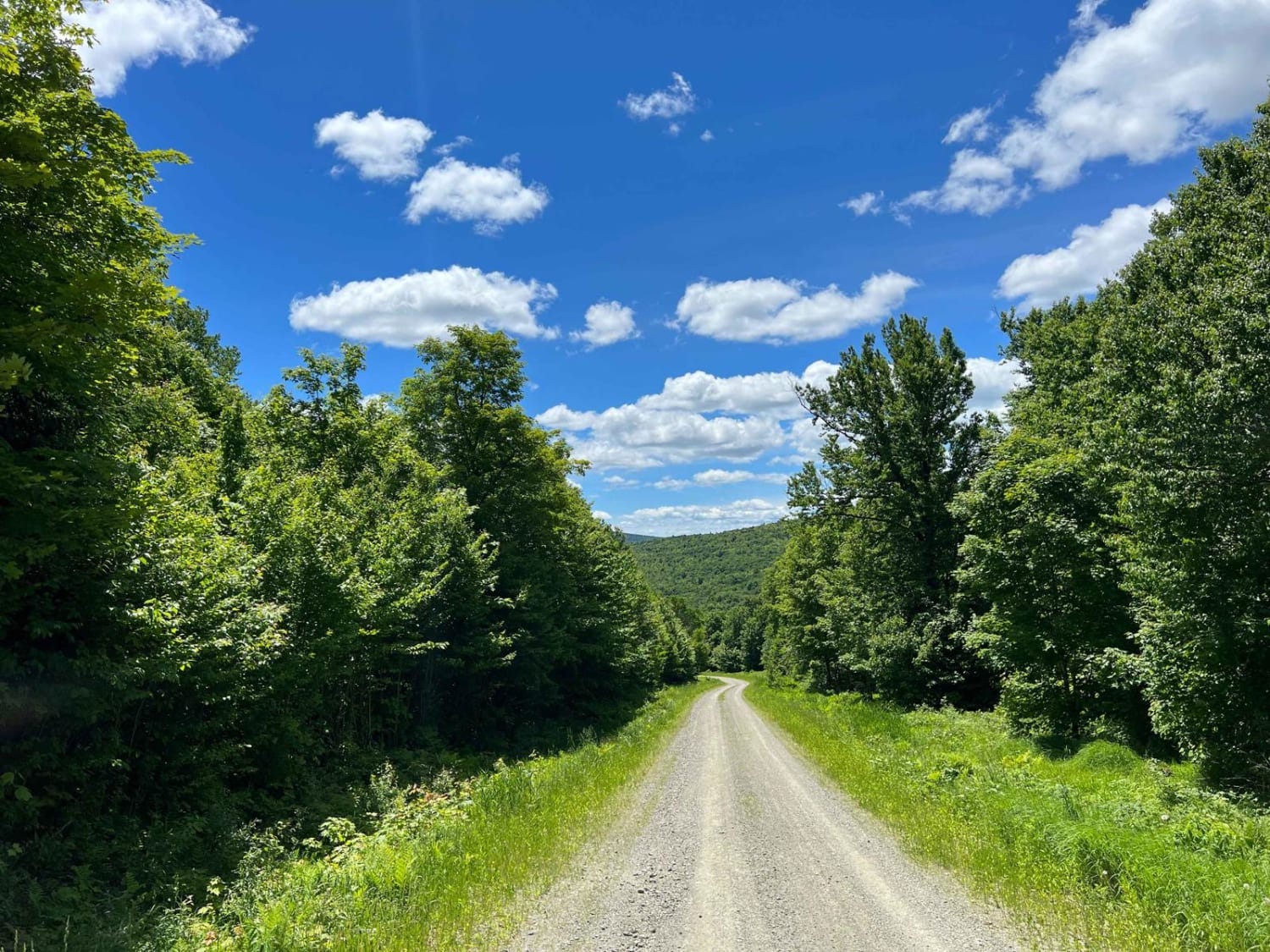
The van was full of joy, the noisy joy that only a pack of 14-year-olds can make when they have been to the mountains and the mountains have embraced them. I turned off the pavement we’d followed back from the White Mtns of New Hampshire for the last hour and a half, and onto the dirt road that led back to the summer camp near the border with Maine. We were minutes away.
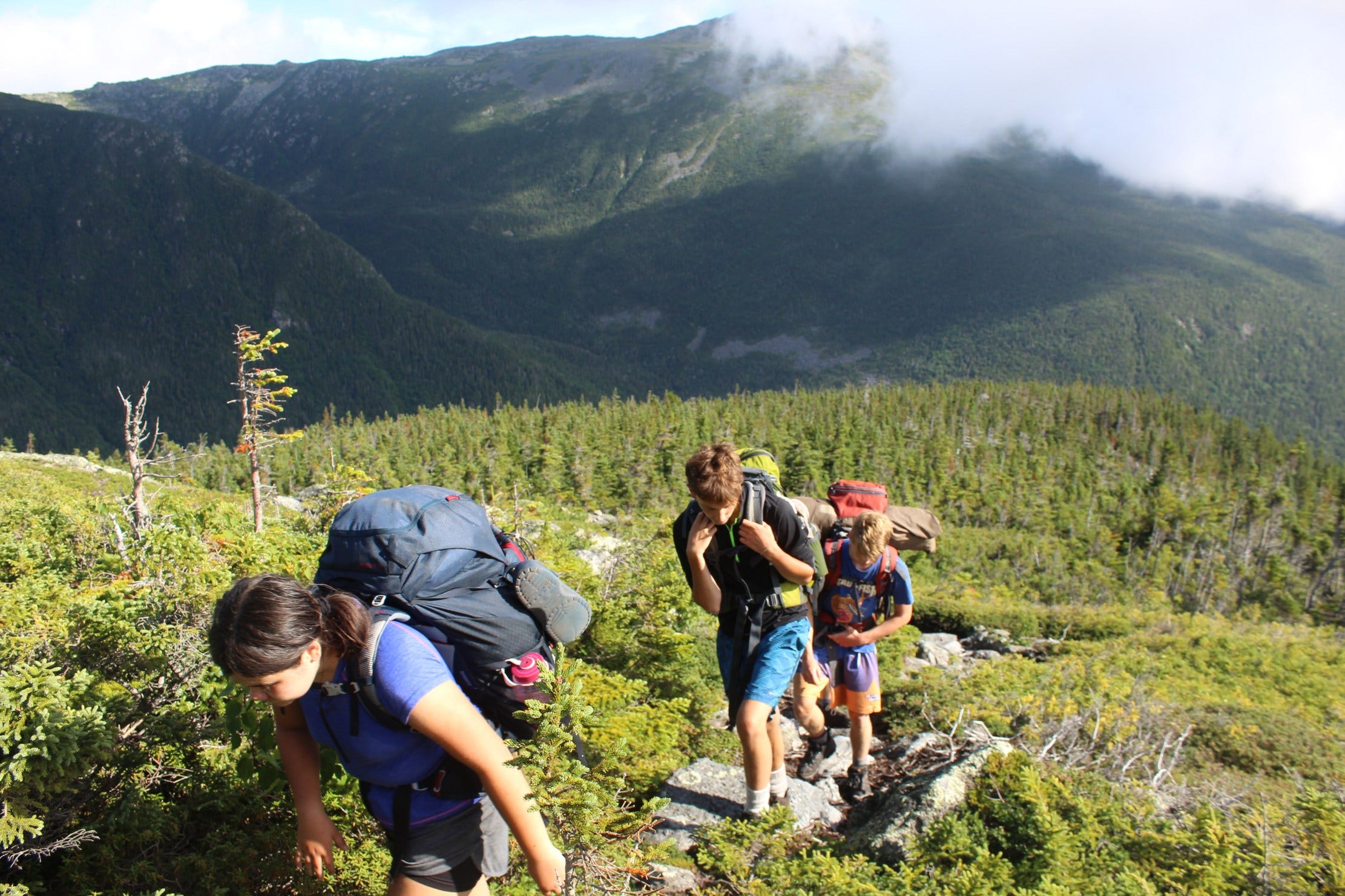
There was singing, though I don’t recall the songs. This was more than thirty years ago, and who knows what happens to stories as they, and we, age. There had been singing in the mountains, too. Or chanting, really, as for three days up and over peaks and over root- and rock-filled trails we had taken turns in pairs carrying a large, heavy, awkward wooden box (as well as our backpacks), and occasionally broke out into a loud and cheerful three-beat theme: “Wan-i-gan! Wan-i-gan! Wan-i-gan!”
The wanigan box swung from a long wooden pole over our shoulders, like large prey being carried home by two hunters. Carrying it was an absurdity, a challenge the kids invented. They loved the confused or amused reactions we got from other hikers moving aside as we barreled through, and now they carried that joy homeward, scarcely contained by the van.
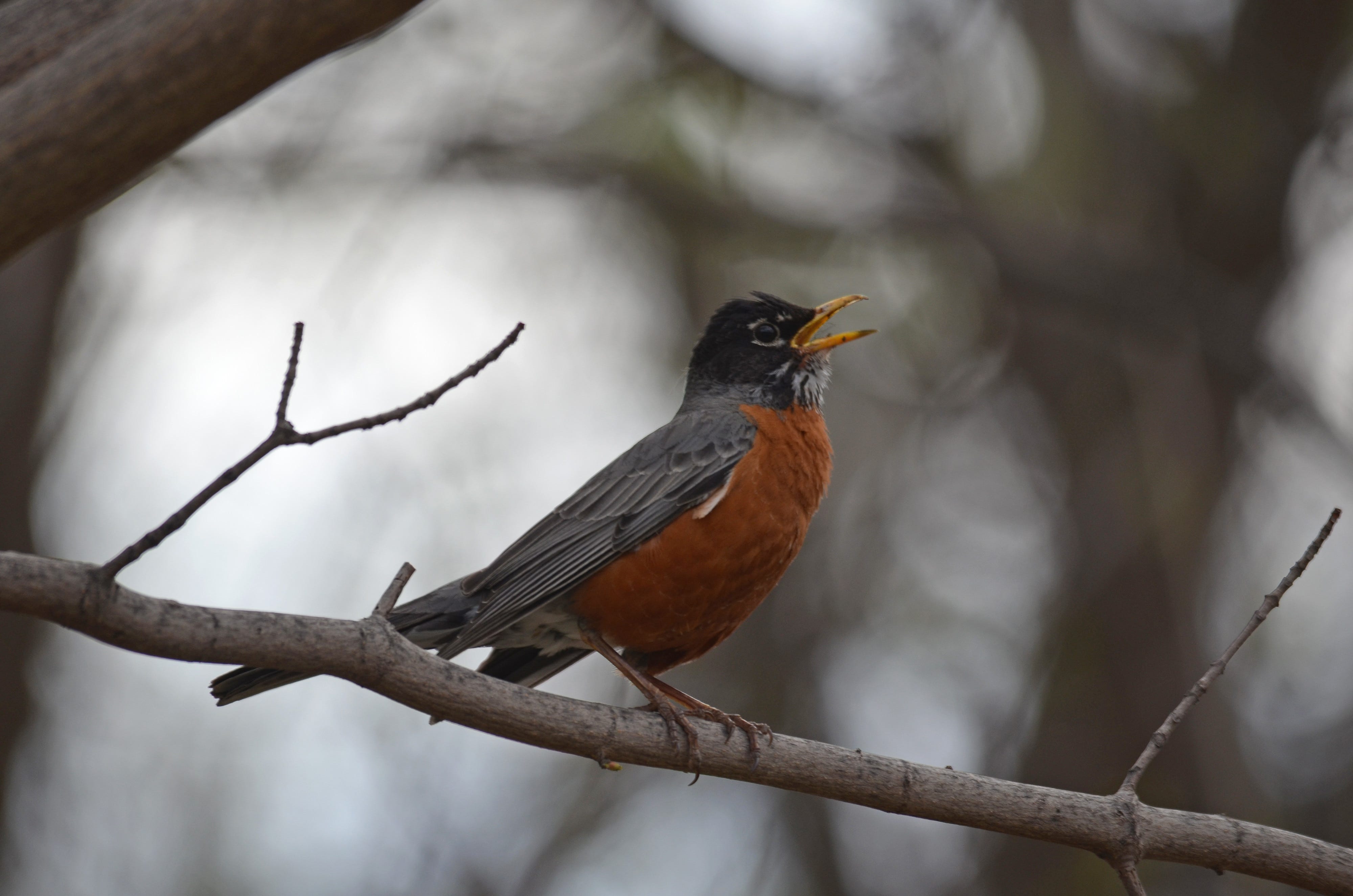
And then, a few miles from home, the invisible bulldozer of our windshield killed a robin flying across the road.
The thwack was loud, and so was I as I swore and hit the brakes, pulling the van to the side. Emotionally, I was in two places at once - the sadness and fury of a guilty conscience, and the churning internal narration of an adult gauging how I should be reacting in front of the kids - as I flung open the van door to find and move the robin.
I cannot see the bird now, though I imagine it splayed across the gravel. I do remember one of the girls joining me as I set the warm corpse in the dry, tall, late-summer grass.
Back in the van, I was dislocated. I wanted to acknowledge the moment’s grief while not raining on the kids’ parade. I think I offered a “Sorry, guys” before starting slowly up the road. They knew me well enough, and they felt the significance - this was terrible - and so they quieted down, but they deserved to keep their joy. The bird’s death was a loud discordant thwack amid the singing, but that singing was rooted in weeks of traveling together in the wild and years of sharing summer camp together.
The silence in the van asked questions of us: What did we owe the bird, and what did we owe our joy?
These were the final hours of their summer camp years. As 14-year-olds, this had been their capstone summer. No longer kids at camp, they’d arrived three weeks earlier as young adults only to pack and then leave on a 17-day canoe trip in northern Maine, with me as one of their leaders. We’d had a famously good time, counting moose, jumping off bridges, and making improvised sails with paddles and tarps while traveling 90-odd miles by river and lake.
And by land, through the difficult crux of the journey: two and a half trips across a two-mile portage between the Penobscot and Allagash watersheds, carrying canoes, gear, and wanigans filled with food and cooking gear. The term originates in an Ojibwe word, and now (among the canoeing culture of northern North America) means a purpose-built box for kitchen items in a canoe. Ours were simple plywood crates with two rope handles, and a pain in the ass to carry for two miles. Canoeing, I’ve always said, is a terrible way to hike.
Thus the absurdity of the idea to carry a wanigan up and over mountains on the three day hike that followed our 17 days on the river.
Like all the thrushes, robins are a beautiful marvel - I love their elegant run-and-freeze ambush hunting technique for worms and bugs - but they’re not rare or threatened. Unlike most other thrushes, they thrive in our fragmented, lawn-obsessed culture. And one robin’s death is a raindrop in a mortal flood: Hundreds of millions of birds are killed by traffic every year, and that’s only a fraction of avian mortality from cats, windows in buildings, habitat loss, and pesticide poisoning. Our robin was one unnecessary death among billions.
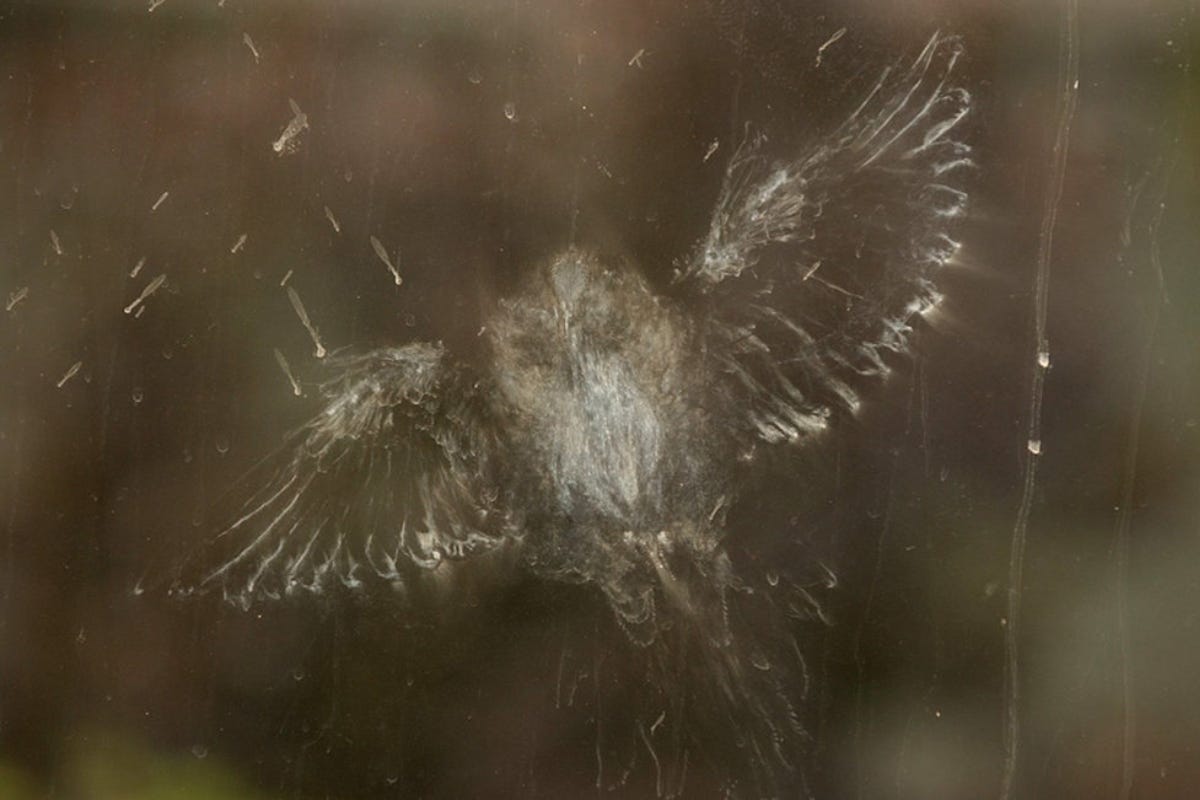
So what’s the value of a robin? How long do we grieve the bump in the road, the feather shadow on the glass? How much do we interrupt our day or our joy for the thump on the bumper or for the body in the ditch?

However we answer those questions, these deaths have weight. Part of that weight is our response to death itself, and part is the reminder of the incalculable burden of roadkill and other industrial killing for which we are all directly or indirectly responsible: the poisoned Big Ag farms our food comes from, the roads our goods and services travel to arrive at our stores or on our doorstep, and the glassy buildings we stare out of at the diminished real world. That’s the world we’ve built for our kids, and that’s the world they’re either normalizing or fighting against.
They also inherit these heavy, awkward boxes of harm, guilt, and apathy that we’ve been carrying from generation to generation, harms done to us and by us in an ecologically bankrupt system. What I struggled with in that moment outside the van is part of the Anthropocene struggle: Deciding where the greater reality is between a pop-up culture full of invisible bulldozers and the astonishing, eternal wonders of the life being bulldozed.
Is the road we’re traveling a way forward or a scar cut through the beauty?
I can make a good ethical case for a van full of kids in love with rivers, mountains, and life, and for me in that moment as a guide to all of it. Those kids - now somehow in their late 40s - have probably loved moose and mountains, rivers and trails, for their entire lives. Maybe summer camp connected them to birds too. And so perhaps the robin’s death can be considered collateral damage in the midst of an effort to reconnect the next generation to the fabric of life that embraces that robin. But that still feels like a justification for the status quo, for choosing the road over the bird.
In the quiet van at the side of the road, it would have been nice to have the wisdom to articulate and defuse the tension in that moment, to acknowledge the death we’d caused while allowing room for the joy to continue - a moment of silence, perhaps. But I muddled along, as did the kids, and we were home for dinner before the robin’s body had fully cooled.
That’s how our days go, right? We muddle forward awkwardly through a diminished natural world. To a certain degree, that’s okay. We’re a muddling species in a culture that makes us aliens on our own planet, and it seems to me that we rarely have the wisdom to articulate even to ourselves how to live amid what’s being lost, assuming we think about it at all.
And the reality is that every day of this life is full of these tradeoffs. As I’ve said here many times, we’re all complicit and trapped, always, because the system built for us has no exits. We can reduce our harm and devote ourselves to changing the system, but we’re all still inside it.
Looking back now, the 14-year-olds seem wiser than I was. Not in their conscious articulation, but in the joy, in the singing, and in the scale of the challenges they were willing to take on. I’m cheerful, but joy is a skill I have to relearn each time, and I limit my singing to the page. I was like that then, and haven’t changed. I wonder who the kids are now, but in that time of their lives, at least, they had learned that they could do anything, or at least to feel that they could.
Who else would choose to lug a heavy awkward wooden box swinging from a rough pole through three days of mountain hiking but a pack of kids who had been at home on the river and felt embraced by the mountains? They’d been camping and traveling for weeks, cheerfully, so why couldn’t they, as a cheerful team, be the first people in history (so we imagined) to portage a wanigan up into the peaks of the White Mountains?
All of which is a reminder that kids, then and today, are inheriting the positive stuff too, whether from a hippy summer camp and its expeditions, a long-haired poet/trip leader, or the books, songs, TikToks, and other carriers of age-old stories we tell of protecting the real world, of finding joy in birds and moose, of hoisting up our burdens and singing our way up the mountain. The robins sing, despite everything, and so do 14-year-olds. I like to think that some of the kids in that van are now some of the adults working to make a better world for all who sing.
Thanks for sticking with me.
In other Anthropocene news:
From PBS, the Wilding documentary about the stunning rewilding project by Charlie Burrell and Isabella Tree at the Knepp estate in southern England. Marginal farmland punished by industrial agriculture and soaked in pesticides has, once left alone and stocked with wild cattle, ponies, deer, pigs, and beaver, reverted quickly into a small portrait of pre-modern Europe and attracted an incredible wealth of biodiversity, including healthy populations of some of the UK’s most endangered species. Find out more at the Knepp estate site, read Rewilding Britain’s larger context for the project, and spend some time at the “Kneppflix” YouTube page, which has lots of rewilding clips and a short film, Knepp Rewilded, about the rewilding project, in which Isabella describes part of the project’s magic:
I think the key to Knepp’s success is really feeling that something exciting is happening here, that nature is teaching us something, rather than us always feeling that we are in control, that we are the masters of the universe.
I recommend you subscribe to Owl in America, which in the spirit of Heather Cox Richardson’s Letters from an American is subtitled “Notes from An American Environmentalist.” Owl in America isn’t on Substack, but like so much good work here is free for all but well worth your paid subscription. The latest letter, covering the Rice's whale endangered status, approval for new deepwater oil drilling, a new public lands rule, and the Park Service in disarray, is here. Here’s her general pitch:
Owl in America is a series of letters written from inside the unraveling of U.S. environmental governance. Drawing on the author's decades of work in public service—as a biologist, an environmental lawyer, and a witness to how laws, agencies, and courts function in practice—the series documents the second Trump era as it reshapes public lands, wildlife protections, climate policy, and the institutions meant to safeguard the commons. These essays track not only what is being dismantled, but how: through administrative capture, legal erosion, disinformation, privatization, and the steady hollowing of democratic constraints.
The series resists both despair and false reassurance. It journeys into analysis of political power, but always returns back to land, ecology, history, and moral responsibility. What does human stewardship means in an age of accelerating extraction and authoritarian drift? The through-line is paying attention: to systems, to language, to human experience, and to the fragile threads that still connect people, law, and the living world. These letters invite us to stay informed and connected while the ground shifts beneath our feet.
From the Guardian, in the spirit of swords-into-plowshares, how bomb craters can become biodiverse wetlands. The article begins with WWII craters outside London, now longstanding ecologically-rich ponds, and shifts to the thousands of craters now pockmarking Ukraine, speculating on what a peaceful future will look like in a ravaged land. The good news, as one Ukrainian ecologist noted, is that “Diversity of habitats, even created by war, leads to species diversity.”
From Noema, “There is ‘No Hard Problem of Consciousness’,” a complex but readable philosophical essay on how both mind and soul, however mysterious, are as subject to the laws of physics as our furniture. What makes us imagine our souls as some transcendent magic that exists outside the bounds of nature is the same old assumption that we and our consciousness are somehow more important than other animals and plants, mountains and rivers.
From the Times, “America the Undammed,” an upbeat look at the slow but steady movement to get rid of “deadbeat” dams that for far too long have turned rivers into ecologically impoverished messes. Check out also the great work being done to remove dams from the nonprofit American Rivers.
Also from the Times, “Why So Few Babies?”, an op-ed that reasonably concludes that the decline in birthrates across the U.S., Europe, and elsewhere, is defined by a pervasive sense of social uncertainty and economic instability. After the “great recession” and amid the polycrisis of climate and biodiversity loss, and during a rise in right-wing populism that exacerbates both, the future becomes a less secure place to raise kids. The cause of birth rate decline is complicated, certainly, but this assessment seems like a solid part of the picture:
What unites these disparate cultures, policy environments and demographics, researchers are now realizing, is young people’s inescapable and crushing sense that the future is too uncertain for the lifelong commitment of parenthood. Call it the vibes theory of demographic decline.
The First Conference on Transitioning Away from Fossil Fuels was held on April 24th-29th in Santa Marta, Colombia, with representatives from 60 nations gathering to discuss what the COP conferences have not: How to move away, finally, from the root cause of 86% of anthropogenic climate change. You can read accounts at the Guardian and Carbon Brief; the latter is a fuller breakdown of what was accomplished, and the former is a ten-point summary. Both report on the relief of the attendees to finally be discussing a way forward. Here’s the Guardian:
“The mood here in Santa Marta is euphoric,” said Tzeporah Berman, the founder and chair of the fossil fuel non-proliferation treaty initiative. “After years stuck in endless debates about whether to phase out fossil fuels, finally we are focusing on the how. We are no longer fighting for recognition of the problem, but creating solutions. It’s like watching a dam break – all that pent-up experience, knowledge and passion suddenly flowing into concrete ways to phase out dirty fuels. The hope is contagious.”
From NPR, an account of the Stillaguamish Tribe in Washington buying up river delta farmland in their people’s former territory and re-creating the ancient tidal marshes that once nurtured young salmon.
From Mike Shanahan and Planet Ficus, “Strangler Figs Are the Rainforest’s Pop-Up Restaurants,” another great tale of an underappreciated reality, that fig trees are absolutely vital for life around the tropical world. Be sure to listen to the wonderful recording of all the wildlife converging on a single strangler fig in Indonesia when the figs have ripened.
Jason, this was a delight to read! You captured the nostalgia and camaraderie of the summer expedition mingled with the complexity of grief so well. As a parent of children, now close to 30, who were led by wise poet/leaders, and later led trips themselves, I can attest to the way these experiences shape a life. Thank you for this piece, which names the love and the loss so skillfully.
Beautiful - thank you Jason!