
Whether the Storm
3/19/26 – Is a storm still a storm?

Hello everyone:
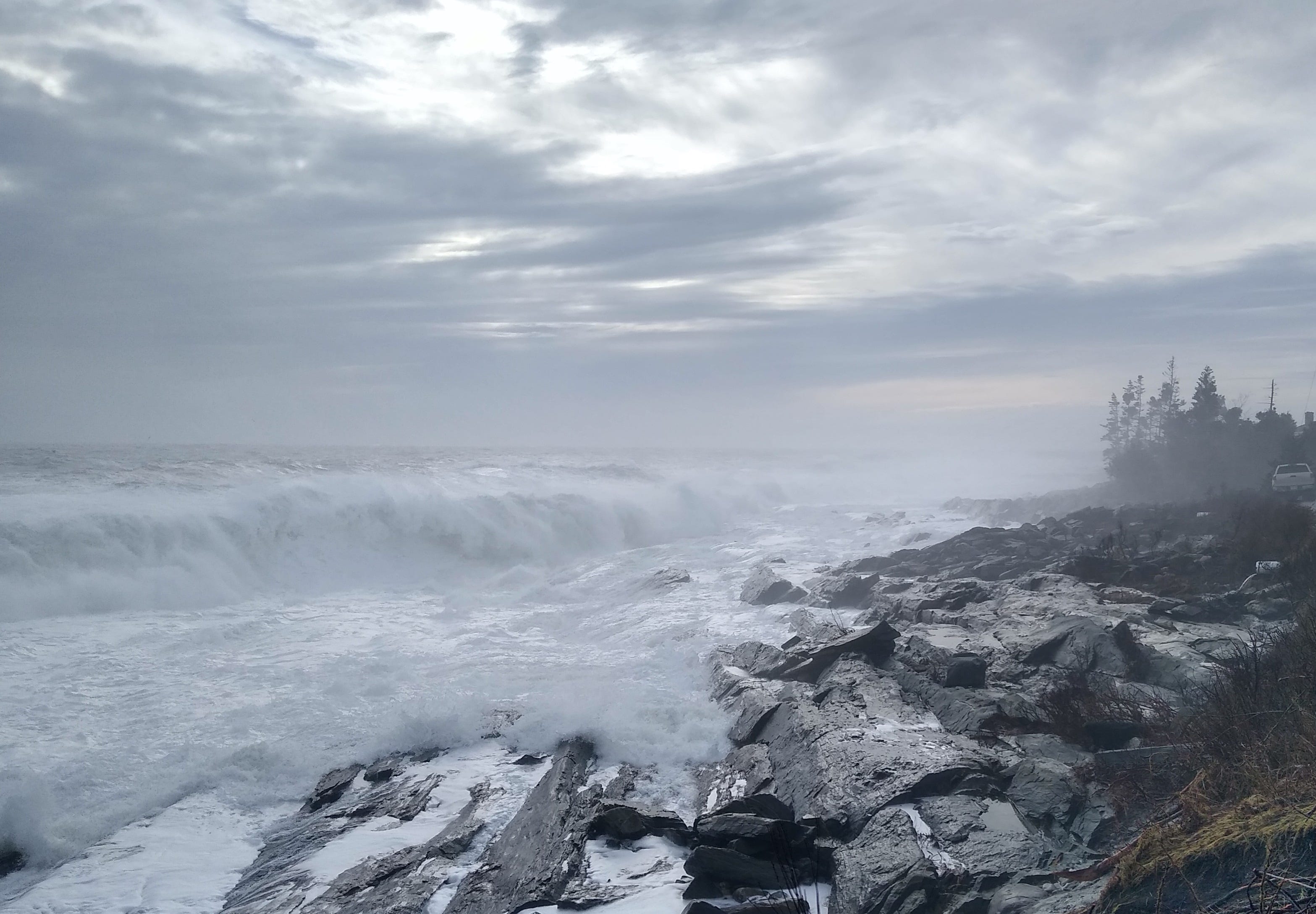
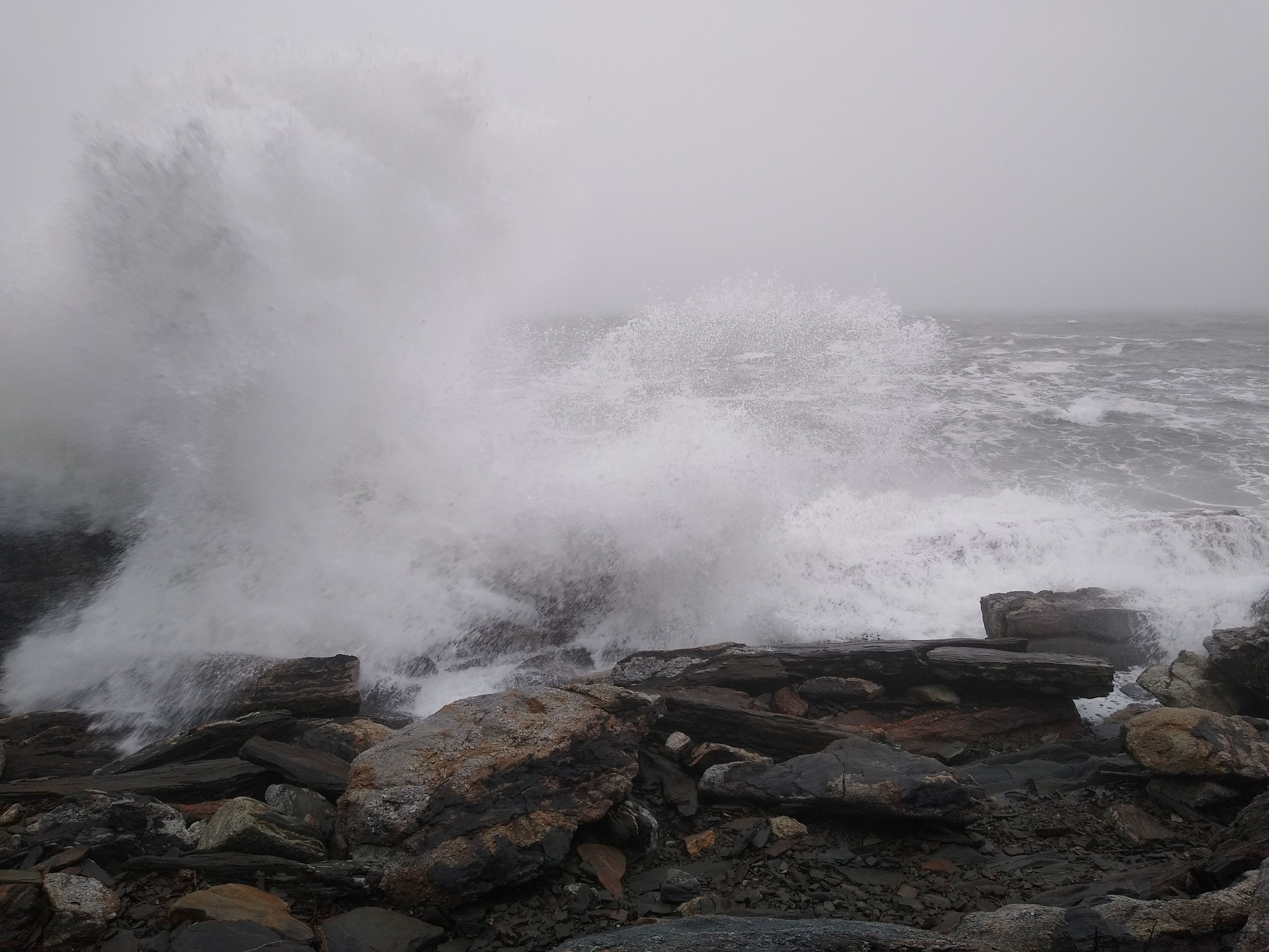
We had a good storm pass through a few days ago, with high seas and higher winds. Every storm is a reminder of the energy that surrounds us, sustains us, and shakes us out of our expectations. With that in mind, I wanted to reintroduce you to an essay of mine from a couple years ago (now shorter and rewritten) that celebrates storms and provides some Anthropocene context.
As always, please remember to scroll past the end of the essay to read some curated Anthropocene news.
Now on to this week’s writing:
Like it or not, the scale of human impacts on all of life means we now “manage” the Earth. Or as Stewart Brand and the Whole Earth Catalog warned us a half-century ago, “We are as gods and might as well get good at it.”
We are not yet good at it. Judging from the news, we can scarcely manage ourselves. Nonetheless, the underlying task behind all of our good efforts to cool the climate, and to patch up the fabric of life across continents and oceans, is to become rational and compassionate managers of the planet we’ve overrun. Or, ideally, we’ll restore enough of the planet so we can hand back much of the management to the species who are born knowing how to live.
They had, after all, been doing just fine for millions of years before yesterday’s arrival of our pop-up civilization.
The world is bacterial and fungal, leafy and woody, scaly and fleshy, furry and feathered, atmospheric and oceanic, stony and wet. Because it is alive and conscious, the world is sacred, though we forget that. And because we are nearly always caught up in our own species’ drama, we forget about the wild story happening all around us.
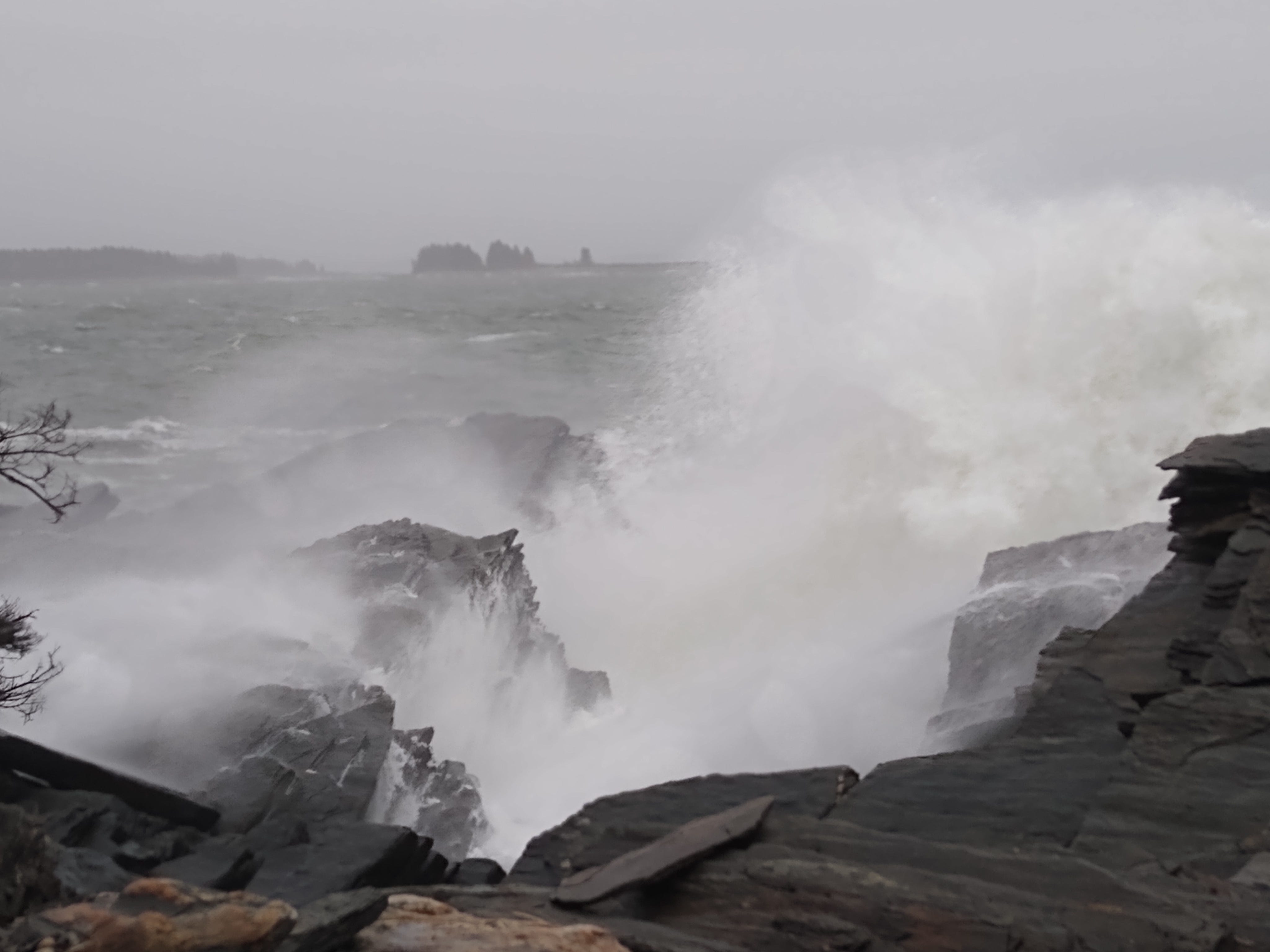
One of the best ways to reconnect, and to set aside our worries about the climate (whether political or planetary), is to be out in the wild weather. For us to thrive, our skin and senses need as much exposure to sun and rain as ferns.
And I think we all know, on some intuitive level, that we need storms to reframe our daily lives. Storms erase the chalkboard. They force us to check our supplies, rush to the market, make contingency plans, and upend our schedules. Storms remind us, amid our mismanagement of the Earth, that we too are being buffeted by greater forces.
Storms also kill and impoverish people, destroy crops and homes, and upend much more than schedules. This has always been true, and will continue to be true for as long as there are people, crops, homes, and schedules. Here on the resilient coast of a privileged nation, I don’t wish to diminish this truth, but neither do I want to focus on it this week. For all of life, storms have always been as much gift as curse. They transform. They are necessary turbulence.
The messier the storm, the cleaner the break. Don’t we all have memories of intense moments in a storm? I’ve watched trees uproot in New England hurricanes, shuddered as gale-driven waves broke completely over a New Zealand ferry, and been blown off my feet by katabatic winds hurling down an Antarctic glacier. There is awe in these moments, and awe awakens something wonderful within us amid the fear-tinged laughter.
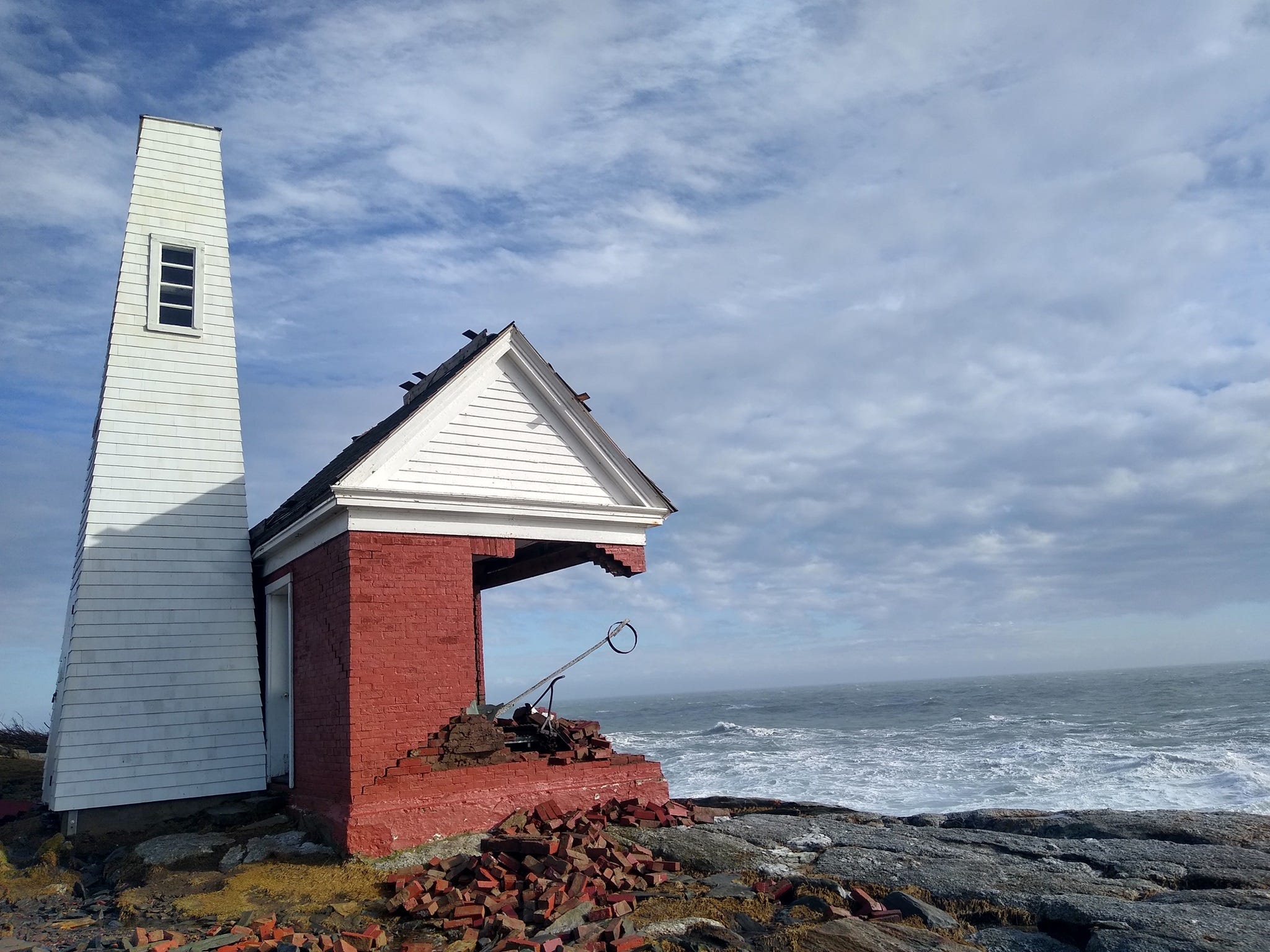
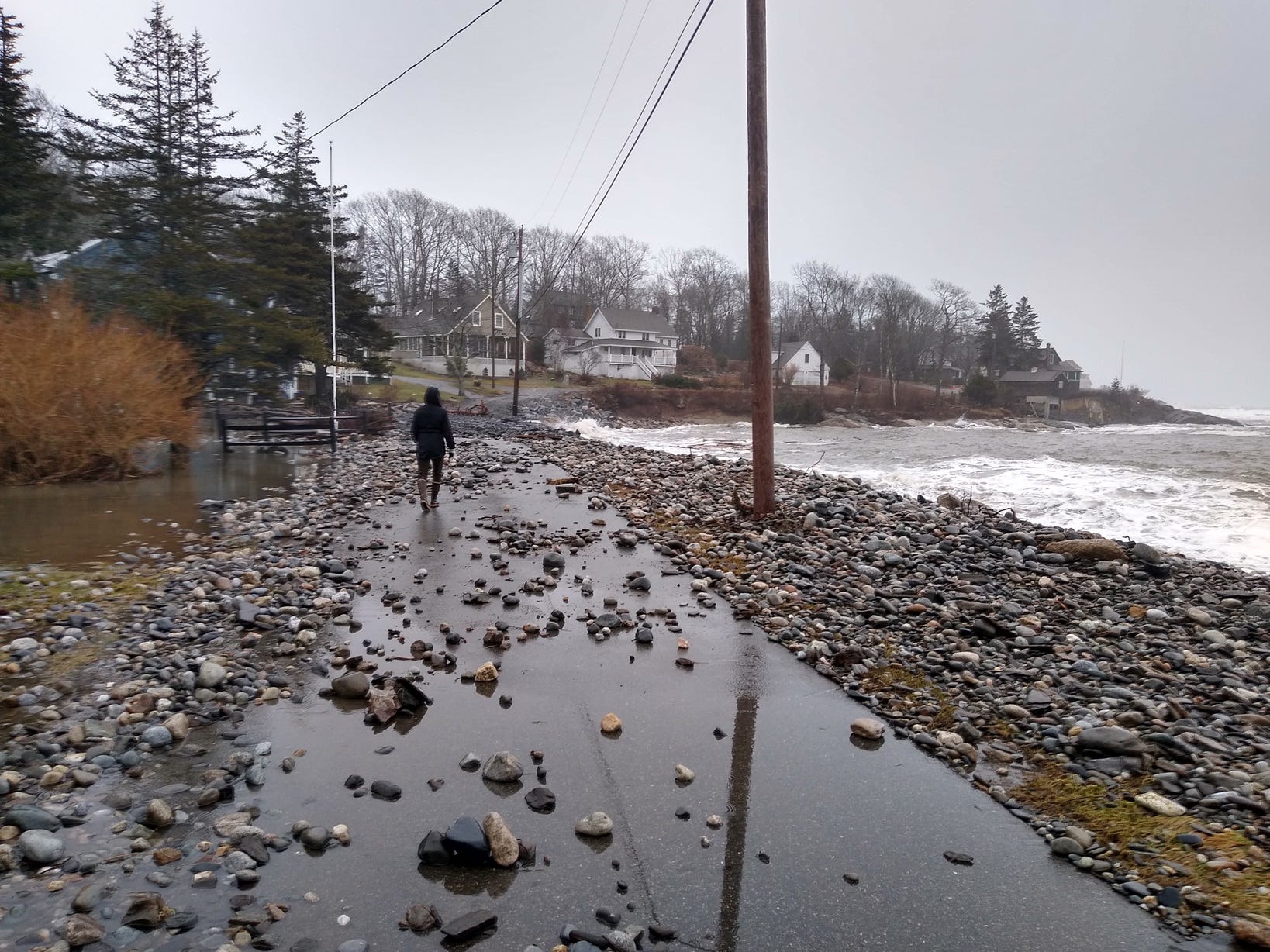
Two coastal storms, a few days apart, tore up the Maine coast a couple years ago. The damage was historic, as record high tides combined with huge swells and hurricane-force winds to destroy wharves, homes, businesses, roads, and much more. Down the road from us, a house was lifted and rotated away from its chimney by the surge. Others had their seaside walls smashed in. A small working harbor lost five wharves and suffered serious damage to others. The harbor’s debris, when hauled off, filled forty-five dump truck loads. These scenes of wreckage and salvage repeated in hundreds of coves and harbors, peninsulas and islands, all along the coast.
At a famous lighthouse at the end of our peninsula, a 130-year-old brick bell house lost two of its walls to waves of enormous height and power. Elsewhere, the sea chewed away at shoreline roads, making them impassable. Stones seemingly floated ashore like broken buoys, turning yards into patios. Heavy seas pushed a footlocker-sized rock under a chain-link fence and into the middle of a tennis court.
As with any storm, there were moments of grace amid the chaos. The first was when an entire dining room floor, with an unscathed dining table surrounded by a jumble of chairs, stove, and cabinet, washed up intact on the shore of a place I look after. A century-old fish house and dock had been plucked from shore and then disassembled by the waves as it traveled a mile down the bay. All around that dining room, the cove was full of dock and house, trash and family treasure, all woven into a deep mat of seaweeds ripped off their stony anchors. Heather and I spent a day pulling lumber and furniture and trash from the cove, trying to keep the worst of it from floating back out on the next tide as pollution or navigation hazards.
The second moment came after I posted a picture of that furniture online and immediately heard from the owners, a family that has been in the area since the 1850s. They arrived with the next low tide, eager to salvage what they could of the family legacy. We walked the shore, picking up slide carousels and placemats, buoys and framed prints. One bit of art they were most excited to find was an old framed nursery rhyme titled “Whether the Weather.” It was hard to imagine a more suitable poem for the moment:
Whether the weather be fine,
Or whether the weather be not,
Whether the weather be cold,
Or whether the weather be hot,
We'll weather the weather,
Whatever the weather,
Whether we like it or not.
For the family, the impact of the storm was compounded by the cold ferocity of the insurance company, which refused to cover their loss.


For those of us who didn’t suffer as they did, the wildness of these storms was as refreshing as it was sobering. To feel a storm arrive, throb and roar against the granite shore, and then pass over, is to be shaken out of our complacency. In the hours we spent plucking things from a cold cove, Heather and I were far more connected to our cold digits than to our digital lives. The shape of the real world reappeared.
But I couldn’t avoid seeing the fingerprints of the Anthropocene everywhere, as messy as the swathes of shoreline debris. In an era of disrupted planetary norms and a hotter atmosphere, is a storm just a storm anymore?
Our fingerprints on storms range from the invisible to the catastrophically obvious. On one end of the scale, microplastics, combustion particulates, and PFAS chemicals float in the atmosphere alongside natural particles to act as precipitates for raindrops and snowflakes. What we pollute daily toward the heavens falls daily on our heads.
On the other end, we’ve burned so much carbon-rich stuff that we’ve changed the behavior of the atmosphere and ocean faster than life can adapt. In between, the forests that regulate the Earth’s climate - generating moisture, moving it across continents, and seeding clouds - are too often being erased. Even the scraggly spruce forests of coastal Maine have been replaced with the empty vacation homes of the wealthy.
Everywhere, the heat and turbulence that characterize our mismanagement of the Earth are both cause and effect. More burning makes more heat, and more disruption of the living world makes more turbulence in every planetary system.
The burgeoning field of attribution science makes these larger fingerprints readable, if still not precisely defined. We know with increasing certainty whether certain storms or other intense climatic events are more likely due to our transformation of the atmosphere. But that’s only a statement of odds. We can gesture at the pervasive plastic trash and blue styrofoam washed up in the cove and say, This is what we do. But we cannot point a finger at a storm and say, That’s us.
An Atlantic article suggests we should imagine the accelerating chaos of climate change through two specific concepts:
The first is nonlinearity, the idea that change will happen by factors of multiplication, rather than addition. The second is the idea of “gray swan” events, which are both predictable and unprecedented. Together, these two ideas explain how we will face a rush of extremes, all scientifically imaginable but utterly new to human experience.
We can think of nonlinear change as intensifying in irregular leaps and bounds rather than simply becoming different at a steady pace. As the climate warms, for example, high winds and hard rains become higher and harder while breezes and showers will remain much the same. Droughts as well as floods grow more severe because nonlinear change increases turbulence in the atmosphere.
This accelerated, turbulent change leads to “gray swan” events, defined as the predictable result of intensifying the conditions for life on Earth beyond anything our species has witnessed. A “white swan” in this metaphor is normal, and a “black swan” is unimaginable. The data can predict the storms on our Anthropocene horizon, but we’ve never seen them before.
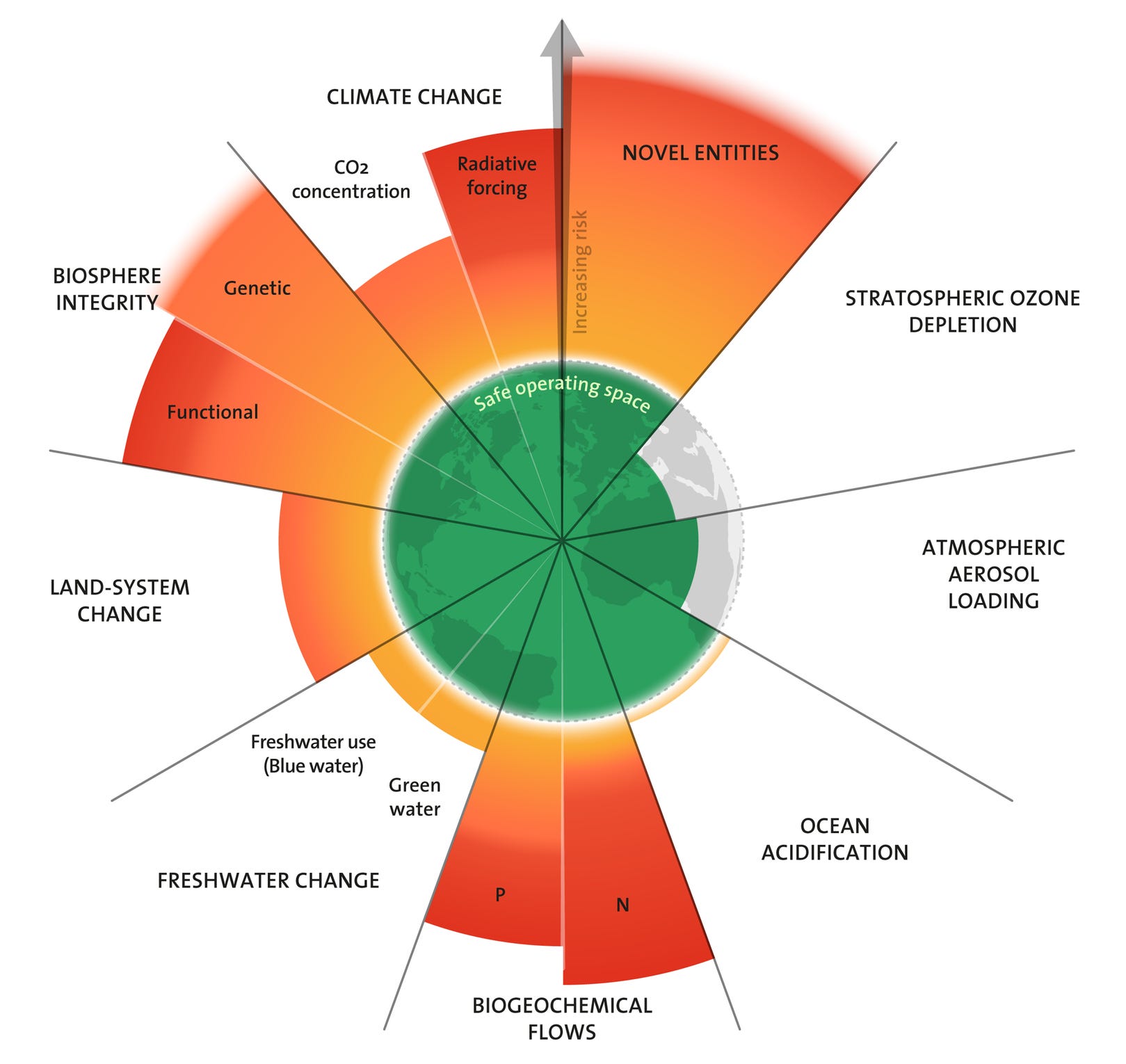
Part of our dilemma is that as we breach planetary boundaries we tend to normalize both our behavior and its consequences. We’re trapped in lives that push these boundaries and limit our options to heal them. Plant and animal populations diminish or wink out of existence, and we hesitate to act. Megatons of artificial nitrogen and mined phosphorus poured onto industrial agriculture run off into choked waterways, and we hesitate to act. Hurricanes strengthen at lightning speed over warmer seas, and we hesitate to act.
One fundamental truth of the Anthropocene is that there is no place on Earth untouched, and no place to hide. There were once ecosystems where farms and bulldozers and fishing boats did not reach, but now the altered atmosphere warms and infiltrates all of life with its chemistry. The ocean thunders against the shore as it always has, though now the waves are warmer, less oxygenated, and more acidic.
But remember that a storm is always an opportunity. The chalkboard is being erased. Who we become amid the turbulence ahead will define both the scale of turbulence and the life that emerges from it.
One of the more complex truths of this time is that humans have long been a transformational species. On one hand, we seem uniquely responsible for ecological change and the extinction of many large animal species as far back as 50,000 years ago. On the other, Indigenous cultures across the globe have been responsibly managing vast regions of the Earth for millennia. We are fully capable of being the storm that brings life and builds resilience, but only if we proclaim and adhere to a set of ethics that reframe the management task ahead of us.
Those ethics should, at heart, be rooted in empathy for the living world, and a not-infrequent desire to be out in the wind, sun, and rain.
We are eight billion, heading for ten billion, and we are hungry for resources we do not need, yet we must find it within ourselves to diminish our harms and enrich the future fabric of life. We must, as I’ve written, return to being a keystone species that supports life rather than merely a headstone species writing epitaphs for the species we cared too little about.
This is a lot to salvage from a storm, I know, especially one that mainly impacted a small state in a wealthy country. More to the point, I don’t want to be trapped in a doom spiral of attribution science, or even of attribution ethics. Nor do I want you to be stuck thinking about what we’ve done every time the weather gets interesting. We need the joy and fear and clarity of weather against our skin and senses, and that’s okay.
In the end, a storm is a storm, even if it’s raining plastic. The Earth acts according to the forces that be, and we are now one of those forces.
The Anthropocene is a storm across deep time, a storm on an epochal scale that will leave its mark on the genetic and sedimentary history of this planet. The sooner we stop the sources of harm – whether heat, erasure, contamination – the sooner we improve those portions of our Earth management portfolio.
Whether the storm has our fingerprints on it, or whether a beautiful and powerful storm is as much crime as scene, is less important than how we prepare for it and how we manage our response to it. The future of storms is one more thing to manage, as is our ability to find joy, awe, beauty, and laughter amid the fear of weathering what’s to come.
Thanks for sticking with me.
In other Anthropocene news:
From Orion, “The Plan,” a brief and beautifully-written ode to the optimism in gardening, and to the reality checks a gardener faces when devising, over years, plans for how life will unfold:
How much of the pleasure of making a garden is in the plan? It is a collaboration with God—you plant your bulb, a prayer cased in tissue-thin skin, prone to rot, dropped into the damp earth, and then, months later, the prayer is miraculously fleshed forth in petals.
Time is what you garden, in the end. Plants come and go, but time continues.
From Reasons to be Cheerful, “The Native Seed Farm Safeguarding California’s Future,” an excellent article on Heritage Growers, a nonprofit farm with more than 200 acres dedicated to growing native plants. The farm meticulously harvests the seeds from those plants which are used in habitat restoration projects around the state. Everyone involved is planning years ahead for how and where to best use these seeds. One large project that’s benefited is the massive Klamath River dam removal and habitat restoration project spearheaded in part by the Yurok tribe.
From Jonathan Tonkin and Predirections, “The future is being stolen one small decision at a time,” a brief, thoughtful reflection on how short-term thinking underpins so much that is wrong with how global culture asks us to live on the Earth. Short election cycles and financial goals make us forget how to be good ancestors:
We imagine the future being lost in big, cinematic moments. Yes, there are wars that are started and there are leaders that are elected that change the course of history. But it’s mostly eroded in ways that are near invisible.
And once you start seeing these tiny losses, the questions become inevitable.
From Mother Jones, “The Battle Over Solar on Farmland,” an articulation of the two very different ways farmers view the growing phenomenon of agrivoltaics, as expressed by two farmers in Oregon. As I’ve noted here often, evidence mounts daily of the benefits, economic and often agricultural, when farmers incorporate solar in their fields where either grazing or growing take place. (Solar Saves Farms gathers information on those benefits.) But many farmers fear the loss of good growing soil to yet another corporate takeover.
From the Times, new research suggests that climate change has accelerated significantly over the last decade. Again and again, predictions for the rate of change and the arrival of consequences for the oceans and atmosphere have underestimated the speed of the transformation.
From the Guardian, an illustrated exploration of insect migration, focused on a few astonishing migration stories - including Painted Lady butterflies crossing the Atlantic and bogong moths in Australia navigating by the stars - to remind us that insect migration is far more common that we thought, and that insects are just as complex and amazing as the birds whose migrations we celebrate.
Also from the Guardian, “Mining’s Toxic Timebomb,” an overview of the long-term hazards of tailing ponds, i.e. “dams full of toxic waste,” that threaten massive environmental harm all over the world:
The impact of tailings dams on the environment can last for decades, often with disastrous consequences for nature. Heavy metals do not degrade over time and can evolve into many poisonous forms, accumulating up food chains, inhibiting plant growth and altering populations of soil microbes.
Prof Elaine Baker, a marine scientist at the University of Sydney who helped develop the first public database of mine-tailings dams around the world, says: “The way we do mining is still very similar to the Romans. We get a whole lot of waste and we dump it somewhere and we hope that it’s not going to hurt anybody.
From the Cornell Lab, a reminder of several ways you can help birds. I want to emphasize two here: Making windows bird-friendly with tools that make them visible to birds, and keeping your cats indoors. I’ve written in “Our Haunting Failure” about treating windows to protect birds, and will write one soon about cats.
Fancy a stroll? From the BBC, the new King Charles III England Coast Path is officially opened, linking 2,689 miles of coastal paths and allowing walkers to traverse nearly all of the English coastline. It is, apparently, the world’s longest coastal footpath, and took 18 years to complete.
Another beautiful post, Jason! Thanks for providing poetry to these troubling times! This bit is on point: "Part of our dilemma is that as we breach planetary boundaries we tend to normalize both our behavior and its consequences. We’re trapped in lives that push these boundaries and limit our options to heal them." And thanks for the shout out! Much appreciated.
Cheers,
Jono
“…return to being a keystone species that supports life rather than merely a headstone species writing epitaphs for the species we cared too little about.” Yes.